Gender equality has never played such a prominent role in the design of public and urban spaces. The world needs more than superficial, reactionary measures to address the long history of public space as the physical realm of patriarchy.


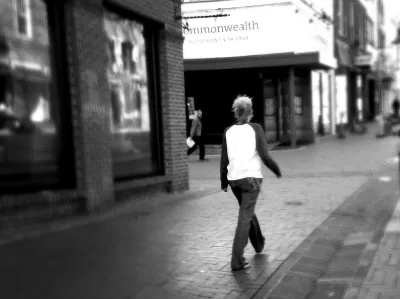
"Urban planning and public-space design has long responded to existing uses, rather than creating opportunities for entirely new behaviors," according to an article by Jennifer Gardner and Larissa Begault in describing the kind of typical, reactionary approach to gender equality that has been celebrated as progress in the field for decades now.
Instead, the authors argue, gender equality in urban design requires a different approach that addresses root causes. "As social scientists, policymakers, and designers increasingly talk about pushing for inclusion in the field [of urban design] and designing for gender equality, we need to make sure actions address root causes, rather than just solve for superficial manifestations of a larger problem."
The article compares and contrasts examples from Vienna (an example of the first, reactionary approach) to New York City, Toronto, Rio de Janeiro, and more for the latter, deeper approach.
Read the full story: How Better Urban Planning Can Improve Gender Equality

Planning for Love, Part 3: Enhancing human connection through walkability
In the third and final installment of this series, author Hannah Kosoff examines what her research findings say about modern dating and urban form.

Planning for Love, Part 2: What happens to dating in a car-centric world?
A survey of over 150 adults about their dating lives reveals stark differences based on their neighborhood's walkability.

The Parking Lot Maternity Leave
New parenthood is the stress test of suburbia. I’ve learned the hard way just how spectacularly it fails.

Planetizen Federal Action Tracker
A weekly monitor of how Trump’s orders and actions are impacting planners and planning in America.

The state-sanctioned urbicide of Austin
People don’t kill cities. Freeways do.

Colorado’s Largest Data Center Could Rise Next to Homes — Without a Public Hearing
The proposed campus would consume 11 times the power of Denver International Airport; as it has across the country, opposition mounts.

Judges permit Denver to divert 77,000 acre feet from the Colorado River for reservoir expansion
Overuse and climate change have caused the Colorado River’s water levels to plummet.

Amtrak, CN end decades-long dispute with eight-year agreement
The new operating agreement establishes an updated framework for the companies to work together, including processes to resolve disputes.

Raised interest rates may kill financially vulnerable construction projects
The chief economist at ConstructConnect warns that if construction project owners are negatively impacted by the raised rates, it could result in delayed payments to contractors.

FREE Course: Walkable City 1: Why Walkability?
After describing his path towards focusing on walkability as the essence of good planning, Jeff Speck marches through his five principal reasons for making more walkable places.
Reinventing Malls: Planning Alchemy—Turning Gray Fields Into Gold
The course focuses on the opportunities and imperatives that shape reinvention of mall sites.

KFH Group Inc.
Greater Baltimore Committee
Eagle County Government
The Architects Foundation
University of Cincinnati Online
The Pocatello Development Authority
The Urban Renewal Agency of the City of Pocatello