The third time was not the charm for a transit sales tax in Gwinnett County, Georgia.


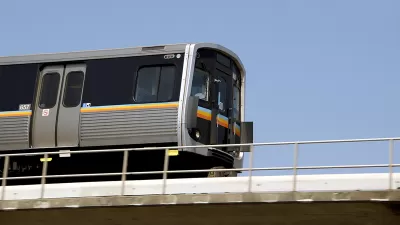
Tyler Estep and Amanda C. Coyne report that Gwinnett County voters rejected a proposed sales tax that would have funded the extension of the MARTA transit system into the suburban county.
"Gwinnett has now rejected MARTA three times," according to the article, including in 1971 and 1990, but there was reason to believe this time might be different. "Since the last vote, the county has nearly tripled in population and shifted from a conservative suburb to a deeply diverse community that’s rapidly urbanizing and has shown an increased acceptance of political issues like mass transit."
Planetizen picked up a separate article by Coyne from February 2019 that provided details about the Connect Gwinnett Transit Plan that the sales tax would have supported.
As for why the transit referendum failed, Estep followed up on news of the vote with analysis that credits the outcome to a grassroots opposition campaign that did a better job delivering its message than the well-funded pro-transit campaign urging support for the tax. Some supporters of the tax blamed the failure on the decision to hold the referendum during a special election, rather than a general election.
David Wickert and Estep provide yet another follow up article mining the failure of the transit referendum for lessons to inform future efforts to approve transit funds, generate more transit funding, or join the MARTA system in Gwinnett and other counties in the region. "The stakes are high as other communities – including Fulton, DeKalb and Cobb counties – consider similar transit expansion initiatives. Elected officials and others say learning the right lessons from Gwinnett’s failed referendum will be crucial as metro Atlanta tries to address traffic congestion and compete for good jobs," explains the article.
Finally, for analysis of the vote's results from a national perspective, see an article by Daniel C. Vock for Governing.
FULL STORY: Gwinnett’s MARTA referendum has failed


Voters Considering Game Changing 'Connect Gwinnett Transit Plan'
Suburban Gwinnett County could change the course of its history by finally voting to connect to the Atlanta region's transit network.

Why Gwinnett County Rejected a Transit Tax Again
Coronavirus and a heavy rail project doomed a transit sales tax in Gwinnett County, Georgia, according to this election post-mortem.

Transit Sales Tax Hinges on Local Control in Suburban Atlanta
Gwinnett County voters living have rejected proposals to pay taxes for the MARTA transit system before, so the latest proposal for a transit sales tax is going to great lengths to prove its local control bonafides.

Planetizen Federal Action Tracker
A weekly monitor of how Trump’s orders and actions are impacting planners and planning in America.

The state-sanctioned urbicide of Austin
People don’t kill cities. Freeways do.

US to reduce Colorado River water deliveries to Mexico
A new Colorado Treaty amendment reduces Mexico’s Colorado River water allocation by 250,000 acre feet.

Mamdani overhauls NYC's Vision Zero plan with 100 new policy goals
The overhaul aims to reduce traffic deaths and make streets safer for pedestrians, cyclists and drivers through lower speed limits, new safety infrastructure and more.

Amtrak not solely to blame for New Jersey commuter rail's unreliability, report finds
A new study from the Garden State Initiative found that NJ Transit’s budget grew 20% across a 4 year period, but reliability declined significantly over the same period.

EPA erases limits on planet-warming pollution from power plants
Under Monday’s plan, power plants would still have some limits on how much mercury, arsenic and other contaminants they can emit.

FREE Course: Walkable City 1: Why Walkability?
After describing his path towards focusing on walkability as the essence of good planning, Jeff Speck marches through his five principal reasons for making more walkable places.
Reinventing Malls: Planning Alchemy—Turning Gray Fields Into Gold
The course focuses on the opportunities and imperatives that shape reinvention of mall sites.

Eagle County Government
Harvard University Graduate School of Design
Nashville Planning Department
The Architects Foundation
University of Cincinnati Online
The Pocatello Development Authority
The Urban Renewal Agency of the City of Pocatello
Journal of the American Planning Association