The heating and cooling of buildings must be addressed if the United States is going to curb its emissions.



The Green New Deal (GND) had a lot to say about making American buildings more efficient. Proposals for creating better building efficiency were among the most criticized before the first bill on the issue was voted down. But there’s no getting around the role heating and cooling buildings plays in climate change. "Buildings are responsible for about 40 percent of the greenhouse gases in the US. Those emissions come, in part, from the fossil fuels (primarily natural gas these days but also heating oil) burned to heat (and cool) the water and space inside buildings," David Roberts writes for Vox.
While some have characterized policies to limit building emissions as unworkably bureaucratic, there are many cities and states already addressing the issue. Policies in California, like rebates offered by the Sacramento Municipal Utility District, push for electrification in new buildings. In New York City, legislation is trying to take on existing buildings. "The city council is now considering a remarkable bill, championed by Councilmember Costa Constantinides, that would mandate a 40 percent reduction in emissions from large buildings by 2030, rising to 80 percent by 2050," Roberts reports.
Cities like Minneapolis, Boise, Boulder, and Washington D.C. also have policies in the works to address these issues. Supporters of the GND hope federal legislation can learn from the successes of local level policies.
FULL STORY: The Green New Deal aims to get buildings off fossil fuels. These 6 places have already started.

Study: Building Pollution Contributing to Poor Air Quality in NYC
Pollutants from methane, propane, and fuel oil are on the rise, leading to a growing public health crisis.

USDOT Unveils Strategies to Achieve Near-Zero Transportation Emissions
Three key strategies — reducing travel distances, increasing energy-efficient travel modes, and transitioning to zero-emission vehicles and fuels — are recommended to meet national climate goals under the Paris Agreement.
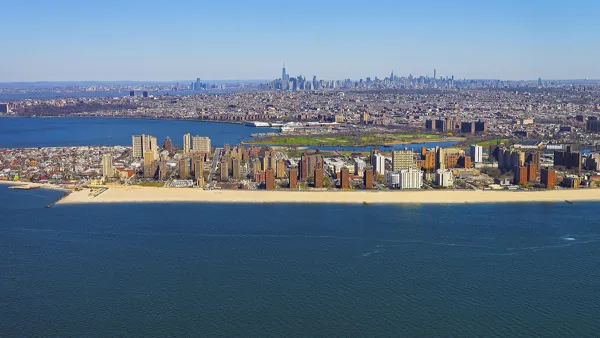
NYC Targets Buildings for Massive Emissions Reduction Effort
Last week, the New York City Council approved some of the most substantial climate change legislation to date by a city in the United States—call it the local example of the Green New Deal.

Planetizen Federal Action Tracker
A weekly monitor of how Trump’s orders and actions are impacting planners and planning in America.

The state-sanctioned urbicide of Austin
People don’t kill cities. Freeways do.

US to reduce Colorado River water deliveries to Mexico
A new Colorado Treaty amendment reduces Mexico’s Colorado River water allocation by 250,000 acre feet.

5 New England states march closer to 800 megawatt wind energy project
Securing federal approval for the project may be complicated under the Trump administration, which has historically been hostile towards domestic wind power.

Baltimore to break ground on $50 million Transit Priority Project
The project will bring faster bus trips, safer streets and better bike connections to Baltimore.

Airbnb launches $250 million 'last-dollar financing' housing accelerator, makes first investment in Austin
The company will put $6.4 million towards affordable housing development in Texas’ capital.

FREE Course: Walkable City 1: Why Walkability?
After describing his path towards focusing on walkability as the essence of good planning, Jeff Speck marches through his five principal reasons for making more walkable places.
Reinventing Malls: Planning Alchemy—Turning Gray Fields Into Gold
The course focuses on the opportunities and imperatives that shape reinvention of mall sites.

Eagle County Government
Harvard University Graduate School of Design
Nashville Planning Department
The Architects Foundation
University of Cincinnati Online
The Pocatello Development Authority
The Urban Renewal Agency of the City of Pocatello
Journal of the American Planning Association