During the CERAWeek conference held earlier in Houston, oil companies were not of one mind when it came to the future of their industry, with some saying transportation will be electrified while others maintained oil will continue to dominate.



It wasn't necessarily oil vs. battery advocates, as both sides are represented within the oil industry at CERAWeek, the global conference organized by consulting firm IHS Markit that occurred all through last week, writes business columnist Chris Tomlinson for the Houston Chronicle on March 15.
We are operating in a world that is not on a sustainable path,” said Bob Dudley, CEO of oil and gas giant BP...Dudley and other leaders of European oil and gas companies predicted an electric future, where renewable energy sources backed by natural gas supplied energy to homes and businesses where vehicles plugged into the wall.
On the other side, Ayed Al-Qahtani, director of research at the Organization of the Petroleum Exporting Countries [OPEC], stated, “We expect electric vehicles to constitute about 15 percent of the fleet by 2040... We expect oil to be the main transportation fuel for many decades to come."
[Saudi] Aramco, Saudi Arabia’s national oil company, showed off an internal combustion engine that is 30 percent more efficient with lower emissions. Even though the company is not an automaker, it hopes to reverse the global trend toward electrification.
Like BP, it appears to be the European oil companies that appear more willing to confront climate change directly by attempting to reduce the carbon output of their operations.
"The world’s energy system must be transformed in a profound way to drive decarbonization,” said Eldar Saetre, CEO of Equinor, an Oslo-based major oil company. Equinor is reducing greenhouse emissions in the existing oil and gas production process while preparing for the day when oil demand begins to drop, Saetre said. His company is investing in renewable energy, particularly wind production offshore, where the company has experience building platforms in the North Sea.
San Ramon, Calif.-based Chevron is approaching climate change indirectly by having its venture capital arm invest in technologies to remove carbon from the air to offset burning fossil fuels, adds Tomlinson.
Reality check
"The International Energy Agency, which governments worldwide rely on to track global energy supplies, said in October that overall oil demand is expected to rise 12 percent by 2040, reaching 105 million barrels a day," writes James Osborne for the Chronicle
Tomlinson ends his commentary on a positive note, notwithstanding the pessimistic reality check by his colleague when it comes to reducing greenhouse gas emissions.
The one thing no one questioned at CERAWeek was the reality of climate change.
But the fact there is a competition at all to reduce greenhouse gas emissions is an exciting step forward. And the race may even produce the breakthroughs we desperately need.
Related in Planetizen:
- Canadian Prime Minister Wins Award for Being Pro-Oil Sands and Pro-Environment, March 14, 2017: CERAWeek 2017.
FULL STORY: Electricity and oil battle for future of transportation

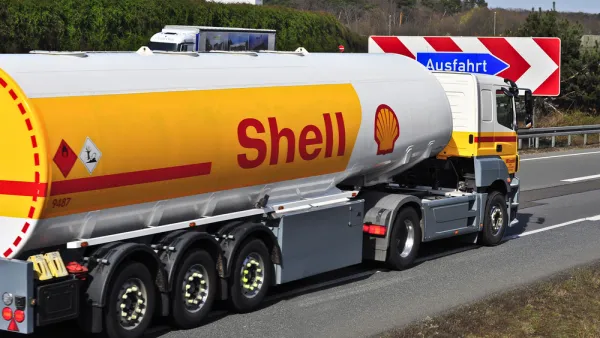
Royal Dutch Shell: Big Oil with a Conscience?
Big Oil companies are not all alike. Royal Dutch Shell is the first one to part ways with a major oil industry trade group over differences on climate change. It's also linking executive pay to goals to reduce the company's carbon footprint.
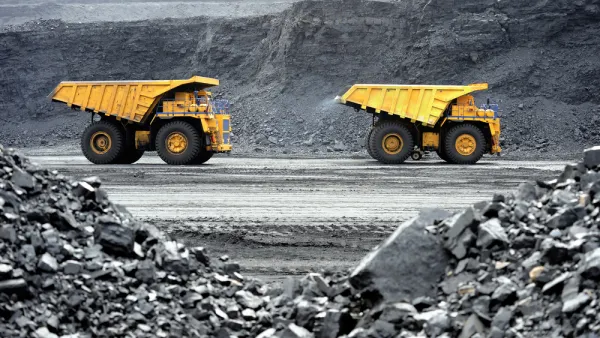
Global Coal Consumption Grows After Three Years of Decline
The rise is attributed to Asian nations, particularly India and China, where coal-power plants are newer than in the West. It shows a growing disconnect between energy and climate goals, warned the International Energy Agency.
Big Oil Wins Climate Change Lawsuits
The courts are no place to be deciding on the contribution of fossil fuels to climate change, ruled a Northern California federal district court judge in a "stinging defeat" to San Francisco and Oakland that wanted Big Oil to pay mitigation costs.

Planetizen Federal Action Tracker
A weekly monitor of how Trump’s orders and actions are impacting planners and planning in America.

The state-sanctioned urbicide of Austin
People don’t kill cities. Freeways do.

US to reduce Colorado River water deliveries to Mexico
A new Colorado Treaty amendment reduces Mexico’s Colorado River water allocation by 250,000 acre feet.

Mamdani overhauls NYC's Vision Zero plan with 100 new policy goals
The overhaul aims to reduce traffic deaths and make streets safer for pedestrians, cyclists and drivers through lower speed limits, new safety infrastructure and more.

Amtrak not solely to blame for New Jersey commuter rail's unreliability, report finds
A new study from the Garden State Initiative found that NJ Transit’s budget grew 20% across a 4 year period, but reliability declined significantly over the same period.

EPA erases limits on planet-warming pollution from power plants
Under Monday’s plan, power plants would still have some limits on how much mercury, arsenic and other contaminants they can emit.

FREE Course: Walkable City 1: Why Walkability?
After describing his path towards focusing on walkability as the essence of good planning, Jeff Speck marches through his five principal reasons for making more walkable places.
Reinventing Malls: Planning Alchemy—Turning Gray Fields Into Gold
The course focuses on the opportunities and imperatives that shape reinvention of mall sites.

Eagle County Government
Harvard University Graduate School of Design
Nashville Planning Department
The Architects Foundation
University of Cincinnati Online
The Pocatello Development Authority
The Urban Renewal Agency of the City of Pocatello
Journal of the American Planning Association