The World Resources Institute's Transformative Urban Mobility program has produced two new guides that succinctly describe why and how cities can implement transportation demand management policies and programs.


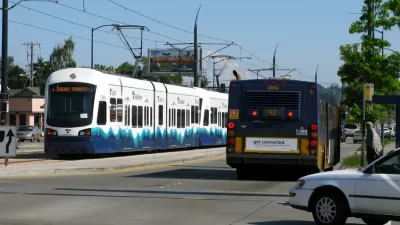
World Resources Institute's Transformative Urban Mobility program released two new guides that succinctly describe why and how cities can implement transportation demand management policies and programs.
Reducing Demand for Vehicle Trips in Cities
Many cities have realized they cannot build themselves out of traffic jams by adding new roads and parking lots. An alternative is managing the demand for urban trips (called travel demand management). An interesting subset of demand management is to require companies to devise flexible ways to change how their employees commute.
The Role of Companies in Improving Urban Mobility
This guide describes how a government authority can prepare a Trip Reduction Ordinance. It also describes the elements of a Workplace Travel Plan to meet the requirements of a Trip Reduction Ordinance.
These guides use examples from around the world, including Seattle, Washington, which by implementing commute trip reduction policies and improving transportation options reduced downtown automobile mode share from 35% to 25% in just seven years.
Well done World Resources Institute! Well done Seattle!
Read the full story: Reducing Demand for Vehicle Trips in Cities

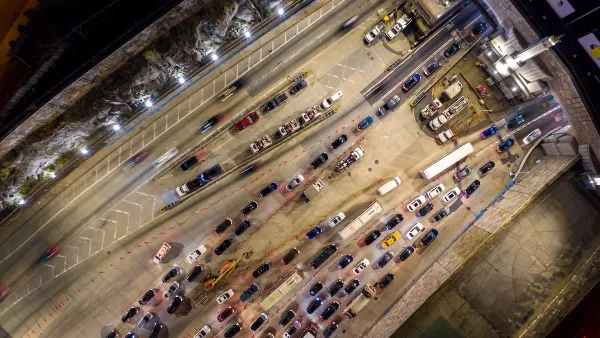
Congestion Pricing Lives
New York Governor Hochul revived the dormant NYC congestion plan with a $9 toll, likely securing its implementation before the incoming Trump administration.

The Risks of Self-Fulfilling Travel Forecasts
Transportation agencies continue to apply predict-and-provide planning which simply extrapolates past trends to predict future needs. It’s time to apply decide-and-provide planning to better achieve community goals.

When it Comes to Vehicle Travel, Less is More
Motor vehicle travel provides many benefits, but also imposes large costs on users and communities. With better planning people can drive less, rely more on non-auto modes, enjoy more access, and be better off overall as a result.

Planetizen Federal Action Tracker
A weekly monitor of how Trump’s orders and actions are impacting planners and planning in America.

The state-sanctioned urbicide of Austin
People don’t kill cities. Freeways do.

US to reduce Colorado River water deliveries to Mexico
A new Colorado Treaty amendment reduces Mexico’s Colorado River water allocation by 250,000 acre feet.

Nation's most wind-powered state turns to coal as data centers increase energy demand
For the first time in decades, Iowa has increased its generation of coal power.

NYC cools commuters with city's first rain garden above a bus stop
New York City officials say the plants in the rain garden can absorb 16 gallons of rainwater during heavy storms.

Brightline West’s future may rely on $6 billion federal loan
The company has until Nov. 2 to make a $400 million equity investment into its proposed high-speed rail line.

FREE Course: Walkable City 1: Why Walkability?
After describing his path towards focusing on walkability as the essence of good planning, Jeff Speck marches through his five principal reasons for making more walkable places.
Reinventing Malls: Planning Alchemy—Turning Gray Fields Into Gold
The course focuses on the opportunities and imperatives that shape reinvention of mall sites.

Eagle County Government
Harvard University Graduate School of Design
Nashville Planning Department
The Architects Foundation
University of Cincinnati Online
The Pocatello Development Authority
The Urban Renewal Agency of the City of Pocatello
Journal of the American Planning Association