The city says the increased fees that many people are seeing reflect a more equitable billing system, but residents argue the charges are unfair.



Detroit water and sewer bills have risen quickly since the city rolled out a new drainage fee structure last year. In the past, residents paid a flat rate, and businesses were supposed to be charged based on the size of their water pipes or the "impervious acreage"—the area on the property covered with materials that prevent the absorption of water. The result, reports Joel Kurth, was that rates varied considerably and owners of large parcels often had lower drainage bills.
Now property owners pay $598 per impervious acre, and many have seen their monthly bills increase dramatically. They say the fees are unfair, particularly in a city with high tax rates and poverty levels. Questions have also arisen about whether the new charges are a fee or a tax. A tax, residents say, would require voter approval under Michigan state law.
"Detroit officials say the rates are fair, lowering fees for 56 percent of all residents and equitably spreading the cost of treating wastewater," says Kurth. But the city has also spent $1 billion in recent years to update its wastewater treatment facilities. The projected $150 million a year the new drain fees will bring in will help the city repay these infrastructure costs.
Read the full story: Detroit is billing residents for rain. It’s going as well as you’d think.

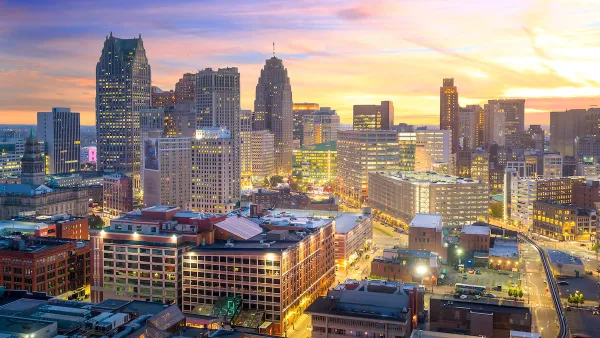
Detroit and Michigan on the Upswing
It's been 66 years since the Motor City last grew its population. Census data released last month revealed an increase of nearly 2,000 people last year, nearly half the state's population growth.
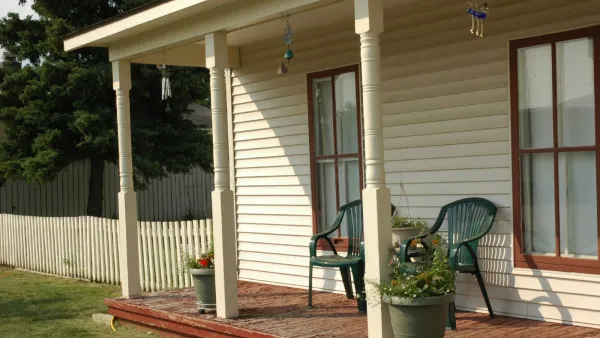
The Front Porch: A Space of Deep Meaning for African-Americans
Much more than just an extension of a house, the porch has long been a place of safety, intimacy, and communality.
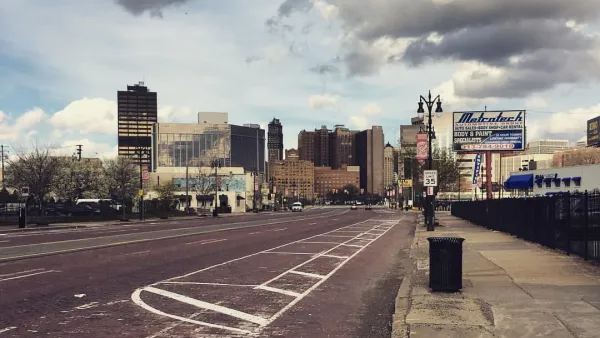
Big Redevelopment Plan for Detroit Neighborhood, But Little Progress
The Detroit project was slated to become a massive sports and entertainment district. After five years, little has changed.

Planetizen Federal Action Tracker
A weekly monitor of how Trump’s orders and actions are impacting planners and planning in America.

California plans to bury El Niño’s downpour
If the state plays its cards right, it may be able to store a billion acre-feet of El Niño’s water in aquifers.

Chicago breaks ground on $3 billion megadevelopment
The new neighborhood, titled Foundry Park, will one day host 3,700 residences.

Satanic place names
From streams and lakes to valleys and canyons, I mapped more than 1,000 places named after the Devil.

California High-Speed Rail Authority CEO resigns after $600,000 scandal
Under Ian Choudri, the authority used taxpayer dollars to fund first class flights and trips to nightclubs.

Want to study the Missouri River? Soon, you may need unanimous approval from 10 states
Legislation would require 10 governors’ permission to study or build projects moving water outside the basin.

FREE Course: Walkable City 1: Why Walkability?
After describing his path towards focusing on walkability as the essence of good planning, Jeff Speck marches through his five principal reasons for making more walkable places.
Reinventing Malls: Planning Alchemy—Turning Gray Fields Into Gold
The course focuses on the opportunities and imperatives that shape reinvention of mall sites.

City of Rosemead
Rutgers University, Edward J. Bloustein School of Planning and Public Policy
One Hundred Miles
Hunter College, City University of New York (CUNY)
The Architects Foundation
University of Cincinnati Online
City of Cambridge
Montrose County
The Pocatello Development Authority