The agency’s director wants to change the city’s transportation priorities and provide more mobility options to residents.


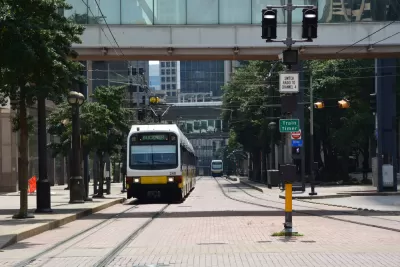
Dallas established a Department of Transportation just last year, and Michael Rogers, the city’s new transportation director, envisions a more connected city less focused on cars. Rogers is taking steps to bring comprehensive transportation planning and multimodal networks to Dallas. In addition, he is behind the use of data analytics that brought electric scooters to the city and have helped guide pedestrian safety projects.
Emily Nonko reports that Rogers has also taken on the Texas Department of Transportation by challenging plans to widen Interstate 30 East, a move that city leaders described as "radical":
He pushed back, offering his own "guiding principles" for the redesign. They included better connections for cyclists and pedestrians, no highway expansion in height or width, and bringing the elevated portion of the road below grade to reconnect neighborhoods that have been torn apart by infrastructure development.
Rogers has plans to continue a shift away from a singular focus on road projects, develop a strategic mobility plan, and make public input an integral part of the planning process.
Still, Nonko points out that Dallas faces a long road and many hurdles in improving the region’s transportation system, particularly around transit. "A big criticism of Dallas Area Rapid Transit’s sprawling rail system: While the largest in the country, it’s inefficient and doesn’t effectively serve many dense neighborhoods."
Read the full story: Dallas DOT Is Making Plans for a Better-Connected City

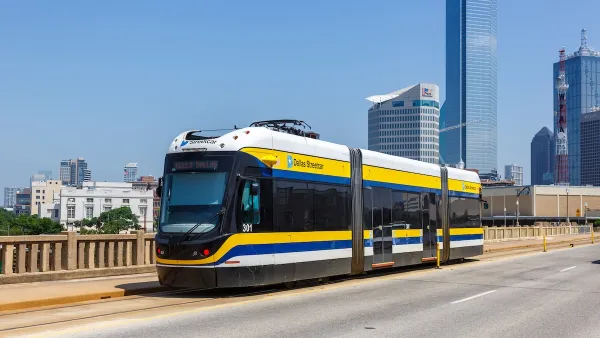
Dallas, Suburbs Clash Over DART Funding
The city voted to ‘fully fund’ its rapid transit system, but northern suburbs are moving to reduce funding.
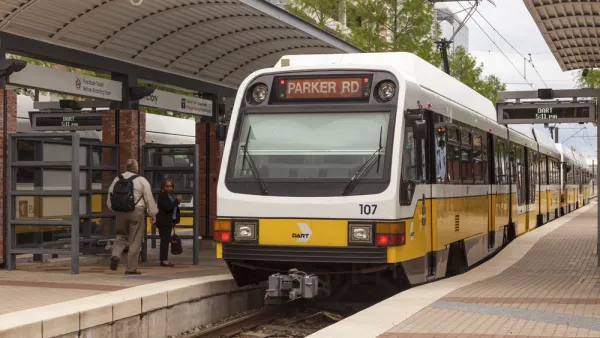
Dallas Council Begrudgingly Keeps Downtown Streetcar Alive
Council members complain that the Oak Cliff Streetcar is a "vanity project" that drains money from other potential transit improvements.
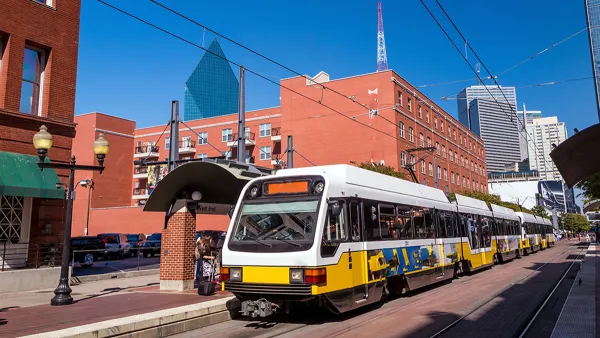
The Right Planning Consultant Could Make All of the Difference
Between DART service optimization and deciding the fate of I-345, Dallas has big of decisions to make. The right consultant, who understands accurate framing of planning issues, could help choose a route that best serves Dallasites.

Planetizen Federal Action Tracker
A weekly monitor of how Trump’s orders and actions are impacting planners and planning in America.

California plans to bury El Niño’s downpour
If the state plays its cards right, it may be able to store a billion acre-feet of El Niño’s water in aquifers.

Desperate measures: Advocates weigh draining Lake Powell to fill Colorado River
Draining the reservoir could reduce evaporation losses by a couple hundred thousand acre-feet.

California city breaks ground on transit connector
The project includes three mobility hubs and a pedestrian bridge.

After public outcry, Massachusetts city releases housing development tracker
Cambridge’s tracker currently shows 250 housing projects in various stages of development.

40 years after approval, Chicago breaks ground on new park
The park honors Jean Baptiste Point du Sable, the city’s first permanent non-native settler.

FREE Course: Walkable City 1: Why Walkability?
After describing his path towards focusing on walkability as the essence of good planning, Jeff Speck marches through his five principal reasons for making more walkable places.
Reinventing Malls: Planning Alchemy—Turning Gray Fields Into Gold
The course focuses on the opportunities and imperatives that shape reinvention of mall sites.

City of Rosemead
Rutgers University, Edward J. Bloustein School of Planning and Public Policy
One Hundred Miles
Hunter College, City University of New York (CUNY)
The Architects Foundation
University of Cincinnati Online
City of Cambridge
Montrose County
The Pocatello Development Authority