Toledo, Ohio held a special election for voters to decide on the Lake Erie Bill of Rights.


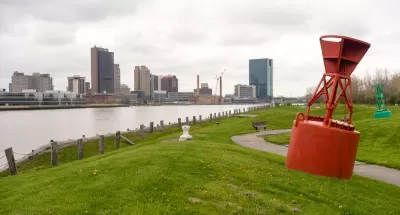
As Planetizen previewed late last week, voters considered the Lake Erie Bill of Rights this week, which proposed the legal status of personhood for the environmentally troubled lake.
Voters overwhelmingly approved the idea, according to an article by Tom Henry: "In a special election that drew only about 9 percent of Toledo’s registered voters to the polls, the citizen-led Lake Erie Bill of Rights referendum passed by a 61-39 margin on Tuesday night, according to unofficial election results."
"Toledo represents only a fraction of the entire Lake Erie basin, but it lies along the heart of the western Lake Erie shoreline — the most ecologically fragile and most biologically dynamic part of the Great Lakes basin because of its shallowness and relative warmth. Just outside the Toledo area lies some of North America’s top fishing and birding opportunities," explains Henry of the city of Toledo's stake in the debate.
The approval of the Lake Erie Bill of Rights doesn't entirely resolve the issue, however. "Now, it’s up to lawyers to sort out what the citizenry’s impassioned plea for the lake really means in practice — that is, if it will be more of a symbolic gesture or, as its supporters claim, a new approach to planning and enforcement that will hold more polluters accountable," according to Henry.
An article published by WTVG proves that point, reporting that the Drewes Family Farm in Custar filed the first lawsuit against the Lake Erie Bill of Right in U.S. District Court. "The suit says the Lake Erie Bill of Rights puts the Drewes Family at risk of massive liability if any fertilizer runoff enters the Lake Erie watershed," according to the article.
Additional commentary and insight into the Lake Erie Bill of Rights is available in an article on Vox by Sigal Samuel. The article includes a lot of historical background on the evolving legal question of the rights of nature. Samuel also speculates on the potential effectiveness of this strategy.
Read the full story: Lake Erie Bill of Rights gets approval from Toledo voters

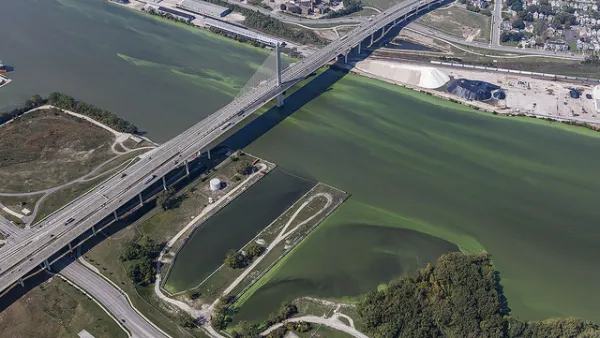
Voters to Decide the Legal Status of Lake Erie
Voters in Toledo, Ohio could grant personhood status to the polluted and abused Lake Erie.
Great Lakes Leaders Call for Drinking Water Protections
In light of August's drinking water catastrophe in Toledo, Ohio, Great Lakes mayors gathered this week to call for policy action to protect water resources round the Great Lakes.
EPA Awards $267 Million to Clean Up and Reuse Contaminated Sites
The EPA is investing the funds to clean up and redevelop contaminated sites nationwide, supporting economic growth, community revitalization, and environmental restoration.

Planetizen Federal Action Tracker
A weekly monitor of how Trump’s orders and actions are impacting planners and planning in America.

The state-sanctioned urbicide of Austin
People don’t kill cities. Freeways do.

US to reduce Colorado River water deliveries to Mexico
A new Colorado Treaty amendment reduces Mexico’s Colorado River water allocation by 250,000 acre feet.

Nation's most wind-powered state turns to coal as data centers increase energy demand
For the first time in decades, Iowa has increased its generation of coal power.

NYC cools commuters with city's first rain garden above a bus stop
New York City officials say the plants in the rain garden can absorb 16 gallons of rainwater during heavy storms.

Brightline West’s future may rely on $6 billion federal loan
The company has until Nov. 2 to make a $400 million equity investment into its proposed high-speed rail line.

FREE Course: Walkable City 1: Why Walkability?
After describing his path towards focusing on walkability as the essence of good planning, Jeff Speck marches through his five principal reasons for making more walkable places.
Reinventing Malls: Planning Alchemy—Turning Gray Fields Into Gold
The course focuses on the opportunities and imperatives that shape reinvention of mall sites.

Greater Baltimore Committee
Eagle County Government
Harvard University Graduate School of Design
The Architects Foundation
University of Cincinnati Online
The Pocatello Development Authority
The Urban Renewal Agency of the City of Pocatello
Journal of the American Planning Association