For all the money pouring into autonomous vehicle technology, the public is still relatively unconvinced about the viability of the technology.


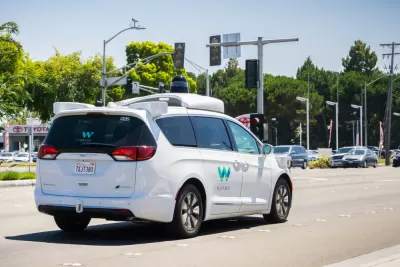
"Deloitte recently released its 2019 Global Automotive Consumer Study, which found consumer trust in autonomous vehicles (AV) is lagging behind the automotive industry's pace of investment in and development of the technology," according to an article by Kristin Musulin.
"The study, which surveyed more than 25,000 respondents across 20 countries, found that 50% of U.S. respondents — more or less on par with last year's 47% — do not believe AVs will be safe, with similar unwavering sentiments felt among consumers in China, Japan, South Korea, India and Germany," adds Musulin.
The report shows consumer opinion of autonomous vehicles not budging much since 2018, but trust is down significantly from 2017. The study also found increasing rates of adoption of ride-hailing technology, echoing the findings of a recent survey by the Pew Research Center.
Read the full story: Deloitte: AV investment, development is outpacing consumer demand
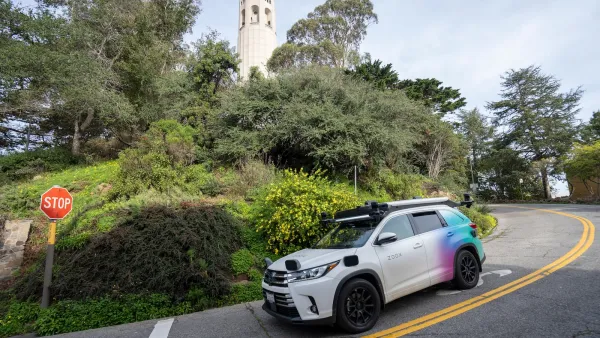
Feds want to make brake pedals optional in AVs
A proposed rule change would no longer require carmakers to include manual brake pedals or steering wheels in fully self-driving cars.
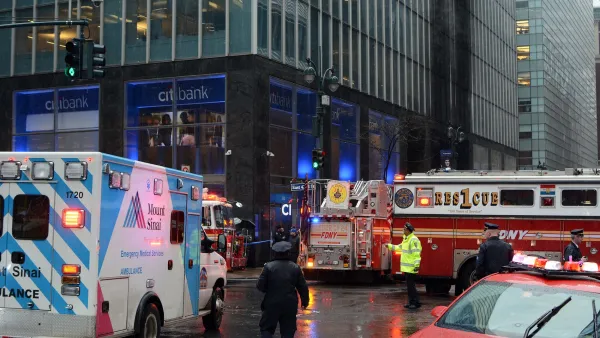
Waymo's troubles with emergency vehicles are getting worse
In one case, first responders waited 53 minutes to reach a Waymo support representative during an emergency.
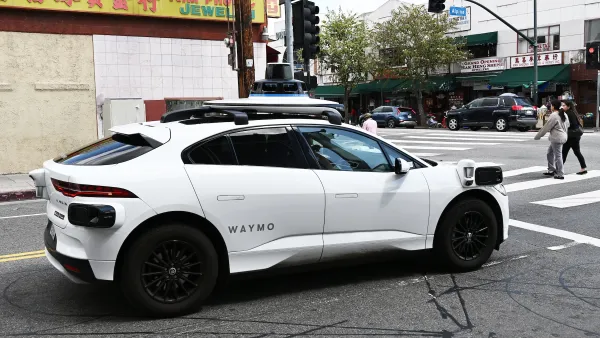
California cops will start ticketing robotaxis
The California DMV issued new guidance that allows law enforcement to give autonomous cars a "notice of noncompliance" when they break traffic laws.

Planetizen Federal Action Tracker
A weekly monitor of how Trump’s orders and actions are impacting planners and planning in America.

California plans to bury El Niño’s downpour
If the state plays its cards right, it may be able to store a billion acre-feet of El Niño’s water in aquifers.

Desperate measures: Advocates weigh draining Lake Powell to fill Colorado River
Draining the reservoir could reduce evaporation losses by a couple hundred thousand acre-feet.

Los Angeles just elected an urban planner as its mayor
Transportation analysts are optimistic that Raman will be more aggressive in addressing transit issues than Bass.

Mamdani’s pied-à-terre tax survives legal challenge
A panel of judges found that the plaintiffs failed to demonstrate injury as a result of New York City's implementation of the tax.

Eastern Nebraska is running out of electricity
Data centers and electrification are straining eastern Nebraska’s grid, throttling economic development.

FREE Course: Walkable City 1: Why Walkability?
After describing his path towards focusing on walkability as the essence of good planning, Jeff Speck marches through his five principal reasons for making more walkable places.
Reinventing Malls: Planning Alchemy—Turning Gray Fields Into Gold
The course focuses on the opportunities and imperatives that shape reinvention of mall sites.

City of Rosemead
Rutgers University, Edward J. Bloustein School of Planning and Public Policy
One Hundred Miles
University of Michigan School for Environment and Sustainability (SEAS)
Hunter College, City University of New York (CUNY)
The Architects Foundation
City of Cambridge
Montrose County
The Pocatello Development Authority