The California DMV issued new guidance that allows law enforcement to give autonomous cars a "notice of noncompliance" when they break traffic laws.


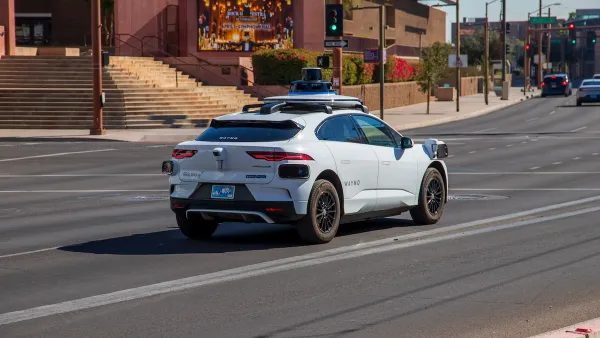
New rules from the California Department of Motor Vehicles will allow law enforcement to issue traffic tickets to robotaxis and autonomous cars starting on July 1, reports Stevie Bonifield in The Verge.
"The updated regulations come after years of viral traffic violations and multiple safety investigations involving robotaxis," Bonifield explains. Now, police officers can give AV manufacturers a "notice of noncompliance" when their cars commit a traffic violation.
The new rules also aim to prevent robotaxis from blocking emergency areas, requiring AV operators to answer calls from first responders within 30 seconds and allow emergency personnel to "issue electronic geofencing directives" to keep autonomous vehicles out.
According to Bonifield, "The new regulations also allow AV companies to test and deploy heavy-duty autonomous trucks and include 'licensing qualifications and permitting and training requirements for remote drivers and assistants.'"
Read the full story: Now California’s cops can give tickets to driverless cars


Waymo's troubles with emergency vehicles are getting worse
In one case, first responders waited 53 minutes to reach a Waymo support representative during an emergency.
What Happens When a Robotaxi Gets Pulled Over?
In Phoenix, a police officer who pulled over a Waymo driving in the wrong lane was “unable to issue citation to computer.”

New Jersey bill would require AVs to use 3 sensing technologies — banning Tesla's robotaxi fleet
Elon Musk has been 'largely alone' in his conviction that radar and lidar sensors are not necessary for the safe operation of autonomous cars.

Planetizen Federal Action Tracker
A weekly monitor of how Trump’s orders and actions are impacting planners and planning in America.

California plans to bury El Niño’s downpour
If the state plays its cards right, it may be able to store a billion acre-feet of El Niño’s water in aquifers.

Chicago breaks ground on $3 billion megadevelopment
The new neighborhood, titled Foundry Park, will one day host 3,700 residences.

California High-Speed Rail Authority CEO resigns after $600,000 scandal
Under Ian Choudri, the authority used taxpayer dollars to fund first class flights and trips to nightclubs.

Want to study the Missouri River? Soon, you may need unanimous approval from 10 states
Legislation would require 10 governors’ permission to study or build projects moving water outside the basin.

Desperate measures: Advocates weigh draining Lake Powell to fill Colorado River
Draining the reservoir could reduce evaporation losses by a couple hundred thousand acre-feet.

FREE Course: Walkable City 1: Why Walkability?
After describing his path towards focusing on walkability as the essence of good planning, Jeff Speck marches through his five principal reasons for making more walkable places.
Reinventing Malls: Planning Alchemy—Turning Gray Fields Into Gold
The course focuses on the opportunities and imperatives that shape reinvention of mall sites.

City of Rosemead
Rutgers University, Edward J. Bloustein School of Planning and Public Policy
One Hundred Miles
Hunter College, City University of New York (CUNY)
The Architects Foundation
University of Cincinnati Online
City of Cambridge
Montrose County
The Pocatello Development Authority