A proposed rule change would no longer require carmakers to include manual brake pedals or steering wheels in fully self-driving cars.


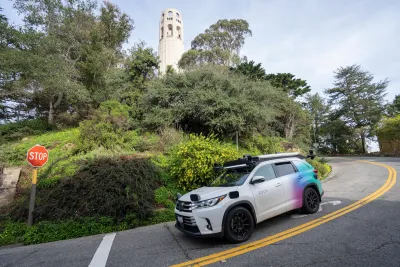
The National Highway Traffic Safety Administration is proposing eliminating the requirement for brake pedals in cars designed to be fully self-driving, marking a key milestone for the autonomous vehicle industry.
As Ece Yildirim explains in an article for Gizmodo, the agency's new AV Framework is designed to reduce barriers to AV adoption. "Under the current rules, all cars, no matter how autonomous they are designed to be, require hand or foot-operated manual brake controls. Autonomous vehicle makers can apply for an exemption from the restrictions, but each approved exemption would allow them to sell no more than 2,500 vehicles per year." If the rule change is approved, AVs would still have to meet stopping distance performance criteria but would not have to include a manual brake.
The change would be advantageous to carmakers like Tesla, who would no longer be constrained on how many vehicles without brake pedals, such as its Cybercab, that it could produce and sell. Amazon's Zoox robotaxi company asked the government for an exemption to operate vehicles without brake pedals or steering wheels, which has not been approved.
Read the full story: Trump Admin Wants to Make Brake Pedals Optional in Autonomous Vehicles

Waymo's troubles with emergency vehicles are getting worse
In one case, first responders waited 53 minutes to reach a Waymo support representative during an emergency.
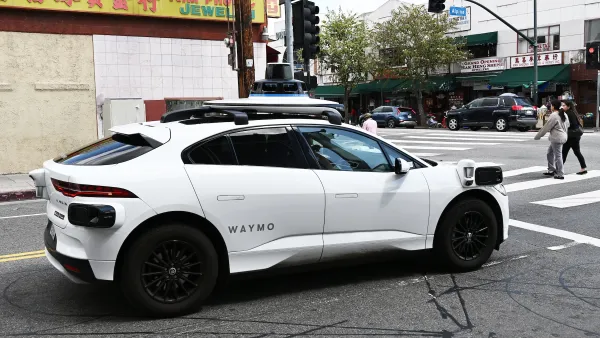
California cops will start ticketing robotaxis
The California DMV issued new guidance that allows law enforcement to give autonomous cars a "notice of noncompliance" when they break traffic laws.

Tesla 'completely' redacts robotaxi crash reports
Reports submitted to the NHTSA also reveal differences in the types of crashes Tesla cars are involved in as opposed to its competitors.

Desperate measures: Advocates weigh draining Lake Powell to fill Colorado River
Draining the reservoir could reduce evaporation losses by a couple hundred thousand acre-feet.

Eastern Nebraska is running out of electricity
Data centers and electrification are straining eastern Nebraska’s grid, throttling economic development.

Move over, LA: St. Louis gears up for Olympics, invests millions in downtown redevelopment
The Missouri city will host the 2028 Olympic soccer group stage and knockout matches.

Mass. votes against statewide minimum lot size for single-family homes
Over 2 million residents voted on Question 7; it was decided by just over 30,000 votes.

Maryland’s $15 billion bridge project gains key approval
The Maryland Transit Authority said the project will create over 60,000 jobs and add $23 billion to the local economy.

‘No clear next steps’ for Chicago's permanent festival grounds
Eleventh Ward Ald. Nicole Lee has suggested Soldier Field as a possible location for the permanent event space.

FREE Course: Walkable City 1: Why Walkability?
After describing his path towards focusing on walkability as the essence of good planning, Jeff Speck marches through his five principal reasons for making more walkable places.
Reinventing Malls: Planning Alchemy—Turning Gray Fields Into Gold
The course focuses on the opportunities and imperatives that shape reinvention of mall sites.

City of Rosemead
Rutgers University, Edward J. Bloustein School of Planning and Public Policy
One Hundred Miles
University of Michigan School for Environment and Sustainability (SEAS)
Hunter College, City University of New York (CUNY)
The Architects Foundation
City of Cambridge
Montrose County
The Pocatello Development Authority