A pilot project of cycle tracks on several streets in Toronto produced almost shockingly positive results for all users of the street. At very little cost, the new bike infrastructure increased total street capacity and improved safety.


A report by the city of Toronto to evaluate the performance of cycle tracks on Richmond Street and Adelaide Street, as well as north-south cycle tracks on Simcoe Street and Peter Street, recommends converting the temporary installations to permanent infrastructure facilities.
The report "tells a commuting story of roaring success that was accomplished with little fanfare and even less cost," according to an article by Edward Keenan. According to the report, 730 people biked on Richmond and Adelaide streets before the temporary cycle tracks were installed in 2014. In 2018, that number had increased to 7,509 people biking on the streets every day.
"The city also monitored bike traffic on nearby streets to see if the change was a result of people taking the new lanes instead of travelling on King or Queen Sts," adds Keenan. "It found the decreases in cycle traffic on those roads was minimal, 'suggesting that 94 per cent of the growth in the number of cyclists on Richmond-Adelaide was as a result of new cyclists, shifting their transportation choice from another mode.'"
One final piece of smashing success to note here: "In the downtown core area, the bike lanes now carry almost a third of the vehicles travelling the road during the peak of rush hour, 'a higher volume of vehicles per lane than the motor vehicle lanes.'"
Additional data on improved safety and a lack of impact on trip times for cars are included in the article.
FULL STORY: Bike lanes prove that transportation solutions can be cheap and effective

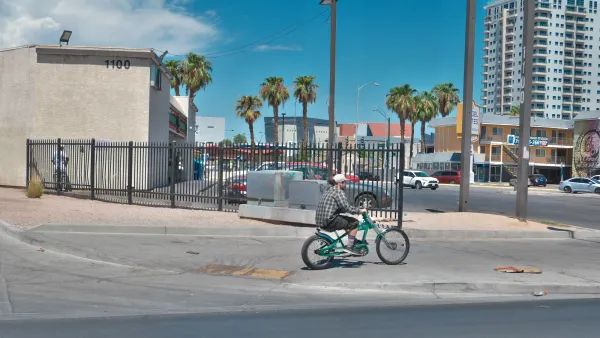
Las Vegas is building its first protected bike lane
The new lane connects Henderson and the Las Vegas Raiders headquarters via Starr Avenue.

Nashville installs concrete barriers to protect bike lanes
The new 'Toronto barriers' provide a physical buffer between cars and bike lanes.
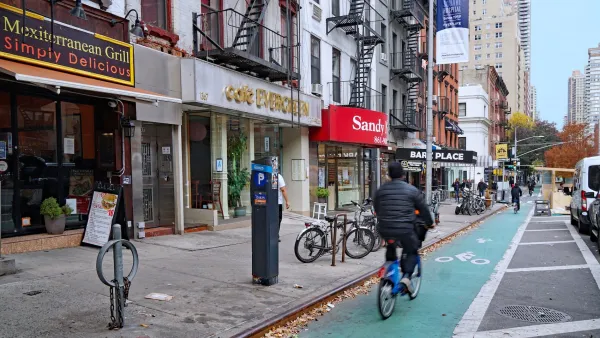
Study: Protected bike lanes increase Citi Bike rides by nearly 400 rides a month
An analysis of millions of NYC bike share rides reveals that only protected bike lanes have a 'statistically significant' increase in ridership.

Planetizen Federal Action Tracker
A weekly monitor of how Trump’s orders and actions are impacting planners and planning in America.

The state-sanctioned urbicide of Austin
People don’t kill cities. Freeways do.

US to reduce Colorado River water deliveries to Mexico
A new Colorado Treaty amendment reduces Mexico’s Colorado River water allocation by 250,000 acre feet.

5 New England states march closer to 800 megawatt wind energy project
Securing federal approval for the project may be complicated under the Trump administration, which has historically been hostile towards domestic wind power.

Baltimore to break ground on $50 million Transit Priority Project
The project will bring faster bus trips, safer streets and better bike connections to Baltimore.

Airbnb launches $250 million 'last-dollar financing' housing accelerator, makes first investment in Austin
The company will put $6.4 million towards affordable housing development in Texas’ capital.

FREE Course: Walkable City 1: Why Walkability?
After describing his path towards focusing on walkability as the essence of good planning, Jeff Speck marches through his five principal reasons for making more walkable places.
Reinventing Malls: Planning Alchemy—Turning Gray Fields Into Gold
The course focuses on the opportunities and imperatives that shape reinvention of mall sites.


Eagle County Government
Harvard University Graduate School of Design
Nashville Planning Department
The Architects Foundation
University of Cincinnati Online
The Pocatello Development Authority
The Urban Renewal Agency of the City of Pocatello
Journal of the American Planning Association