Machine learning has opened a new frontier in urban forest management.


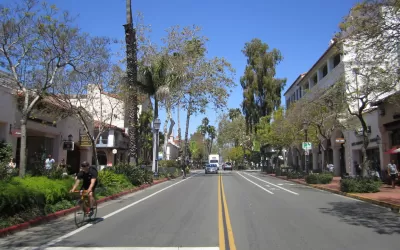
Linda Poon shares news of a new mapping effort enabled by artificial intelligence (AI) that measures the number of trees in cities.
Finding the answer to the question of how many trees are living in a city can be a monumental task, according to Poon. "New York City’s 2015-2016 tree census, for example, took nearly two years (12,000 hours total) and more than 2,200 volunteers. Seattle’s tree inventory won’t be complete until at least 2024."
Still, there are good reasons to count the trees too, according to Poon. "[I]n the short term, they allow cities to better maintain their urban trees. And over the long run, they lay out the foundation for various initiatives that address everything from climate change to public health."
That's where Descartes Labs comes in, with new technology that leverages AI to measure trees in urban settings. "In their quest to leave no tree uncounted, they built a machine learning model that can map an entire city’s canopy, even subtracting other greenery that might look like trees in satellite imagery," reports Poon.
The article includes a lot more about the results (including detailed maps) and the potential of the new tool.
FULL STORY: Every Tree in the City, Mapped

Branching Out: Building Health and Equity Through Community Forestry
Los Angeles County’s Community Forest Management Plan seeks to create a healthier, more equitable community forest by expanding tree coverage, engaging communities, and building resilience to climate impacts.

Dallas Considers a Major Revision to its Tree Ordinance
Neither environmentalists nor developers like the city’s current regulations around tree removal, but there is praise on both sides for the “smart and nimble” new version.
LA’s Tree Canopy is Nearing a ‘Point of Failure’
Calls to 311 for “tree emergencies” are rising, endangering a resource that helps bring down urban temperatures and reduce air pollution.

The state-sanctioned urbicide of Austin
People don’t kill cities. Freeways do.

US to reduce Colorado River water deliveries to Mexico
A new Colorado Treaty amendment reduces Mexico’s Colorado River water allocation by 250,000 acre feet.

New Jersey’s second-largest city bans standalone data centers
Jersey City will continue to allow co-location facilities, such as those meant for research institutions that store their own data.

Amtrak not solely to blame for New Jersey commuter rail's unreliability, report finds
A new study from the Garden State Initiative found that NJ Transit’s budget grew 20% across a 4 year period, but reliability declined significantly over the same period.

EPA erases limits on planet-warming pollution from power plants
Under Monday’s plan, power plants would still have some limits on how much mercury, arsenic and other contaminants they can emit.

Phoenix announces new on-demand transit service, more frequent RAPID buses
Both new services will launch in October, and are part of Phoenix's Project Effective Access Solutions for Easing Congestion.

FREE Course: Walkable City 1: Why Walkability?
After describing his path towards focusing on walkability as the essence of good planning, Jeff Speck marches through his five principal reasons for making more walkable places.
Reinventing Malls: Planning Alchemy—Turning Gray Fields Into Gold
The course focuses on the opportunities and imperatives that shape reinvention of mall sites.

Eagle County Government
Harvard University Graduate School of Design
Nashville Planning Department
The Architects Foundation
University of Cincinnati Online
The Pocatello Development Authority
The Urban Renewal Agency of the City of Pocatello
Journal of the American Planning Association