Much more than just an extension of a house, the porch has long been a place of safety, intimacy, and communality.


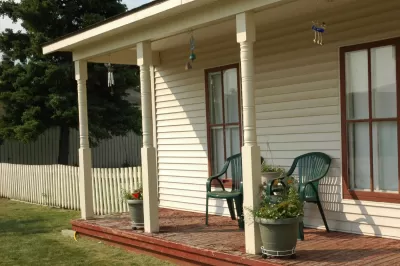
Front porches have played an integral role in African-American life, writes Audra D. S. Burch. "From the narrow shotgun homes of Atlanta to the dormer-windowed bungalows of Chicago, the front porch has served as a refuge from Jim Crow restrictions; a stage straddling the home and the street, a structural backdrop of meaningful life moments."
Burch highlights the work of architecture scholar Germane Barnes, who has explored the role of porches in communities across the country. In Detroit, Barnes collected stories from African-American residents about the front porch as a place for socializing, a symbol of economic prosperity, and the site of cultural and neighborhood empowerment.
The diverse experiences include the story of Shamayim Harris, who spent time on her front porch reflecting on the struggling neighborhood around her:
That was the quiet beginnings of what is now Avalon Village, a green development project birthed on Ms. Harris’s porch and inspired by her youngest son, Jakobi Ra, who died in a hit-and-run accident 11 years ago. The growing village, composed of 32 abandoned parcels, now includes solar-powered streetlights, a park, an educational center and a marketplace for women entrepreneurs.
Another profile describes how Cornetta Lane decided to reclaim the history and identity of her Detroit neighborhood, Core City, by organizing a bike event where participants stopped at porches to hear residents’ stories. "I never considered doing this without the porch," Ms. Lane said. "It is a natural place for convening. You sit on the porch and tell stories. Porches are built for storytelling."
FULL STORY: On the Front Porch, Black Life in Full View

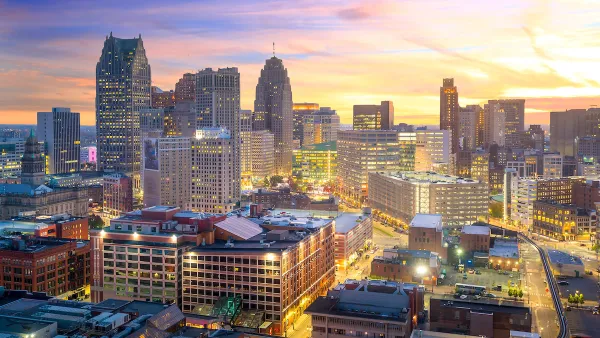
Detroit and Michigan on the Upswing
It's been 66 years since the Motor City last grew its population. Census data released last month revealed an increase of nearly 2,000 people last year, nearly half the state's population growth.
Detroit Drainage Fees Are Hitting Residents Hard
The city says the increased fees that many people are seeing reflect a more equitable billing system, but residents argue the charges are unfair.
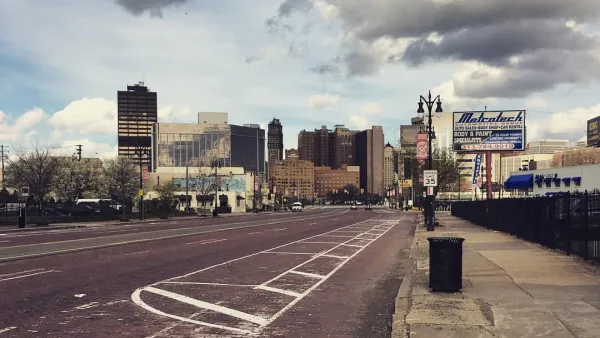
Big Redevelopment Plan for Detroit Neighborhood, But Little Progress
The Detroit project was slated to become a massive sports and entertainment district. After five years, little has changed.

The state-sanctioned urbicide of Austin
People don’t kill cities. Freeways do.

US to reduce Colorado River water deliveries to Mexico
A new Colorado Treaty amendment reduces Mexico’s Colorado River water allocation by 250,000 acre feet.

New Jersey’s second-largest city bans standalone data centers
Jersey City will continue to allow co-location facilities, such as those meant for research institutions that store their own data.

Amtrak not solely to blame for New Jersey commuter rail's unreliability, report finds
A new study from the Garden State Initiative found that NJ Transit’s budget grew 20% across a 4 year period, but reliability declined significantly over the same period.

EPA erases limits on planet-warming pollution from power plants
Under Monday’s plan, power plants would still have some limits on how much mercury, arsenic and other contaminants they can emit.

Phoenix announces new on-demand transit service, more frequent RAPID buses
Both new services will launch in October, and are part of Phoenix's Project Effective Access Solutions for Easing Congestion.

FREE Course: Walkable City 1: Why Walkability?
After describing his path towards focusing on walkability as the essence of good planning, Jeff Speck marches through his five principal reasons for making more walkable places.
Reinventing Malls: Planning Alchemy—Turning Gray Fields Into Gold
The course focuses on the opportunities and imperatives that shape reinvention of mall sites.

Eagle County Government
Harvard University Graduate School of Design
Nashville Planning Department
The Architects Foundation
University of Cincinnati Online
The Pocatello Development Authority
The Urban Renewal Agency of the City of Pocatello
Journal of the American Planning Association