The Mixed Signals report makes the case for Toronto to adopt a dedicated revenue source to pay for transit.


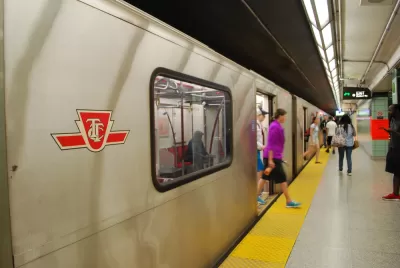
Ben Spurr shares news of a new report called Mixed Signals, authored by the non-profit transit advocacy group CodeRedTO, which finds that the city of Toronto's Toronto Transit Commission (TTC) system is "precariously funded, inefficiently governed and expensive to ride."
The TTC attracts more passengers than comparable networks in other North American cities, explains Spurr, but there are still reasons for concern.
The “most alarming finding,” according to the report, was the extent to which Toronto relies on fare revenue to pay for service.
In 2017, more than two-thirds of the TTC’s $1.8-billion operating budget came from fare revenue, “a level not seen in any other city in North America,” according to the report.
According to the report, relying on fare-generated revenue can lead to a "downward spiral that drives down the quality of service, and could be contributing to the trend of declining ridership on the network."
FULL STORY: Toronto has ‘alarming’ lack of transit funding compared to other cities, report finds

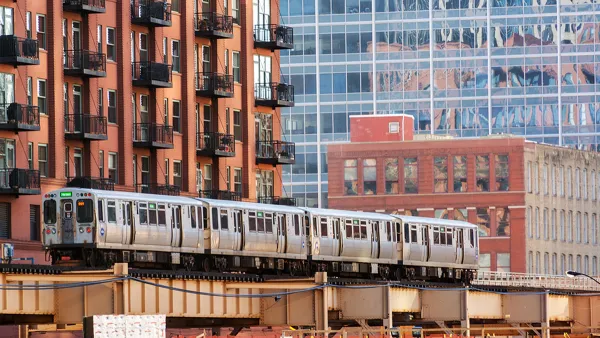
Advocating for Reduced Transit Fairs for Low-Income Riders in Chicago
A new report by the Active Transportation Alliance builds the case for reduced transit fares on all three transit systems in the Chicago region.
Opinion: Fare Evasion Is a Red Herring
The loss of revenue from fare evasion is a drop in the bucket compared to the fiscal cliff facing major U.S. transit agencies.
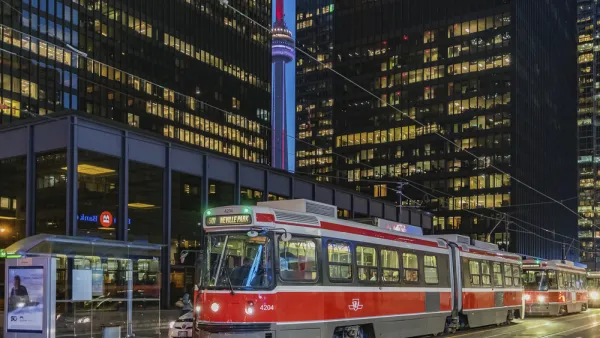
Cost Estimates Nearly Double for Toronto Light Rail Plan
Cost estimate for Toronto's proposed Eglinton East LRT have ballooned from $2.3 billion to as much as $4.4 billion.

Planetizen Federal Action Tracker
A weekly monitor of how Trump’s orders and actions are impacting planners and planning in America.

The state-sanctioned urbicide of Austin
People don’t kill cities. Freeways do.

US to reduce Colorado River water deliveries to Mexico
A new Colorado Treaty amendment reduces Mexico’s Colorado River water allocation by 250,000 acre feet.

LA Metro’s ultimatum: no extra buses for LA28 if federal funding isn’t imminently secured
If Metro does not provide additional buses, LA28 organizers will have to find a new way to manage Olympic traffic. LA28’s budget does not include a line item for transit.

Colorado’s Largest Data Center Could Rise Next to Homes — Without a Public Hearing
The proposed campus would consume 11 times the power of Denver International Airport; as it has across the country, opposition mounts.

5 New England states march closer to 800 megawatt wind energy project
Securing federal approval for the project may be complicated under the Trump administration, which has historically been hostile towards domestic wind power.

FREE Course: Walkable City 1: Why Walkability?
After describing his path towards focusing on walkability as the essence of good planning, Jeff Speck marches through his five principal reasons for making more walkable places.
Reinventing Malls: Planning Alchemy—Turning Gray Fields Into Gold
The course focuses on the opportunities and imperatives that shape reinvention of mall sites.

Eagle County Government
Harvard University Graduate School of Design
Nashville Planning Department
The Architects Foundation
University of Cincinnati Online
The Pocatello Development Authority
The Urban Renewal Agency of the City of Pocatello
Journal of the American Planning Association