The Detroit project was slated to become a massive sports and entertainment district. After five years, little has changed.



Tom Perkins reports on the current status of the District Detroit, a 50-block area near downtown that includes Little Caesar's Arena. Detroit's wealthy Ilitch family owns the arena along with many of the derelict properties in the area. In 2013, the family proposed a plan to turn the neighborhood around. "The Ilitches promised $200m in development around the arena, claiming new housing, stores, restaurants, bars and offices would bloom," says Perkins.
Even with a big tax break from the city, very little has happened in the last five years. "Instead of gaining luxury lofts, [the District Detroit] lost housing, and the Ilitches have only renovated a small fraction of the hundreds of properties its companies purchased here," according to Perkins.
Not only has the area failed to improve; in some ways its condition has deteriorated even more, says Perkins:
On blocks where historic buildings once stood, they have laid dozens of surface parking lots. Those are controversial because the Ilitches charge up to $50 per spot, and a vast stretch of once-dense downtown real estate is now a sea of Ilitch-owned parking spaces.
While the project did not draw upon the city's general fund, Perkins notes that the Detroit did give up substantial tax revenue from arena operations–what could have amounted to more than $336 million for the general fund.
Critics say the city cut a bad deal, with little oversight or accountability, implying that the lack of progress in the District Detroit is not necessarily a surprise. Residents and business owners are now skeptical after seeing little action, but they are still hoping improvements will come.
FULL STORY: Big promises for a thriving urban core in Detroit vanish in a swath of parking lots

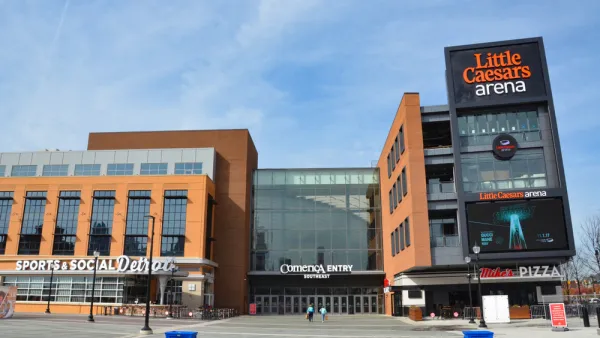
Little Caesars Arena as Catalytic Development
In exchange for generous public subsidies, Illitch Holdings, owner and developer of the Little Caesars Arena in Detroit, promised large-scale economic development.
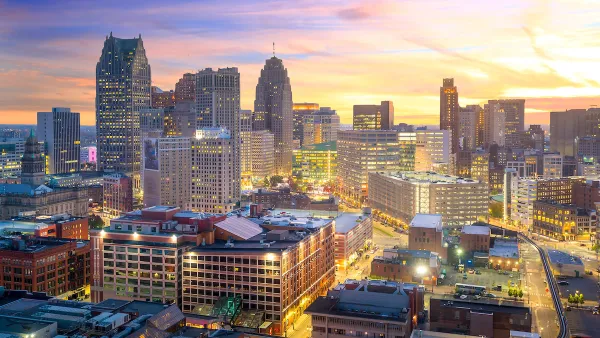
Detroit and Michigan on the Upswing
It's been 66 years since the Motor City last grew its population. Census data released last month revealed an increase of nearly 2,000 people last year, nearly half the state's population growth.
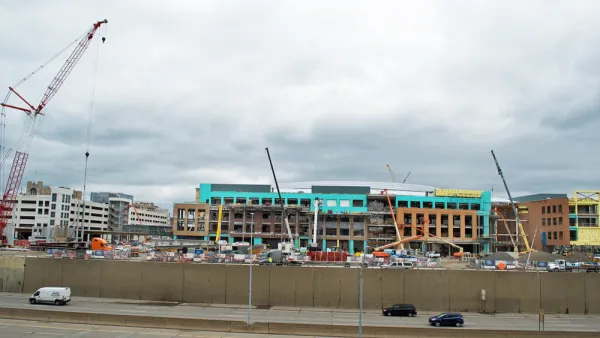
$616 Million in Development Incentives Approved for District Detroit
The “Transformational Brownfield” incentives approved by the Detroit City Council for the $1.5 billion District Detroit still require approval by the state.

The state-sanctioned urbicide of Austin
People don’t kill cities. Freeways do.

US to reduce Colorado River water deliveries to Mexico
A new Colorado Treaty amendment reduces Mexico’s Colorado River water allocation by 250,000 acre feet.

New Jersey’s second-largest city bans standalone data centers
Jersey City will continue to allow co-location facilities, such as those meant for research institutions that store their own data.

Amtrak not solely to blame for New Jersey commuter rail's unreliability, report finds
A new study from the Garden State Initiative found that NJ Transit’s budget grew 20% across a 4 year period, but reliability declined significantly over the same period.

EPA erases limits on planet-warming pollution from power plants
Under Monday’s plan, power plants would still have some limits on how much mercury, arsenic and other contaminants they can emit.

Phoenix announces new on-demand transit service, more frequent RAPID buses
Both new services will launch in October, and are part of Phoenix's Project Effective Access Solutions for Easing Congestion.

FREE Course: Walkable City 1: Why Walkability?
After describing his path towards focusing on walkability as the essence of good planning, Jeff Speck marches through his five principal reasons for making more walkable places.
Reinventing Malls: Planning Alchemy—Turning Gray Fields Into Gold
The course focuses on the opportunities and imperatives that shape reinvention of mall sites.

Eagle County Government
Harvard University Graduate School of Design
Nashville Planning Department
The Architects Foundation
University of Cincinnati Online
The Pocatello Development Authority
The Urban Renewal Agency of the City of Pocatello
Journal of the American Planning Association