The St. Petersburg Bus Rapid Transit is waiting for funding promised by Congress but yet to be paid out by the Federal Transit Administration.


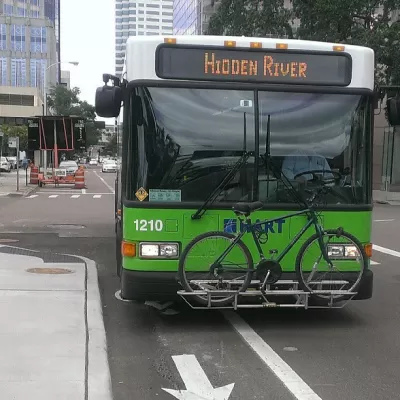
A downtown St. Petersburg Bus Rapid Transit project may be in trouble if it doesn't get the money the federal government promised it soon. The plan was praised for being practical and cost effective, part of why it succeeded where other projects in the area failed. "The project aimed at connecting downtown to the beaches has avoided anti-transit sentiment while securing money and support from local and state sources," Caitlin Johnston reports for Tampa Bay Times. Now, because the Trump administration has been slow to distribute the money Congress appropriated, the project is on less sure footing.
Even with local and state funds, the service will not be able to begin operation without federal dollars.
Despite earning a medium-high grade from the Federal Transit Authority (a mark well above the scores of past Tampa transit projects), the work remains unfunded. "That concerns supporters of the Central Avenue bus project, which would add dedicated lanes for buses to about seven miles of First Avenue N and S to link the Pinellas beaches to downtown St. Petersburg," writes Johnston.
FULL STORY: Could Trump starve a Tampa Bay transit project of federal funds?


Experts Reject Florida Study That Killed St. Pete Bus Lane as ‘Incomplete,’ ‘Unfair’
A transit activist has filed a suit against FDOT, which used a a one-page study to justify removing a dedicated bus lane.
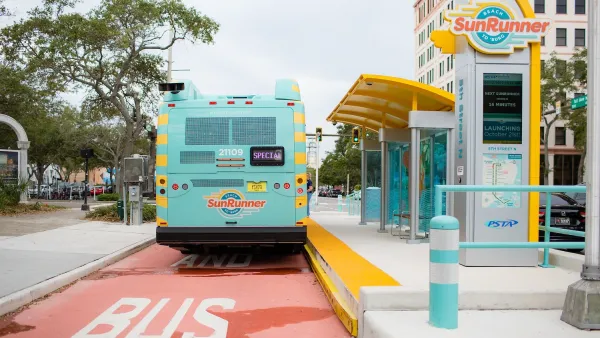
Lawsuit Claims Florida Bus Lane Removal was Illegal
The state cites an increase in crashes and congestion as reasons for eliminating a dedicated bus lane on the SunRunner BRT line, but city data tells a different story.
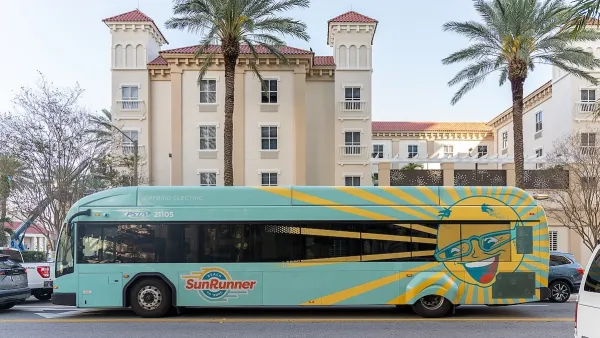
Florida DOT Orders Removal of St. Pete Bus Lane
The state says a popular BRT line has increased crashes and traffic on a state-owned portion of its corridor, prompting it to call for its reversal.

Planetizen Federal Action Tracker
A weekly monitor of how Trump’s orders and actions are impacting planners and planning in America.

The state-sanctioned urbicide of Austin
People don’t kill cities. Freeways do.

US to reduce Colorado River water deliveries to Mexico
A new Colorado Treaty amendment reduces Mexico’s Colorado River water allocation by 250,000 acre feet.

Mamdani overhauls NYC's Vision Zero plan with 100 new policy goals
The overhaul aims to reduce traffic deaths and make streets safer for pedestrians, cyclists and drivers through lower speed limits, new safety infrastructure and more.

Amtrak not solely to blame for New Jersey commuter rail's unreliability, report finds
A new study from the Garden State Initiative found that NJ Transit’s budget grew 20% across a 4 year period, but reliability declined significantly over the same period.

EPA erases limits on planet-warming pollution from power plants
Under Monday’s plan, power plants would still have some limits on how much mercury, arsenic and other contaminants they can emit.

FREE Course: Walkable City 1: Why Walkability?
After describing his path towards focusing on walkability as the essence of good planning, Jeff Speck marches through his five principal reasons for making more walkable places.
Reinventing Malls: Planning Alchemy—Turning Gray Fields Into Gold
The course focuses on the opportunities and imperatives that shape reinvention of mall sites.

Eagle County Government
Harvard University Graduate School of Design
Nashville Planning Department
The Architects Foundation
University of Cincinnati Online
The Pocatello Development Authority
The Urban Renewal Agency of the City of Pocatello
Journal of the American Planning Association