Electric buses have arrived. Portland is only the latest example.


"TriMet has a nearly $500 million plan to phase out its diesel buses [pdf] - significant emitters of carbon into the atmosphere -- while buying a new fleet of electric vehicles over the next 22 years," reports Andrew Theen.
The plan is made all the more ambitious by the fact that the agency currently has zero electric buses operating its fleet.
He benefit will be realized in the environment, according to Theen. "TriMet uses about 6 million gallons of diesel fuel every year, emitting about 57,000 metric tons of carbon dioxide into the region's air, according to its analysis. Diesel vehicles are a large contributor to carbon emissions, and freight traffic, school buses and other diesel-based industries also emit deadly exhaust in Portland's air."
TriMet isn't the only transit agency adding electric buses to its fleet. According to Theen, 38 transit agencies in the United States "have a battery electric bus in hand already or have ordered one," and China already has 400,000 electric buses. Accordign to a report by Bloomberg New Energy Finance and released in May, the world's bus transit systems will be 80 percent electric by 2040.
FULL STORY: TriMet debuts $500 million plan to ditch diesel buses, go electric

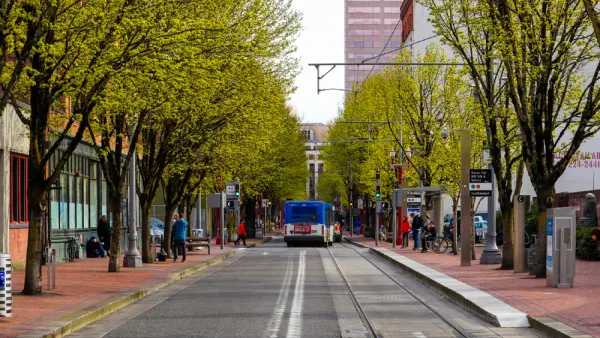
New Portland Transit Budget Targets Driver Shortage, Express Service
The Tri-County Metropolitan Transportation District of Oregon plans to restore pre-pandemic service, expand its light rail lines, and move toward an all-electric bus fleet.
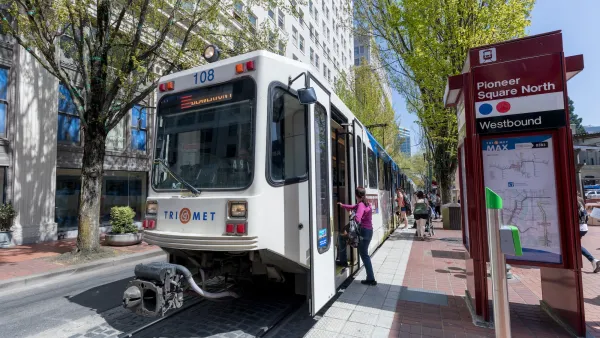
TriMet will eliminate 'Hand-to-Hand' paratransit service for half of its users
Roughly 300 Portland-area paratransit riders will lose access to a program that lets drivers escort them into their destination.
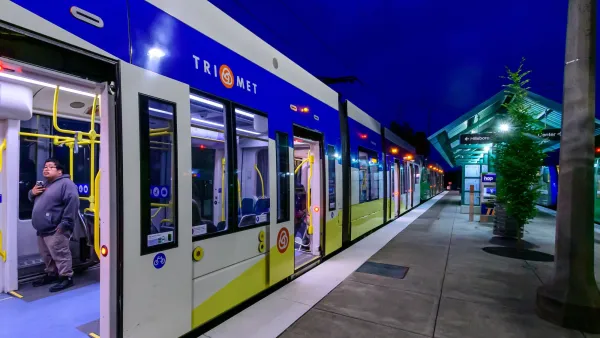
Portland transit announces deep service cuts, hundreds of layoffs
The TriMet agency is cutting service on multiple transit lines, reducing customer service phone hours and eliminating over 100 staff positions.

The state-sanctioned urbicide of Austin
People don’t kill cities. Freeways do.

US to reduce Colorado River water deliveries to Mexico
A new Colorado Treaty amendment reduces Mexico’s Colorado River water allocation by 250,000 acre feet.

New Jersey’s second-largest city bans standalone data centers
Jersey City will continue to allow co-location facilities, such as those meant for research institutions that store their own data.

Amtrak not solely to blame for New Jersey commuter rail's unreliability, report finds
A new study from the Garden State Initiative found that NJ Transit’s budget grew 20% across a 4 year period, but reliability declined significantly over the same period.

EPA erases limits on planet-warming pollution from power plants
Under Monday’s plan, power plants would still have some limits on how much mercury, arsenic and other contaminants they can emit.

Phoenix announces new on-demand transit service, more frequent RAPID buses
Both new services will launch in October, and are part of Phoenix's Project Effective Access Solutions for Easing Congestion.

FREE Course: Walkable City 1: Why Walkability?
After describing his path towards focusing on walkability as the essence of good planning, Jeff Speck marches through his five principal reasons for making more walkable places.
Reinventing Malls: Planning Alchemy—Turning Gray Fields Into Gold
The course focuses on the opportunities and imperatives that shape reinvention of mall sites.

Eagle County Government
Harvard University Graduate School of Design
Nashville Planning Department
The Architects Foundation
University of Cincinnati Online
The Pocatello Development Authority
The Urban Renewal Agency of the City of Pocatello
Journal of the American Planning Association