Put another way: Which cities will be more attractive to in-migration once the effects of climate change become more obvious.



Aria Bendix shares the results of an un-scientific survey of climate scientists that asked where Americans should consider moving in the future, given the likely impacts of climate change.
In fact, writes Bendix, "climate change may already be impacting where Americans choose to move. A recent study found that American homes that are vulnerable to rising sea levels sell for around 7% less than similar unexposed properties — even though the damage could be decades away."
Bendix surveyed 11 climatologists for their opinions on the places in the United States least vulnerable to disaster. Making the list, with more insight provided in the article, are Tulsa, Boulder, San Diego, Minneapolis-St. Paul, Sacramento, Charlotte, Portland (Oregon), and Pittsburgh. To contrast those relatively insulated locations, the list also includes "Anywhere but Hawaii."
Read the full story: We asked 11 climate scientists where they'd live in the US to avoid future natural disasters — here’s what they said

Sea Level Rise is Drowning This Pacific Island Nation; They Have a Plan
The nation of Tuvalu has created an ambitious plan to relocate its entire population and preserve key cultural and historic resources as rising seas threaten to wipe it out within three decades.
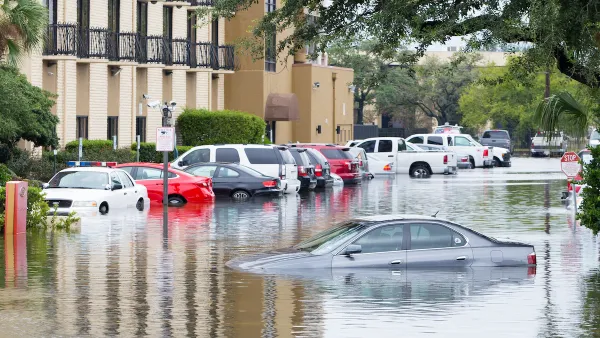
Migration to Disaster-Prone Areas Persists
Regions at high risk for flooding, wildfires, and other climate-fueled disasters continue to see rapid population growth.
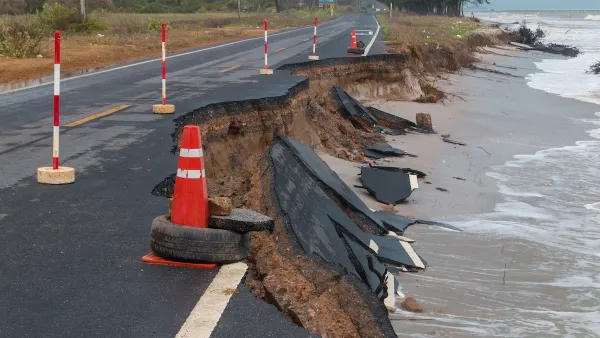
We Must Relocate to Prepare for Climate Change, and We Must Do it Now
As flooding, sea level rise, fires, and other climate impacts increase, we’ll need to move about 20 million Americans by 2100. Here’s how we can rethink managed retreat to get ahead of the rising tides.

Planetizen Federal Action Tracker
A weekly monitor of how Trump’s orders and actions are impacting planners and planning in America.

Eastern Nebraska is running out of electricity
Data centers and electrification are straining eastern Nebraska’s grid, throttling economic development.

Move over, LA: St. Louis gears up for Olympics, invests millions in downtown redevelopment
The Missouri city will host the 2028 Olympic soccer group stage and knockout matches.

Dallas releases zoning code overhaul to officials
The drafted overhaul is over 400 pages long.

NYC renovations for dangerous, ‘mercilessly crammed’ street delayed until 2027
Construction was supposed to begin this fall.

San Diego’s Midway Rising project gets greenlight from city council
The project looks to become the largest affordable housing development in California's history.

FREE Course: Walkable City 1: Why Walkability?
After describing his path towards focusing on walkability as the essence of good planning, Jeff Speck marches through his five principal reasons for making more walkable places.
Reinventing Malls: Planning Alchemy—Turning Gray Fields Into Gold
The course focuses on the opportunities and imperatives that shape reinvention of mall sites.

City of Rosemead
Rutgers University, Edward J. Bloustein School of Planning and Public Policy
One Hundred Miles
University of Michigan School for Environment and Sustainability (SEAS)
Hunter College, City University of New York (CUNY)
The Architects Foundation
City of Cambridge
The Pocatello Development Authority
The Urban Renewal Agency of the City of Pocatello