Residents in parts of Raleigh would be allowed to build accessory dwelling units (ADUs) on their property, if a majority of their neighbors approve the idea.


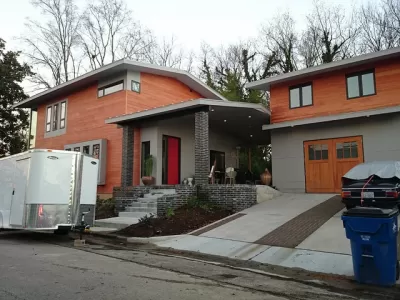
"Backyard cottages have cleared a critical hurdle to being approved within Raleigh city limits, but some worry that the proposed rules will be too taxing for most people," reports Anna Johnson.
"The regulations, which were recommended by a Raleigh City Council committee Wednesday afternoon, would require your neighbors to vote on whether you should be allowed to build a backyard cottage," according to Johnson.
The city's new regulations would create a special district where ADUs would be allowed to seek approval from neighbors. The regulations also lay out other zoning and development considerations. The regulations are still several months away from final approval, however.
While there's still time to refine the rules, Philip G. Freelon and Michael Stevenson, architects at Perkins+Will, penned an opinion piece calling a less restrictive approach to ADUs. By severely restricting the ability of homeowners to permit and build ADUs, "[the] zoning policy harkens back to the era when discriminatory planning and zoning was purposefully and effectively used as a means to segregate neighborhoods by race, class and income," according to Freelon and Stevenson.
FULL STORY: After months of scrutiny, backyard cottages take a big step toward approval in Raleigh

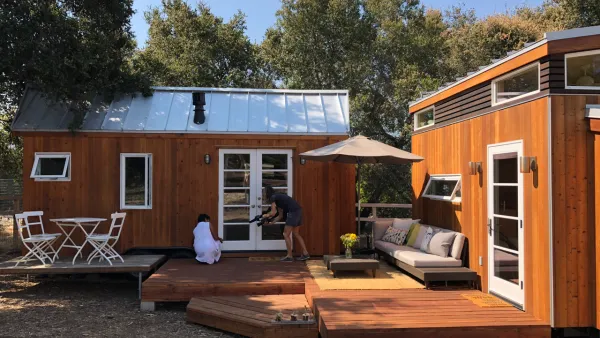
An Online Portal for Designing Accessory Dwelling Units
The ADUniverse website offers pre-approved designs for homeowners who want to add Accessory Dwelling Units on properties in Seattle.

What do the Gilmore Girls, Happy Days, and Full House have in common? ADUs.
American sitcoms are full of garage apartments, attic rooms, and pool houses. Why aren't our cities?
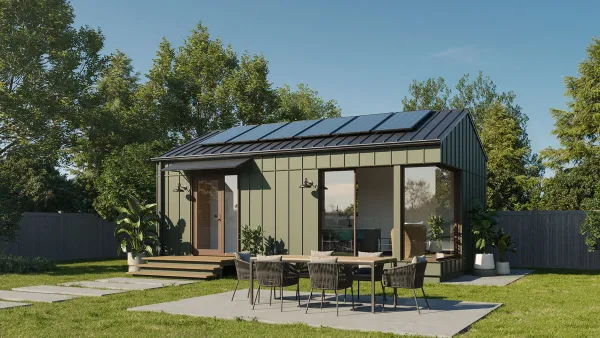
NYC’s ‘ADU for You’ Initiative Offers Pre-approved Plans and Financing Tools
The project pairs pre-approved plans with financing and other tools to help more homeowners build accessory units.

The state-sanctioned urbicide of Austin
People don’t kill cities. Freeways do.

US to reduce Colorado River water deliveries to Mexico
A new Colorado Treaty amendment reduces Mexico’s Colorado River water allocation by 250,000 acre feet.

New Jersey’s second-largest city bans standalone data centers
Jersey City will continue to allow co-location facilities, such as those meant for research institutions that store their own data.

Amtrak not solely to blame for New Jersey commuter rail's unreliability, report finds
A new study from the Garden State Initiative found that NJ Transit’s budget grew 20% across a 4 year period, but reliability declined significantly over the same period.

EPA erases limits on planet-warming pollution from power plants
Under Monday’s plan, power plants would still have some limits on how much mercury, arsenic and other contaminants they can emit.

Phoenix announces new on-demand transit service, more frequent RAPID buses
Both new services will launch in October, and are part of Phoenix's Project Effective Access Solutions for Easing Congestion.

FREE Course: Walkable City 1: Why Walkability?
After describing his path towards focusing on walkability as the essence of good planning, Jeff Speck marches through his five principal reasons for making more walkable places.
Reinventing Malls: Planning Alchemy—Turning Gray Fields Into Gold
The course focuses on the opportunities and imperatives that shape reinvention of mall sites.

Eagle County Government
Harvard University Graduate School of Design
Nashville Planning Department
The Architects Foundation
University of Cincinnati Online
The Pocatello Development Authority
The Urban Renewal Agency of the City of Pocatello
Journal of the American Planning Association