It was viewed as a "David vs. Goliath" pipeline fight: the city of South Portland, Maine against a pipeline company backed by Big Oil. The city had passed a zoning ordinance preventing the export of oil which would have impacted public health.


"A federal judge has ruled [pdf] that the coastal city of South Portland, Maine, did not violate the [Commerce Clause of the] U.S. Constitution when it passed an ordinance that blocked a local pipeline company from bringing tar sands oil through its port," reports Sabrina Shankman for InsideClimate News.
For the city of 25,000, the [Aug. 24] ruling was a surprise victory after years of fighting what felt like an impossible battle against some of the world's biggest oil companies, which lined up to support the Portland Pipe Line Corporation (PPLC).
Provided the [U.S. District Court of Maine] ruling survives an appeal, it slams the door on a significant plan to ship Canadian tar sands oil, one of the most carbon-intensive fuels on the planet, to the East Coast for export to international markets, and it could offer a guide for other communities hoping to block energy projects.
The pipeline proposal is unconventional: Convert an existing "236-mile underground pipeline that has carried foreign crude from harbor terminals in South Portland to refineries in Montreal since World War II," according to Joe Lawlor of the Portland Press Herald, to carry tar sands crude originating from Alberta and reverse the direction (see map). However, tar sands crude, unlike the current crude flowing through the pipeline, is also unconventional, meaning it needs additional processing before it can be exported. Shankman explains:
The plan called for the construction of a pair of 70-foot-high smokestacks next to a beloved waterfront park to burn off volatile compounds from the tar sands oil before it could be loaded into tankers. Concerns about emissions from those smokestacks led to the creation of the so-called Clear Skies Ordinance which banned the bulk loading of crude oil onto tankers. [See Planetizen: Tar Sands Rebellion in Maine Port City, July 25, 2014. Listen to NPR report (source article].
The pipeline company filed its lawsuit in 2015, and a lengthy, expensive legal battle ensued. Late last year, a federal district court judge threw out all but one of the industry's claims against the city, but left open the key question of whether the ordinance violated the Constitution [which was decided Aug. 24 to the favor of South Portland].
The decision "gives communities a powerful tool," said Ken Rumelt, a Vermont Law School professor who led students at its environmental law clinic in advising groups involved in the case. "It says that a community, assuming there is no state law preempting what they're trying to do, can say no, we don't want to suffer these impacts."
"This is one of the first times that a federal court has ruled that cities and towns can prohibit crude oil pipeline and loading facilities through local zoning without being preempted by any federal statute or violating federalism principles in the Constitution," according to Foley Hoag LLP, the Boston firm that represented South Portland.
Lawlor of the Press Herald reports that Portland Pipeline is considering an appeal, which would go to the 1st U.S. Circuit Appeals Court in Boston.
Update on Canadian tar sands crude pipeline projects
"One by one, viable options to export the tar sands via pipeline have run into challenges," adds Shankman.
TransCanada abandoned its plans for the Energy East Pipeline in 2017, announcing it was uneconomical. Earlier this month, a federal judge ordered a new environmental review of the Keystone XL project. And later this week, a Canadian court will rule on whether First Nations groups were adequately consulted in the plans for the Trans Mountain pipeline—a decision that could delay or cancel the plans for that pipeline.
Related recent energy export post
-
Federal Judge Strikes Down Oakland's Ban on Coal Exports, May 18, 2018Shipping coal from Utah to export to Asia through a new cargo facility in Oakland, California took a significant step forward on May 15 with a strongly worded ruling condemning the adequacy of the city of Oakland's environmental analysis.
Read the full story: South Portland’s Tar Sands Ban Upheld in a 'David vs. Goliath' Pipeline Battle

A Reversal of Direction for TransCanada
TransCanada, the company that hoped to build a Canada-to-Gulf Coast pipeline, now wants to build one to carry Bakken oil from North Dakota to Canada, transporting oil now hauled only by trains that have caused recent deadly explosions.
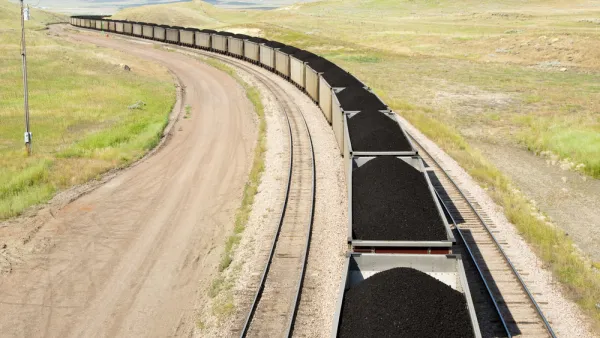
Mountain Coal States vs. West Coast Cities
A legal battle is being waged between the coal-exporting states of Utah, Wyoming, and Montana and coastal cities in California, Oregon, and Washington that pits the power of local land-use authority against the protection of interstate commerce.
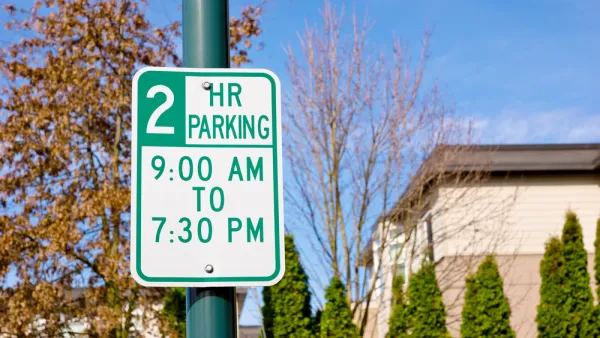
Court Ruling: Chalking Tires Amounts to Unconstitutional Search of Vehicle
A unanimous ruling by a three-judge panel of the U.S. Sixth Circuit Court of Appeals on April 22 found that the chalking of tires by parking enforcement officers on public streets is a violation of the Fourth Amendment.

Planetizen Federal Action Tracker
A weekly monitor of how Trump’s orders and actions are impacting planners and planning in America.

California plans to bury El Niño’s downpour
If the state plays its cards right, it may be able to store a billion acre-feet of El Niño’s water in aquifers.

Chicago breaks ground on $3 billion megadevelopment
The new neighborhood, titled Foundry Park, will one day host 3,700 residences.

California High-Speed Rail Authority CEO resigns after $600,000 scandal
Under Ian Choudri, the authority used taxpayer dollars to fund first class flights and trips to nightclubs.

Want to study the Missouri River? Soon, you may need unanimous approval from 10 states
Legislation would require 10 governors’ permission to study or build projects moving water outside the basin.

Desperate measures: Advocates weigh draining Lake Powell to fill Colorado River
Draining the reservoir could reduce evaporation losses by a couple hundred thousand acre-feet.

FREE Course: Walkable City 1: Why Walkability?
After describing his path towards focusing on walkability as the essence of good planning, Jeff Speck marches through his five principal reasons for making more walkable places.
Reinventing Malls: Planning Alchemy—Turning Gray Fields Into Gold
The course focuses on the opportunities and imperatives that shape reinvention of mall sites.

City of Rosemead
Rutgers University, Edward J. Bloustein School of Planning and Public Policy
One Hundred Miles
Hunter College, City University of New York (CUNY)
The Architects Foundation
University of Cincinnati Online
City of Cambridge
Montrose County
The Pocatello Development Authority