According to Next City, "Euclid is doing what many Great Lakes cities thought would never be possible."


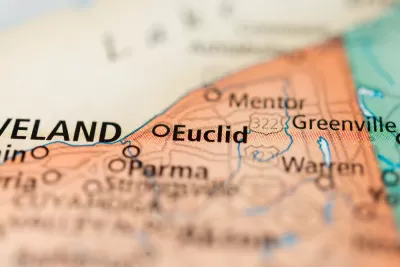
The Euclid City Council voted to build a trail on the Lake Erie waterfront that Cleveland.com calls "innovative and nationally significant."
One notable aspect of the project, according to reporter Steven Litt, is the deal the city made with neighboring property owners "to allow public access along the waterfront in their backyards in exchange for publicly financed improvements aimed at halting erosion." The city also voted to issue a $2 million bond for the trail's first phase.
The three-quarter-mile trail would begin at the fishing pier at Sims Park, with public access to the waterfront provided by stairway on a parcel owned by the city. When completed, the eastern half of the trail would lead to a proposed paddle beach.
Part of a master greenway plan for Cleveland, the lakefront project represents ambitions to raise property values in the suburban area facing "increasing poverty, loss of jobs and a shrinking tax base." It could become a model for other cities in the region, Litt suggests, pointing to previous coverage in Next City.
Read the full story: Euclid City Council takes historic vote to launch innovative lakefront trail

How One Lake Erie Town Got Free Waterfront Property for Public Use
Clear communication and a fair trade let Euclid, Ohio begin to rethink its lakefront—and its future.
2011 Master Plan for the Central Delaware Cut Philadelphia's Waterfront Short
Waterfront views and large parcels of vacant land should be a good urban revitalization in a growing city like Philadelphia, but the Central Delaware waterfront has fallen short of expectations.

Offshore Wind Lands on Lake Erie
By 2019, a multi-million dollar project developed by a former "big energy" guy might make Cleveland the new U.S. leader in renewable energy.

Planetizen Federal Action Tracker
A weekly monitor of how Trump’s orders and actions are impacting planners and planning in America.

California plans to bury El Niño’s downpour
If the state plays its cards right, it may be able to store a billion acre-feet of El Niño’s water in aquifers.

Desperate measures: Advocates weigh draining Lake Powell to fill Colorado River
Draining the reservoir could reduce evaporation losses by a couple hundred thousand acre-feet.

California city breaks ground on transit connector
The project includes three mobility hubs and a pedestrian bridge.

After public outcry, Massachusetts city releases housing development tracker
Cambridge’s tracker currently shows 250 housing projects in various stages of development.

40 years after approval, Chicago breaks ground on new park
The park honors Jean Baptiste Point du Sable, the city’s first permanent non-native settler.

FREE Course: Walkable City 1: Why Walkability?
After describing his path towards focusing on walkability as the essence of good planning, Jeff Speck marches through his five principal reasons for making more walkable places.
Reinventing Malls: Planning Alchemy—Turning Gray Fields Into Gold
The course focuses on the opportunities and imperatives that shape reinvention of mall sites.

City of Rosemead
Rutgers University, Edward J. Bloustein School of Planning and Public Policy
One Hundred Miles
Hunter College, City University of New York (CUNY)
The Architects Foundation
University of Cincinnati Online
City of Cambridge
Montrose County
The Pocatello Development Authority