The city aims to increase canopy tree coverage by nearly 30% to cool streets and decrease heat-related illness.


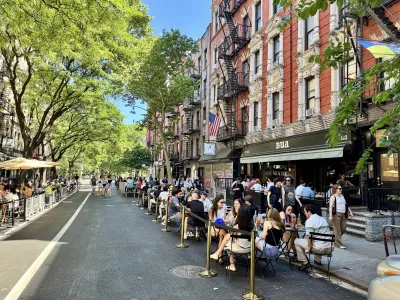
As summers grow ever hotter, New York City has unveiled its newest strategy for fighting climate change and cooling down the city: the city’s first Urban Forest Plan, which lays out a strategy to preserve trees, plant more trees throughout the boroughs and expand the team who cares for them.
The plan aims to add 700 acres of trees to New York City every year for the next 14 years, with the goal of increasing New York City’s canopy tree coverage from 23.4% to 30% by 2040, Gabriele Holtermann writes for Brooklyn Paper.
Living in a tree-lined city brings numerous benefits for its residents: they cool streets by up to two degrees Fahrenheit, improve air quality, better residents mental health and even decrease heat-related illnesses and deaths. The trees currently covering New York City are already removing 1,100 tons of air pollution per year and reducing stormwater runoff by 69 million cubic feet.
Read the full story, below.
Read the full story: Trees grow in Brooklyn: NYC’s first Urban Forest Plan aims to expand tree canopy

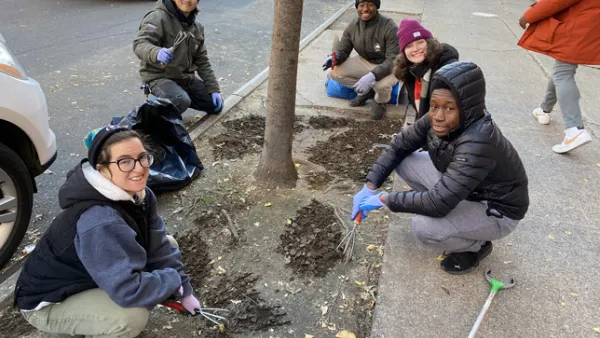
NYC plants over 18,000 trees, the most new foliage in a decade
Many of the trees were planted in communities vulnerable to extreme heat.
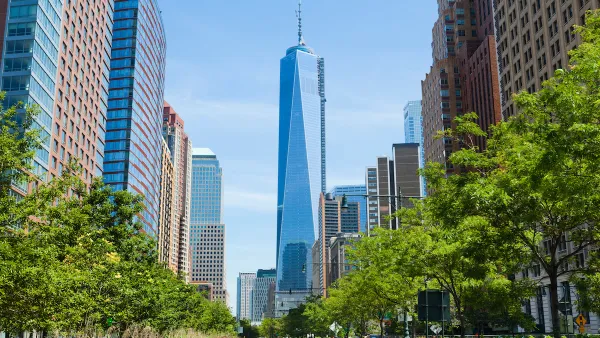
Tree Folio NYC Aims to Monitor Urban Forest in Real Time
A new tool could help the city reach its goal of planting up to 250,000 new trees by 2035.
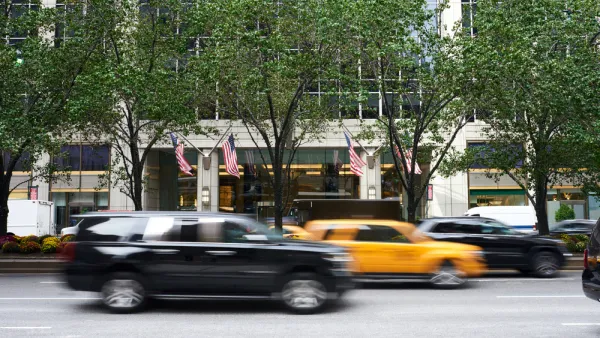
New York City’s Tree Map Gets More Data
The online tool now shows granular, tree-level data that highlights the public health benefits and economic contributions of urban trees.

Planetizen Federal Action Tracker
A weekly monitor of how Trump’s orders and actions are impacting planners and planning in America.

‘Going backwards:’ Baltimore mayor, students rally against state's transit funding plan
Maryland's proposed six-year plan provides no funding for Baltimore’s BMORE bus program and reduces its road maintenance funding.

Detroit to transform waterfront with $2.2 billion investment
Developers will convert about 18 acres of unused parking lot space into civic spaces.

Data center developers are using lawsuits, cash offers to ‘overwhelm’ rural America
Newsrooms in five states worked together to uncover the tactics big tech developers use to buy land from reluctant communities.

U.S.-Iran war may have ‘devastating’ impact on cost to warm homes
Vermont and Maine residents may see a 76% increase in the cost of warming their homes this winter.

Senate bill would ‘overhaul’ environmental permitting laws
Under the proposed act, government agencies would also not be able to suspend or rescind permits after granting them.

FREE Course: Walkable City 1: Why Walkability?
After describing his path towards focusing on walkability as the essence of good planning, Jeff Speck marches through his five principal reasons for making more walkable places.
Reinventing Malls: Planning Alchemy—Turning Gray Fields Into Gold
The course focuses on the opportunities and imperatives that shape reinvention of mall sites.

One Hundred Miles
County of Mendocino
planning NEXT
The Architects Foundation
University of Cincinnati Online
Montrose County
Northern Illinois Transit Authority (NITA)
The Pocatello Development Authority