A new tool could help the city reach its goal of planting up to 250,000 new trees by 2035.



Writing in Yahoo News, Willy Appelman describes how New York City is using data collection and advanced technology to monitor its tree canopy and assess when and where new trees should be planted to supplement the city’s urban forest.
A project called Tree Folio NYC uses lidar data to “measure the size and volume of individual canopies, making it easier to see where healthy trees are located and where existing canopies are lacking,” according to Cornell University researcher Alexander Kobald.
The tool could help the city keep a closer eye on its trees, which have a lifespan almost ten times as short as a similar tree in a rural environment due to exposure to pollutants like dog urine and salt from street treatments.
Appelman notes that “New York City recently passed measures aiming for 30% tree canopy cover by 2035, intending to plant up to 250,000 new trees.”
FULL STORY: Researchers advocate for new tech to revolutionize NYC infrastructure, and it’s likely not what you think


Invasive Beetles Put Oregon Forests at Risk
Two recently discovered borer beetles could lead to a significant loss of tree canopy.
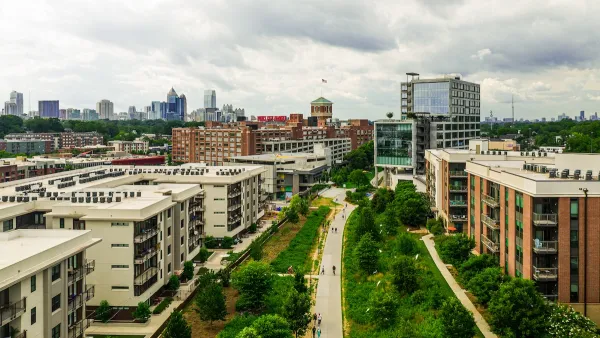
Mapping Georgia’s Urban Forests
Georgia Tech’s latest urban canopy assessment for Atlanta uses high-resolution mapping and a Potential Planting Index to guide data-driven tree preservation.
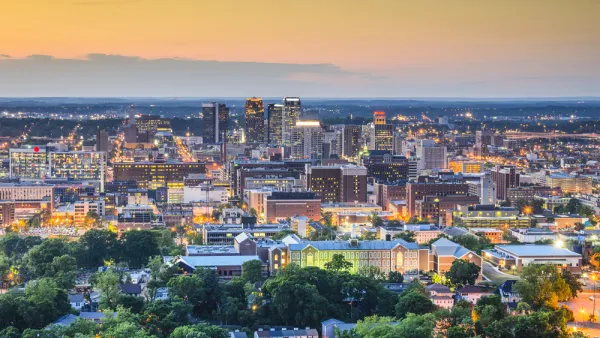
How Data is Helping Protect Campus Trees
The University of Alabama at Birmingham is using GIS technology, student engagement, and sustainability-driven planning to manage and protect its nationally recognized urban forest.

Planetizen Federal Action Tracker
A weekly monitor of how Trump’s orders and actions are impacting planners and planning in America.

The state-sanctioned urbicide of Austin
People don’t kill cities. Freeways do.

US to reduce Colorado River water deliveries to Mexico
A new Colorado Treaty amendment reduces Mexico’s Colorado River water allocation by 250,000 acre feet.

5 New England states march closer to 800 megawatt wind energy project
Securing federal approval for the project may be complicated under the Trump administration, which has historically been hostile towards domestic wind power.

Baltimore to break ground on $50 million Transit Priority Project
The project will bring faster bus trips, safer streets and better bike connections to Baltimore.

Airbnb launches $250 million 'last-dollar financing' housing accelerator, makes first investment in Austin
The company will put $6.4 million towards affordable housing development in Texas’ capital.

FREE Course: Walkable City 1: Why Walkability?
After describing his path towards focusing on walkability as the essence of good planning, Jeff Speck marches through his five principal reasons for making more walkable places.
Reinventing Malls: Planning Alchemy—Turning Gray Fields Into Gold
The course focuses on the opportunities and imperatives that shape reinvention of mall sites.

Eagle County Government
Harvard University Graduate School of Design
Nashville Planning Department
The Architects Foundation
University of Cincinnati Online
The Pocatello Development Authority
The Urban Renewal Agency of the City of Pocatello
Journal of the American Planning Association