During intense spring heatwaves, snow melts nearly twice as fast as usual and can overwhelm city reservoirs.


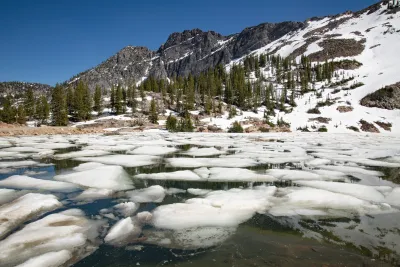
“Snow-eater” heat waves, a new term scientists are using to describe spring heat waves hot enough to nearly double the speed at which snowpacks melt, are happening earlier and more often throughout the year, Kaleb Roedel writes for Tahoe Daily Tribune. The area impacted is also expanding: the snow-eater’s territory has grown by 102,000 square kilometers per century since 1850.
The study defined a snow-eater as a period of three or more days with a temperature of at least six degrees Celsius above normal without dipping below freezing overnight. During the American West’s snowmelt, which lasts from March through July, snow typically melts at a rate of nine millimeters of water per day. In a snow-eater, the rate rises to 17 millimeters of water per day.
As reservoirs are built to handle a gradual snowmelt, snow-eaters can quickly prove overwhelming to city infrastructure: in 1983, a Memorial Day heat wave that experts are now pointing to as an example of a snow-eater flooded Utah’s Wasatch Front and prompted Salt Lake City to create emergency canals.
Read the full story, below.
Read the full story: ‘Snow-eater’ heat waves are melting western snowpack twice as fast, study finds

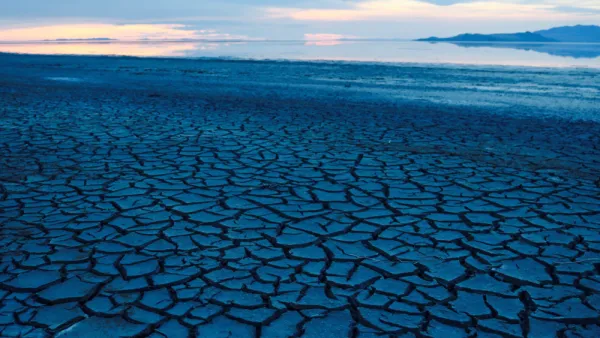
Shrinking Great Salt Lake Is a Ticking Time Bomb
Climate change and population growth are shrinking the Great Salt Lake. The environmental consequences are dire.
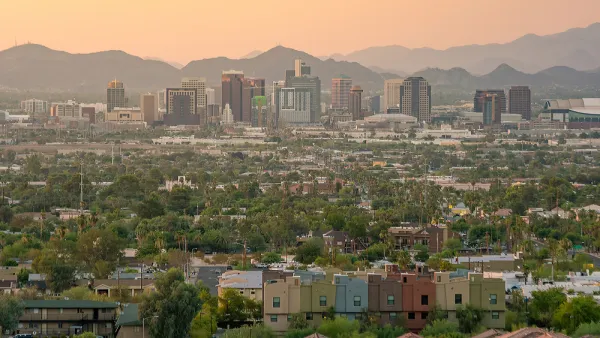
Why It's So Difficult to Measure Heat Deaths
Without a standard for recording and classifying heat-related deaths, experts believe the scale of the problem is much bigger than numbers let on.
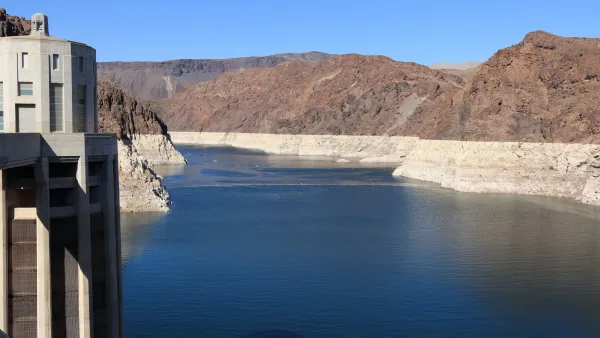
How Extreme Heat Threatens the Electrical Grid
Higher demand for electricity and lower capacity for production due to more intense heat waves are straining the power grid and causing concern for future energy production.

Planetizen Federal Action Tracker
A weekly monitor of how Trump’s orders and actions are impacting planners and planning in America.

‘Going backwards:’ Baltimore mayor, students rally against state's transit funding plan
Maryland's proposed six-year plan provides no funding for Baltimore’s BMORE bus program and reduces its road maintenance funding.

Detroit to transform waterfront with $2.2 billion investment
Developers will convert about 18 acres of unused parking lot space into civic spaces.

HUD, USDA agree on framework to simplify housing environmental review standards
Their agreement is a requirement of the 21st Century ROAD to Housing Act.

Cost of water rising at a faster pace than inflation, median household income
California and Maryland residents have seen their water bills grow especially high.

NYC building owners overwhelmingly comply with new emissions limits
The New York City Department of Buildings is fining owners who did not file emissions reports.

FREE Course: Walkable City 1: Why Walkability?
After describing his path towards focusing on walkability as the essence of good planning, Jeff Speck marches through his five principal reasons for making more walkable places.
Reinventing Malls: Planning Alchemy—Turning Gray Fields Into Gold
The course focuses on the opportunities and imperatives that shape reinvention of mall sites.

planning NEXT
City of Thousand Oaks
City of Wisconsin Rapids
The Architects Foundation
University of Cincinnati Online
Northern Illinois Transit Authority (NITA)
The Pocatello Development Authority
The Urban Renewal Agency of the City of Pocatello