The Trump administration wants to promote the production of self-driving cars while allowing Americans to buy tech-free "traditional" vehicles.


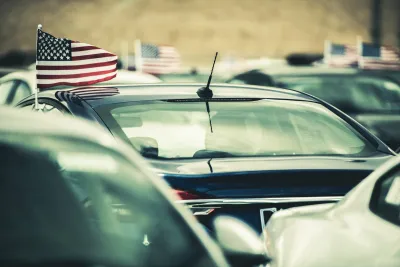
Transportation Secretary Sean Duffy announced a proposed federal law that would bar local or state governments from requiring automakers to equip vehicles with automated driving systems or the capability to transmit data wirelessly.
As Alice Gibbs explains in Newsweek, a July 22 letter from Duffy outlines several proposals that aim to "protect consumer choice," arguing that "Americans should retain the ability to purchase and operate traditional vehicles even as the auto industry develops more advanced autonomous-driving technologies."
According to Gibbs, "The administration is simultaneously calling for expanded testing programs for self-driving cars, the removal of federal deployment caps and new regulatory frameworks designed specifically for driverless vehicles," attempting to strike a balance between encouraging autonomous vehicle production and allowing people to continue buying cars without automated systems.
Gibbs notes that the idea is still a legislative proposal, and Congress would have to incorporate the language into a transportation funding package for it to take effect.
Read the full story: Sean Duffy Proposes ‘Freedom Cars’ for Americans—What it Means

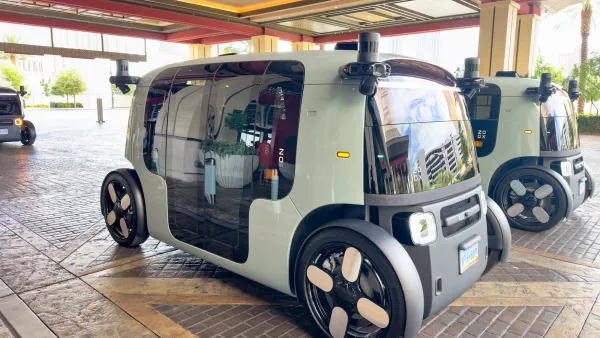
Amazon's steering wheel- and brake pedal-less Zoox robotaxis receive nation's first go-ahead for paid public rides
The NHTSA is giving a temporary permit to some autonomous cars that don't meet current safety standards as it develops a new framework for self-driving vehicles.
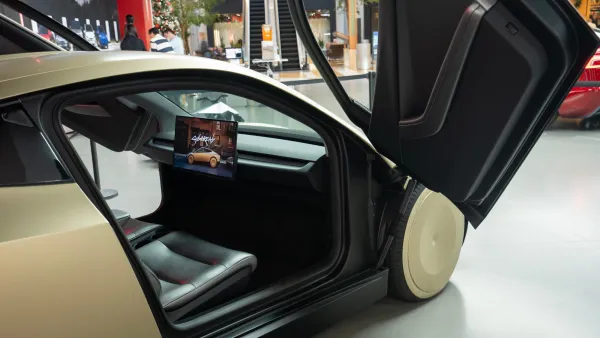
Tesla's steering wheel-less Cybercabs spotted on Austin streets
The company is testing 34 of its robotaxis in downtown Austin, but they have not been approved for public use.
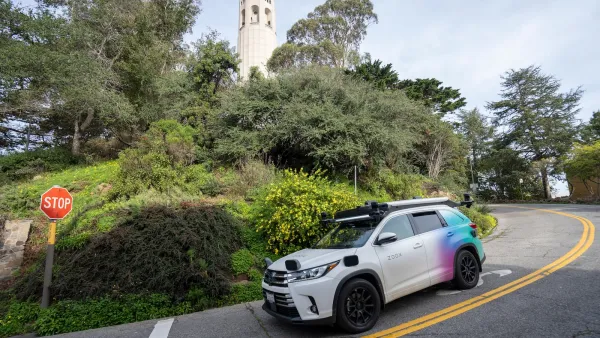
Feds want to make brake pedals optional in AVs
A proposed rule change would no longer require carmakers to include manual brake pedals or steering wheels in fully self-driving cars.

Planetizen Federal Action Tracker
A weekly monitor of how Trump’s orders and actions are impacting planners and planning in America.

Chicago breaks ground on $3 billion megadevelopment
The new neighborhood, titled Foundry Park, will one day host 3,700 residences.

Denver is solving homelessness. Why aren't the rest of us?
Since 2023, Denver's street homeless population has decreased by 64%, proving that effective tools exist to support those in need of housing.

LA accused of breaching $1.4 billion sidewalk repair settlement
The city faces a backlog of nearly 5,000 street repair requests.

MTA kicks off six-year, $1 billion transit upgrade project
The authority is replacing the roughly 90-year-old train signals on the A and C line with modern technology.

Developers may expand largest gas pipeline network in Northwest
Pipeline giant Williams has proposed new expansions for its Northwest Pipeline from the Colorado Rockies through Idaho, Oregon and Washington.

FREE Course: Walkable City 1: Why Walkability?
After describing his path towards focusing on walkability as the essence of good planning, Jeff Speck marches through his five principal reasons for making more walkable places.
Reinventing Malls: Planning Alchemy—Turning Gray Fields Into Gold
The course focuses on the opportunities and imperatives that shape reinvention of mall sites.

City of Rosemead
Rutgers University, Edward J. Bloustein School of Planning and Public Policy
One Hundred Miles
The Architects Foundation
University of Cincinnati Online
Montrose County
Northern Illinois Transit Authority (NITA)
The Pocatello Development Authority