Free since its inception in 1992, Logan's transit system puts big cities to shame, according to one visiting planner.


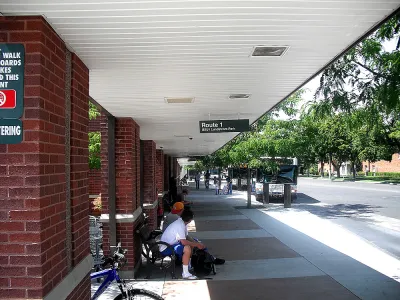
The small city of Logan, Utah offers residents and visitors a practically seamless transit experience, writes Tiana May in Bus News.
According to May, during a 10-day visit, "Services were frequent enough that I rarely found myself checking a timetable. Buses arrived when expected, routes were straightforward to understand and the network covered far more than just the city centre. The air-conditioned buses felt like the obvious way to travel, rather than a service of last resort."
The city's transit system has offered free fares since its launch in 1992, and its ridership has grown to over one million rides per year. It is funded by a dedicated local sales tax and federal grants. While some circumstances that have led to its success are unique to Logan, "If the buses had been infrequent or unreliable, I would probably have remembered Logan as a city with free buses. As it was, I remember it as a city with a genuinely useful bus network."
Read the full story: The Small Utah City Quietly Getting Public Transport Right

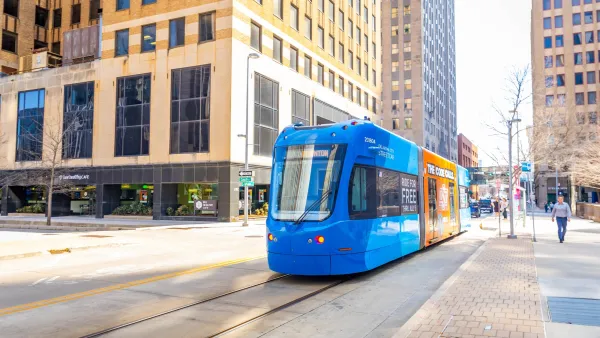
OKC streetcar will stay fare-free after ridership shot up 74%
The downtown streetcar saw a surge in ridership after it eliminated fares in January.
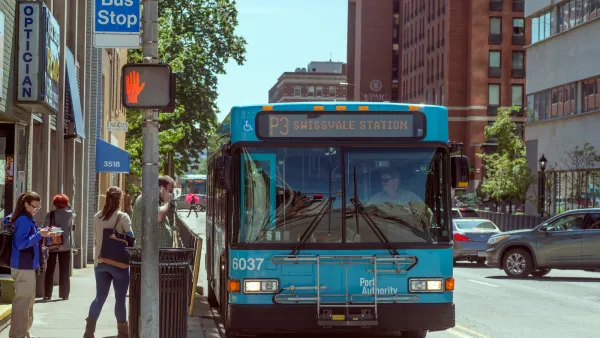
750 Pittsburgh city workers to get free transit passes
City employees working downtown will have access to free transit from Pittsburgh Regional Transit.
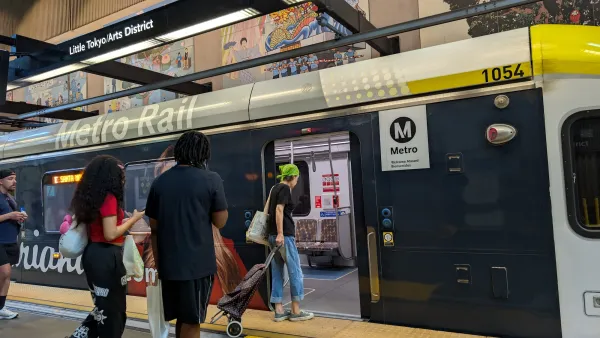
LA mayor wants to make transit fare-free
Los Angeles Mayor Karen Bass says she wants to develop a long-term strategy to make Metro free during her term as chair of the Metro board of directors.

Planetizen Federal Action Tracker
A weekly monitor of how Trump’s orders and actions are impacting planners and planning in America.

Chicago breaks ground on $3 billion megadevelopment
The new neighborhood, titled Foundry Park, will one day host 3,700 residences.

Denver is solving homelessness. Why aren't the rest of us?
Since 2023, Denver's street homeless population has decreased by 64%, proving that effective tools exist to support those in need of housing.

LA accused of breaching $1.4 billion sidewalk repair settlement
The city faces a backlog of nearly 5,000 street repair requests.

MTA kicks off six-year, $1 billion transit upgrade project
The authority is replacing the roughly 90-year-old train signals on the A and C line with modern technology.

Developers may expand largest gas pipeline network in Northwest
Pipeline giant Williams has proposed new expansions for its Northwest Pipeline from the Colorado Rockies through Idaho, Oregon and Washington.

FREE Course: Walkable City 1: Why Walkability?
After describing his path towards focusing on walkability as the essence of good planning, Jeff Speck marches through his five principal reasons for making more walkable places.
Reinventing Malls: Planning Alchemy—Turning Gray Fields Into Gold
The course focuses on the opportunities and imperatives that shape reinvention of mall sites.


City of Rosemead
Rutgers University, Edward J. Bloustein School of Planning and Public Policy
One Hundred Miles
The Architects Foundation
University of Cincinnati Online
Montrose County
Northern Illinois Transit Authority (NITA)
The Pocatello Development Authority