The Birmingham Northern Beltline would run roughly 52 miles through forests and wetlands that are home to multiple endangered species.


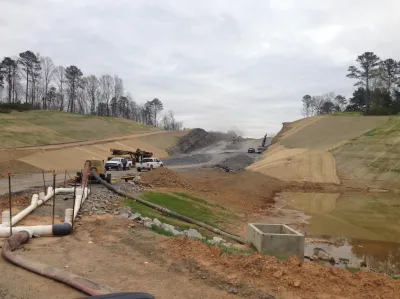
The Alabama Department of Transportation is requesting permission to fill 1.36 acres of wetlands and over 10,000 linear feet of streams as part of the Birmingham Northern Beltline highway expansion project, reports Dennis Pillion in Inside Climate News.
According to Pillion, "The total project is expected to be around 52 miles long. It will pass through thousands of acres of forest and include approximately 90 river or stream crossings over tributaries to the Cahaba and Black Warrior rivers." It is one of the most expensive highway projects in the country, with costs projected to top $5.4 billion and aims to fully surround Birmingham with interstate highways as part of an economic development initiative.
However, a 2010 study from the University of Alabama showed that predictions of an economic boom were “massively overstated.” Matthew Metzgar, author of a 2024 report from the Southern Environmental Law Center, said "Nothing really warrants putting in this massive 52-mile road, again, in a mostly rural area, that there’s just no demand for it."
Read the full story: Alabama Seeks Permit to Fill Wetlands, Streams for Controversial Highway Project
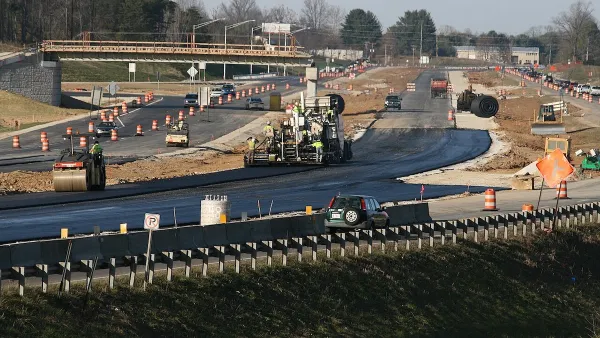
Indiana Segment of Canada-to-Mexico Freeway to Open This Year
The state’s transportation department is reaching completion on its segment of a major north-south corridor that will eventually reach from Michigan to Texas.
Wetland-Clearing Highway Project on List for Texas Stimulus
A 14-mile road segment that would connect two highways in Texas is a contender for stimulus funding in the state. But it would also cause the removal of at least 23 acres of wetlands. Environmentalists are upset the proposal is being considered.

94% of wetlands could lose federal protections under proposed EPA rule
The ruling would only allot federal protections to waterways that flow nearly everyday, which few wetlands do.

Planetizen Federal Action Tracker
A weekly monitor of how Trump’s orders and actions are impacting planners and planning in America.

Eastern Nebraska is running out of electricity
Data centers and electrification are straining eastern Nebraska’s grid, throttling economic development.

Move over, LA: St. Louis gears up for Olympics, invests millions in downtown redevelopment
The Missouri city will host the 2028 Olympic soccer group stage and knockout matches.

Dallas releases zoning code overhaul to officials
The drafted overhaul is over 400 pages long.

NYC renovations for dangerous, ‘mercilessly crammed’ street delayed until 2027
Construction was supposed to begin this fall.

San Diego’s Midway Rising project gets greenlight from city council
The project looks to become the largest affordable housing development in California's history.

FREE Course: Walkable City 1: Why Walkability?
After describing his path towards focusing on walkability as the essence of good planning, Jeff Speck marches through his five principal reasons for making more walkable places.
Reinventing Malls: Planning Alchemy—Turning Gray Fields Into Gold
The course focuses on the opportunities and imperatives that shape reinvention of mall sites.

City of Rosemead
Rutgers University, Edward J. Bloustein School of Planning and Public Policy
One Hundred Miles
University of Michigan School for Environment and Sustainability (SEAS)
Hunter College, City University of New York (CUNY)
The Architects Foundation
City of Cambridge
The Pocatello Development Authority
The Urban Renewal Agency of the City of Pocatello