A new policy to perform spot repairs rather than resurfacing entire streets lets the city skirt requirements to install accessibility and pedestrian infrastructure.


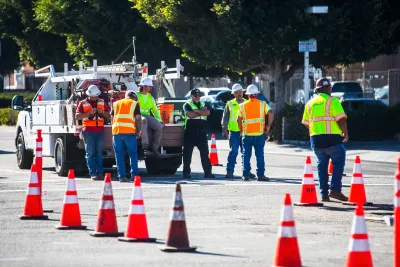
In an opinion piece in Streetsblog LA, Joe Linton outlines the case against a new Los Angeles policy dubbed “large asphalt repair” or LAR, which critics say “appears to be the city shirking its responsibility to comply with the Americans with Disabilities Act (ADA)” and Measure HLA, which requires transit, bike, and pedestrian improvements in street projects.
As Linton explains, the policy means that instead of resurfacing full streets from curb to curb, the city is now mostly resurfacing small portions of streets piecemeal. Because federal ADA law only requires accessibility improvements when a street is “altered” but not doing maintenance, LAR projects effectively eliminate the legal requirement for ADA improvements.
The change also impacts Measure HLA, which requires the city to add bus, bike, and pedestrian improvements with any projects that resurface more than one-eighth of a mile of street.
As numerous access activists have pointed out, making places accessible benefits everyone. A curb that is wheelchair accessible gets used by folks in wheelchairs, as well as folks with canes, with strollers, with shopping carts, and of course folks on bikes.
For Linton, large asphalt repair is “a scandal, a serious breach of public trust” that offers a “pernicious loophole.”
FULL STORY: What’s So Awful About L.A. City’s Shift to “Large Asphalt Repair”

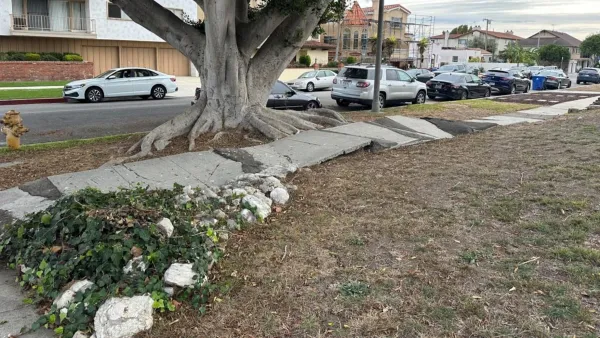
The City of Broken Sidewalks
Can Los Angeles fix 4,000 miles of broken sidewalks before the city hosts the 2028 Olympic Games?
Why Accessible Sidewalks Fall by the Wayside
Despite the passage of the Americans with Disabilities Act more than 30 years ago, most U.S. cities delay making accessibility improvements to sidewalks until activists bring them to court.
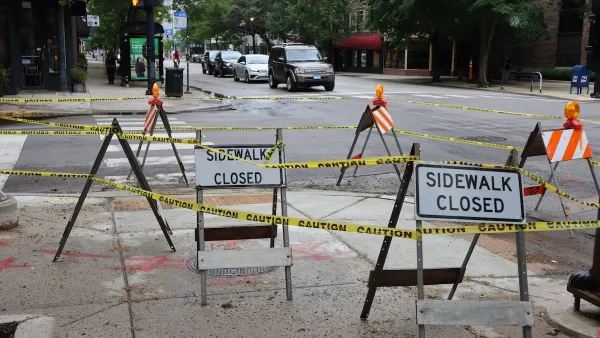
Chicago Residents Sue City Over Inaccessible Sidewalks
The suit alleges the city has failed to create a “coordinated, proactive system” for complying with ADA and ensuring accessibility on the city’s sidewalks and crosswalks.

Planetizen Federal Action Tracker
A weekly monitor of how Trump’s orders and actions are impacting planners and planning in America.

The state-sanctioned urbicide of Austin
People don’t kill cities. Freeways do.

US to reduce Colorado River water deliveries to Mexico
A new Colorado Treaty amendment reduces Mexico’s Colorado River water allocation by 250,000 acre feet.

Amtrak not solely to blame for New Jersey commuter rail's unreliability, report finds
A new study from the Garden State initiative found that NJ Transit’s budget grew 20% across a 4 year period, but reliability declined significantly over the same period.

EPA erases limits on planet-warming pollution from power plants
Under Monday’s plan, power plants would still have some limits on how much mercury, arsenic and other contaminants they can emit.

Phoenix announces new on-demand transit service, more frequent RAPID buses
Both new services will launch in October, and are part of Phoenix's Project Effective Access Solutions for Easing Congestion.

FREE Course: Walkable City 1: Why Walkability?
After describing his path towards focusing on walkability as the essence of good planning, Jeff Speck marches through his five principal reasons for making more walkable places.
Reinventing Malls: Planning Alchemy—Turning Gray Fields Into Gold
The course focuses on the opportunities and imperatives that shape reinvention of mall sites.

Eagle County Government
Harvard University Graduate School of Design
Nashville Planning Department
The Architects Foundation
University of Cincinnati Online
The Pocatello Development Authority
The Urban Renewal Agency of the City of Pocatello
Journal of the American Planning Association