The city’s automated enforcement program has led to a dramatic drop in speeding at camera locations.


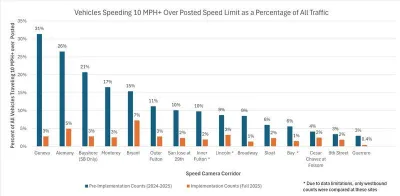
Speeding dropped by 72 percent compared to the prior year at San Francisco locations where the city installed traffic cameras, reports James Salazar in the San Francisco Examiner.
The cameras, which were installed in March, are triggered when a driver goes 11 miles over the posted speed limit. Citations are then inspected and confirmed by SFMTA employees.
After an initial rise in citations, total warnings and citations fell every week starting in July, while average speed for violators dropped in July and August. “Two-thirds of the vehicles that received warnings or citations haven’t received a second, the SFMTA said.”
Street safety advocates caution that while speed cameras are effective in the locations where they’re installed, they do little to slow drivers in other parts of the city, and a safe streets plan should include more efforts to offer alternative transportation modes and improve transit. “The Board of Supervisors recently unanimously passed the Street Safety Act, which includes commitments such as requiring the San Francisco Police Department to develop a traffic-enforcement strategy that complements the speed cameras, as well as expanding the SFMTA’s Biking and Rolling Plan.”
FULL STORY: SF drivers dramatically slowing down around cameras, SFMTA data show

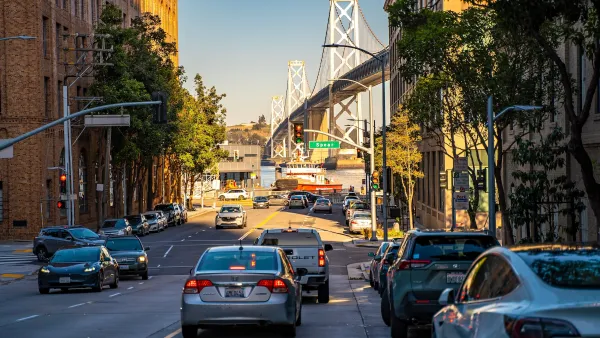
After San Francisco installed traffic cameras, speeding dropped by 80%
The city was allowed to install speed cameras as part of a five-year pilot program approved by California in 2023.
DC’s Traffic Cameras Are Working, but Not a Panacea
Automated enforcement is reducing speeding, but bigger changes to street design and the built environment are needed to make the District’s streets safer and more pleasant for people walking.
Flock cameras misread license plates in 71% of cases in California study
An analysis of 1,500 reports showed a shockingly high rate of error when reading license plates.

Planetizen Federal Action Tracker
A weekly monitor of how Trump’s orders and actions are impacting planners and planning in America.

The state-sanctioned urbicide of Austin
People don’t kill cities. Freeways do.

US to reduce Colorado River water deliveries to Mexico
A new Colorado Treaty amendment reduces Mexico’s Colorado River water allocation by 250,000 acre feet.

Airbnb launches $250 million 'last-dollar financing' housing accelerator, makes first investment in Austin
The company will put $6.4 million towards affordable housing development in Texas’ capital.

Guerilla urbanists are building DIY bus stop benches in Chicago
A before-and-after of one of the bus stops with a new bench. The new benches are not officially sanctioned or permitted, but the residents who placed them hope they will be the start of a network of DIY benches across the city.

Mamdani overhauls NYC's Vision Zero plan with 100 new policy goals
The overhaul aims to reduce traffic deaths and make streets safer for pedestrians, cyclists and drivers through lower speed limits, new safety infrastructure and more.

FREE Course: Walkable City 1: Why Walkability?
After describing his path towards focusing on walkability as the essence of good planning, Jeff Speck marches through his five principal reasons for making more walkable places.
Reinventing Malls: Planning Alchemy—Turning Gray Fields Into Gold
The course focuses on the opportunities and imperatives that shape reinvention of mall sites.

Eagle County Government
Harvard University Graduate School of Design
Nashville Planning Department
The Architects Foundation
University of Cincinnati Online
The Pocatello Development Authority
The Urban Renewal Agency of the City of Pocatello
Journal of the American Planning Association