The NYC mayoral candidate and State Assemblymember says algorithms push workers into unsafe behavior at a systemic level.


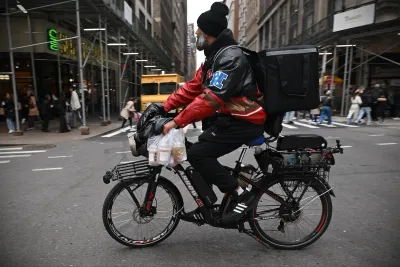
New York City mayoral candidate Zohran Mamdani weighed in on the issue of delivery e-bike safety when asked about how he would enforce laws, reports Dave Colon in Streetsblog NYC.
Mamdani asserted that “the way [to] make the streets safe for both delivery riders and pedestrians is to ensure delivery apps can't push riders to make unsafe decisions on the street,” putting the onus of safety largely on the companies who build the algorithms used by delivery apps.
Although “Much this conversation around e-bikes and e-vehicles focuses on individual actions and infractions,” Mamdani said, he believes the focus should be on the systems that encourage unsafe labor conditions by pushing drivers to make deliveries as quickly as possible. “It is an algorithm that rewards the breaking of street safety regulations and one that hurts drivers, riders who actually follow the law, which would then take them more time. And so we have to ensure that there is regulation of these algorithms such that what is incentivized is following the law,” Mamdani added.
Street design can also make people using all modes of transportation feel safer, Mamdani noted. “Using the Queensboro Bridge as an example, the Assembly member said that moment the city finally allowed pedestrians to start walking on the span's South Outer Roadway was the moment everyone felt much calmer using the bridge.”
Read the full story: Zohran Mamdani On E-Bike Safety: Regulate App Algorithms, Not Workers

NYC e-bike injury study highlights 'critical infrastructure deficiencies'
The sharp rise in e-mobility injuries points to a need for safer roads, not more punitive laws.
New City Office Will Regulate NYC Delivery Bikes and Scooters
The department is designed to help the city regulate small delivery vehicles, manage curb space and congestion, and prepare for new technology like delivery drones.
Study: Delivery Workers Are the Safest Cyclists on NYC Roads
A new study shows that delivery workers are more likely to stop at red lights and obey traffic rules than recreational or commuter riders.

Planetizen Federal Action Tracker
A weekly monitor of how Trump’s orders and actions are impacting planners and planning in America.

Amtrak, CN end decades-long dispute with eight-year agreement
The new operating agreement establishes an updated framework for the companies to work together, including processes to resolve disputes.

Nation's most wind-powered state turns to coal as data centers increase energy demand
For the first time in decades, Iowa has increased its generation of coal power.

Alabama scores up to $2.5 billion federal loan for largest infrastructure project in state’s history
The Mobile River Bridge and Bayway Project aims to ease congestion at Alabama’s worst bottleneck.

Trump is considering data centers on 6 states' public land — some state officials say they had no idea
If the administration approves the proposed projects, data center and data center-related developments will cover 17,600 acres of public land.

Despite court ruling, Trump is keeping nearly all wind projects in the US on hold
At least 110 wind energy projects have not heard from the government since a federal judge ruled that the Trump administration's freeze on wind turbine clearances was likely illegal.

FREE Course: Walkable City 1: Why Walkability?
After describing his path towards focusing on walkability as the essence of good planning, Jeff Speck marches through his five principal reasons for making more walkable places.
Reinventing Malls: Planning Alchemy—Turning Gray Fields Into Gold
The course focuses on the opportunities and imperatives that shape reinvention of mall sites.

KFH Group Inc.
Greater Baltimore Committee
Eagle County Government
The Architects Foundation
University of Cincinnati Online
The Pocatello Development Authority
The Urban Renewal Agency of the City of Pocatello