‘Range anxiety’ contributes to people’s hesitation about EVs — but hardly anyone need the range they think.


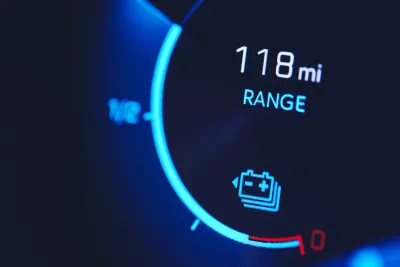
‘Range anxiety’ for EV drivers may not be as big of a concern as most people think, reports Tim Levin in Inside EVs. “Even as consumers demand electric cars that can go 250, 300 or even 400 miles between charging sessions, research shows that they can usually make do with far less. Recurrent, a firm that tracks range and battery health in thousands of EVs, crunched the numbers and learned that electric car drivers only use a small fraction of their batteries each day.”
According to the report, most electric cars with 350-375 mile range average 40.9 miles of driving per day. “Taking the weighted average across all EVs suggests that drivers tend to use 12.6% of their car's rated range daily, Recurrent found.”
As Levin explains, “So the obsession with more and more EV range is less about what people do on a regular basis and more about ‘what if?’ scenarios.” A survey from Recurrent shows that once people buy an EV, just 22.8 percent of owners worry about range. “This suggests the industry's ‘range arms race’ is creating expensive solutions to problems that don't exist, or exist for only a moment before people really experience EV ownership,” says Recurrent.
Read the full story: https://docs.google.com/spreadsheets/d/1PyMOuZQL_W-6Qx3AsaDf4Lvs97Sq9b-sozRsZKeZ7gs/edit?pli=1&gid=0#gid=0


Swapping your gas car for an EV is greener than keeping it, research shows
An EV repays the 'carbon debt' caused by building it after 4,400 miles.
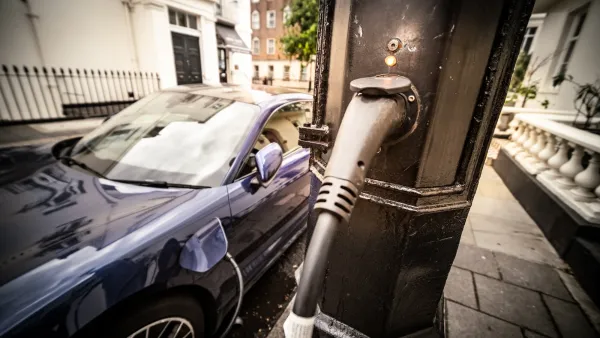
DC light poles will soon charge your electric car
The city awarded three grants to companies that will install more publicly available EV chargers.
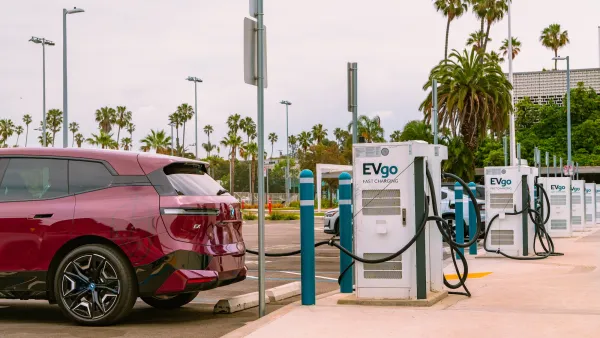
California Beats EV Adoption Goal by Over 1 Million Vehicles
The state pledged to put 1.5 million EVs on its roads by 2025.

Planetizen Federal Action Tracker
A weekly monitor of how Trump’s orders and actions are impacting planners and planning in America.

California plans to bury El Niño’s downpour
If the state plays its cards right, it may be able to store a billion acre-feet of El Niño’s water in aquifers.

Chicago breaks ground on $3 billion megadevelopment
The new neighborhood, titled Foundry Park, will one day host 3,700 residences.

Satanic place names
From streams and lakes to valleys and canyons, I mapped more than 1,000 places named after the Devil.

California High-Speed Rail Authority CEO resigns after $600,000 scandal
Under Ian Choudri, the authority used taxpayer dollars to fund first class flights and trips to nightclubs.

Want to study the Missouri River? Soon, you may need unanimous approval from 10 states
Legislation would require 10 governors’ permission to study or build projects moving water outside the basin.

FREE Course: Walkable City 1: Why Walkability?
After describing his path towards focusing on walkability as the essence of good planning, Jeff Speck marches through his five principal reasons for making more walkable places.
Reinventing Malls: Planning Alchemy—Turning Gray Fields Into Gold
The course focuses on the opportunities and imperatives that shape reinvention of mall sites.

City of Rosemead
Rutgers University, Edward J. Bloustein School of Planning and Public Policy
One Hundred Miles
Hunter College, City University of New York (CUNY)
The Architects Foundation
University of Cincinnati Online
City of Cambridge
Montrose County
The Pocatello Development Authority