Los Angeles County is transforming its historic General Hospital into a mixed-use community with housing, healthcare, and green space — an ambitious project aimed at revitalizing underserved neighborhoods while preserving a cultural landmark.


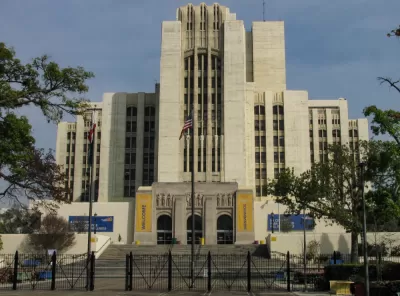
Los Angeles County is moving forward with plans to redevelop the long-vacant General Hospital in Boyle Heights into a mixed-use community centered on healthcare, housing, and green space. As Brannon Boswell reports, the $3.3 million in newly approved funding will help support environmental review, technical analysis, and seismic retrofitting for the nearly century-old Art Deco building, which has remained a cultural icon since its 1934 debut. The project, named Healthy Village, could bring up to 885 residential units, medical services, and public amenities to one of LA’s most underserved areas.
The redevelopment is part of a national trend in which cities repurpose historic medical facilities to meet modern urban needs, blending healthcare, affordable housing, and sustainability. Local developer Centennial Partners—comprised of Primestor and Bayspring Real Estate — will lead the multi-phase revitalization effort. While community support is strong, significant hurdles remain, including seismic upgrades, interagency coordination, and long-term funding. A draft community benefits agreement is expected by the end of 2025, following extensive public engagement.
Located in a historically immigrant-rich area now shaped by demographic change and development pressures, the General Hospital project offers a unique opportunity to deliver deeply needed housing and healthcare. Average rents in the area remain lower than the county average, but new construction has been limited, contributing to the housing shortfall. County officials hope to use the site not only to address urgent infrastructure needs but to restore community trust and create a model for equitable, health-oriented redevelopment.
FULL STORY: Here’s how Los Angeles wants to modernize long-vacant General Hospital

LA approves $2B 'urban village' plan for former cold storage facilities
The project promises an interconnected neighborhood with a focus on public space.
Historic LA Filming Complex Could Get $1B Makeover
A revised plan for a revamped ‘Television City’ in mid-city Los Angeles was endorsed by the City Planning Commission, but faces more hurdles before full City Council approval.
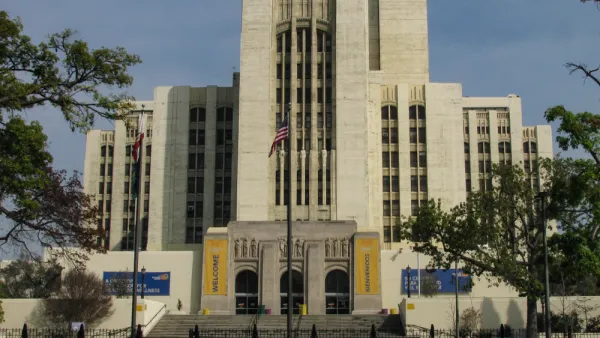
Massive, Vacant L.A. Hospital To Become Affordable Housing
The historic building will be redeveloped with over 500 housing units and supportive services on site.

Planetizen Federal Action Tracker
A weekly monitor of how Trump’s orders and actions are impacting planners and planning in America.

The state-sanctioned urbicide of Austin
People don’t kill cities. Freeways do.

US to reduce Colorado River water deliveries to Mexico
A new Colorado Treaty amendment reduces Mexico’s Colorado River water allocation by 250,000 acre feet.

5 New England states march closer to 800 megawatt wind energy project
Securing federal approval for the project may be complicated under the Trump administration, which has historically been hostile towards domestic wind power.

Baltimore to break ground on $50 million Transit Priority Project
The project will bring faster bus trips, safer streets and better bike connections to Baltimore.

Airbnb launches $250 million 'last-dollar financing' housing accelerator, makes first investment in Austin
The company will put $6.4 million towards affordable housing development in Texas’ capital.

FREE Course: Walkable City 1: Why Walkability?
After describing his path towards focusing on walkability as the essence of good planning, Jeff Speck marches through his five principal reasons for making more walkable places.
Reinventing Malls: Planning Alchemy—Turning Gray Fields Into Gold
The course focuses on the opportunities and imperatives that shape reinvention of mall sites.

Eagle County Government
Harvard University Graduate School of Design
Nashville Planning Department
The Architects Foundation
University of Cincinnati Online
The Pocatello Development Authority
The Urban Renewal Agency of the City of Pocatello
Journal of the American Planning Association