A 2022 state law allows cities to reduce speed limits for safety reasons rather than relying on average traffic speeds to dictate speed limits.


San Diego will lower speed limits by 5 mph on 11 of the city’s most dangerous corridors, reports Abbie Black for CBS8.
“The changes, made possible by state legislation passed in 2022, will slow traffic by at least 5 mph in areas spanning three council districts. Washington Street in the Hillcrest-Mission Hills neighborhood drops from 30 to 25 mph, while sections of Adams Avenue and 30th Street in North Park will see limits reduced to 20 mph,” Black explains.
Assembly Bill 43 allows cities to lower speed limits based on safety considerations. In the past, speed limits were often dictated by how fast the average driver actually travels on that street.
According to Black, “The city plans to have all new speed limit signs installed by the end of the week. Officials also expect to complete a comprehensive citywide speed management plan by the end of the year.”
FULL STORY: San Diego reduces speed for 11 high-crash areas

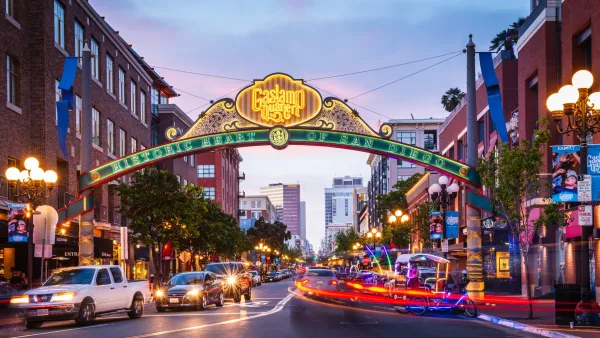
San Diego to Lower Speed Limits on 20% of its Streets
The city council approved reduced speed limits on streets designated as high-risk corridors, school zones, and other areas as part of its Vision Zero strategy.
San Diego budget axes multimodal team at DOT
The budget scales back funding for some bike lane and traffic safety projects that are already in the works.
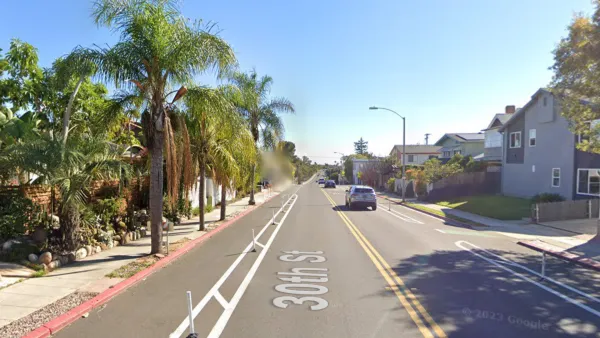
After San Diego Installed a Protected Bike Lane, Ridership More Than Doubled — and Hasn’t Stopped Growing.
“When people feel safe, they ride.”

Planetizen Federal Action Tracker
A weekly monitor of how Trump’s orders and actions are impacting planners and planning in America.

The state-sanctioned urbicide of Austin
People don’t kill cities. Freeways do.

US to reduce Colorado River water deliveries to Mexico
A new Colorado Treaty amendment reduces Mexico’s Colorado River water allocation by 250,000 acre feet.

Baltimore to break ground on $50 million Transit Priority Project
The project will bring faster bus trips, safer streets and better bike connections to Baltimore.

Airbnb launches $250 million 'last-dollar financing' housing accelerator, makes first investment in Austin
The company will put $6.4 million towards affordable housing development in Texas’ capital.

Guerilla urbanists are building DIY bus stop benches in Chicago
A before-and-after of one of the bus stops with a new bench. The new benches are not officially sanctioned or permitted, but the residents who placed them hope they will be the start of a network of DIY benches across the city.

FREE Course: Walkable City 1: Why Walkability?
After describing his path towards focusing on walkability as the essence of good planning, Jeff Speck marches through his five principal reasons for making more walkable places.
Reinventing Malls: Planning Alchemy—Turning Gray Fields Into Gold
The course focuses on the opportunities and imperatives that shape reinvention of mall sites.

Eagle County Government
Harvard University Graduate School of Design
Nashville Planning Department
The Architects Foundation
University of Cincinnati Online
The Pocatello Development Authority
The Urban Renewal Agency of the City of Pocatello
Journal of the American Planning Association