Car insurance costs around the country are going up as insurers receive more claims from areas struck by storms and other climate disasters.


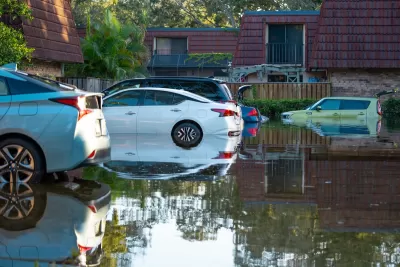
The home insurance market isn’t the only part of the insurance agency being roiled by extreme weather. “Now, car insurance quotes are reflecting trends seen across the home insurance market as climate change becomes an increasingly prevalent — and costly — factor,” writes Kiley Price in Grist.
An August report predicts that car insurance costs will rise by 22 percent by the end of 2024, with rates rising by as much as 50 percent in California, Missouri, and Minnesota. “That’s due to a number of factors, including inflation, extreme weather, and more cases of severe accidents or dangerous driving.” According to professor Andrew Hoffman, “It’s actually secondary perils that are really having a dominant influence on driving up insurance costs.”
FULL STORY: Climate-fueled extreme weather is hiking up car insurance rates

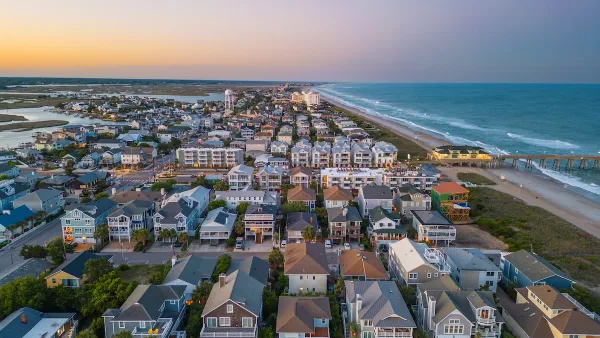
Rising Insurance Rates Squeezing Affordable Housing Developers
Spiking insurance costs in coastal areas prone to climate disasters are making it harder for low-income housing developers to keep building.
Will Hurricanes Drive Away Florida’s Retirees?
Some children of Florida retirees are urging their parents to leave hurricane-prone areas for safer regions.
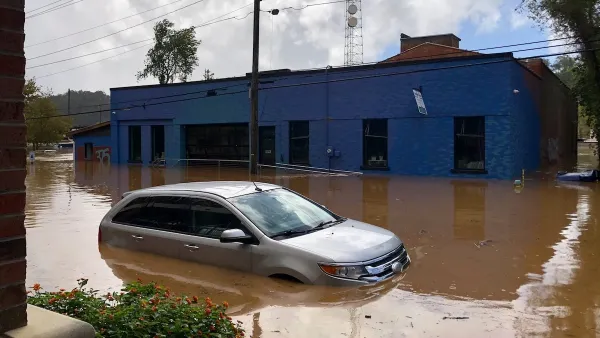
Love Letter to Asheville
A River Arts District resident and urbanist reflects on her experience in the former “climate haven” in the aftermath of Hurricane Helene.

Planetizen Federal Action Tracker
A weekly monitor of how Trump’s orders and actions are impacting planners and planning in America.

The state-sanctioned urbicide of Austin
People don’t kill cities. Freeways do.

US to reduce Colorado River water deliveries to Mexico
A new Colorado Treaty amendment reduces Mexico’s Colorado River water allocation by 250,000 acre feet.

5 New England states march closer to 800 megawatt wind energy project
Securing federal approval for the project may be complicated under the Trump administration, which has historically been hostile towards domestic wind power.

Baltimore to break ground on $50 million Transit Priority Project
The project will bring faster bus trips, safer streets and better bike connections to Baltimore.

Airbnb launches $250 million 'last-dollar financing' housing accelerator, makes first investment in Austin
The company will put $6.4 million towards affordable housing development in Texas’ capital.

FREE Course: Walkable City 1: Why Walkability?
After describing his path towards focusing on walkability as the essence of good planning, Jeff Speck marches through his five principal reasons for making more walkable places.
Reinventing Malls: Planning Alchemy—Turning Gray Fields Into Gold
The course focuses on the opportunities and imperatives that shape reinvention of mall sites.

Eagle County Government
Harvard University Graduate School of Design
Nashville Planning Department
The Architects Foundation
University of Cincinnati Online
The Pocatello Development Authority
The Urban Renewal Agency of the City of Pocatello
Journal of the American Planning Association