An interactive exhibit offered visitors a glimpse into the future rail system.


The California High-Speed Rail Authority unveiled an interactive exhibit at the California State Fair featuring mock-ups of the future system’s trains, reports Marni Rose McFall in Newsweek.
“At the fair, visitors were invited to walk through the life-size mock-ups of train interiors, look at 3D renderings and models of the planned Central Valley stations and more,” McFall writes.
According to an information officer for the Authority, roughly 50,000 people visited the exhibit. “The 3D models show preliminary designs of four central valley stations, Merced, Fresno the Kings Tulare station and Bakersfield.”
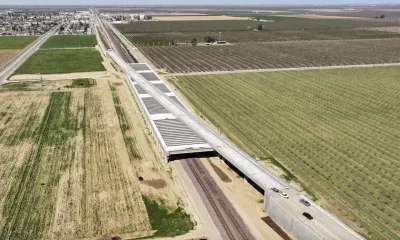
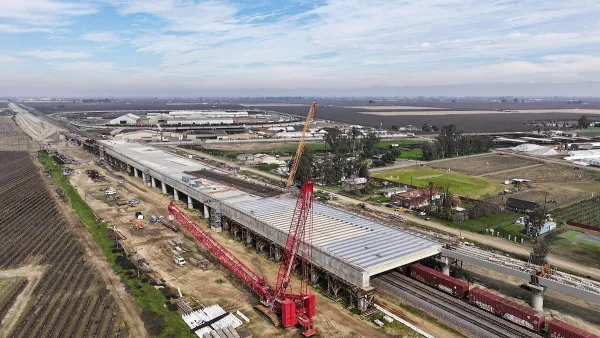
The long-awaited project is underway, with 119 miles under active construction between Merced and Bakersfield in the Central Valley. “Completion is expected upon the initiation of passenger service, which is slated for between 2030 and 2033. The project plans for trains to run at speeds up to 220 miles per hour, enabling a trip from San Francisco to Los Angeles in under three hours.” The cost, initially projected at $40 billion, is now estimated to reach between $88 to $128 billion.
Read the full story: California High-Speed Rail Design Gets First Public Test

DOT Officially Cancels California High-Speed Rail Funding
The Trump administration has repeatedly taken aim at the LA-to-Bay Area rail project, blaming Democratic leaders for cost overruns and delays.
California High-Speed Rail Slashes $1.7B From 2026 Budget
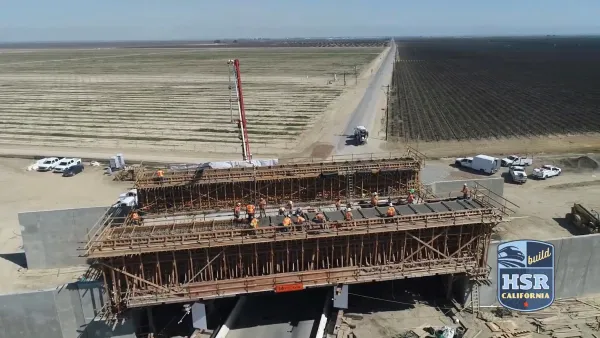
The CHSRA plans to complete the Central Valley segment of the line and begin revenue service as soon as possible.
California Commits $1B Annually for 20 Years to High-Speed Rail
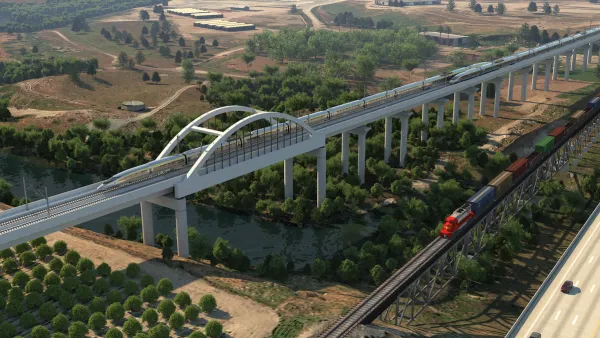
New legislation extends the state’s cap-and-trade program to 2045 and formalized a yearly allocation to the California high-speed rail project.

Planetizen Federal Action Tracker
A weekly monitor of how Trump’s orders and actions are impacting planners and planning in America.

Amtrak, CN end decades-long dispute with eight-year agreement
The new operating agreement establishes an updated framework for the companies to work together, including processes to resolve disputes.

Judges permit Denver to divert 77,000 acre feet from the Colorado River for reservoir expansion
Overuse and climate change have caused the Colorado River’s water levels to plummet.

Boston has spent millions making the Green Line more accessible — and there’s no end in sight
While the city has invested millions into expanding and adding platforms to the Green Line to make it more accessible, new train cars set to arrive next year will be too tall for disabled passengers to board without raising the current platforms.

Idaho may see an 18% drop in federal surface transit funding — the largest estimated cut in the US
Transit systems in rural communities are much more reliant on federal funding to provide their services.

How ‘post-disaster gentrification’ alters neighborhoods after natural calamities
After hurricanes, fires or other calamities, the original residents of a community are often replaced by younger, wealthier residents.

FREE Course: Walkable City 1: Why Walkability?
After describing his path towards focusing on walkability as the essence of good planning, Jeff Speck marches through his five principal reasons for making more walkable places.
Reinventing Malls: Planning Alchemy—Turning Gray Fields Into Gold
The course focuses on the opportunities and imperatives that shape reinvention of mall sites.


City of Wisconsin Rapids
Harvard University Graduate School of Design
KFH Group Inc.
The Architects Foundation
University of Cincinnati Online
The Pocatello Development Authority
The Urban Renewal Agency of the City of Pocatello