The city’s efforts to bring more pools and beaches to its residents could have rippling effects across the state.


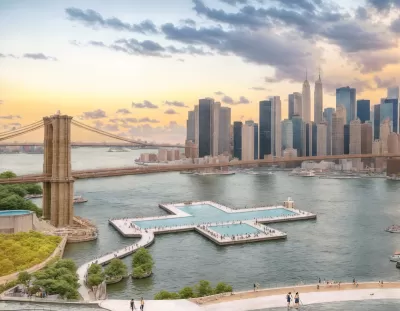
A new plan to open up public swimming on the Hudson River will create more public beaches and swimming areas, reports Sarah Amandolare in Fast Company. “With its emphasis on municipal pools and natural waterways in communities that are underserved or vulnerable to extreme heat, the $150 million plan underscores how access to swimming addresses equity, public health, and climate resilience.”
The program starts to reverse decades-old swimming bans that predate the Clean Water Act and the subsequent improvement of water quality in New York City’s rivers. But “Misperceptions of Hudson River water quality will take time to change, experts say. And the new state guidelines still don’t allow communities to respond to water conditions as effectively as possible.”
The city is piloting a $16 million filtered floating pool in the East River, and “the State Department of Health issued guidance for new beaches in January aimed at helping communities throughout the state create their own floating pools in rivers and lakes.” The initiative also includes funding for lifeguard training and expanded access to swim lessons.
According to Amandolare, New York’s efforts are inspiring a global movement to encourage urban swimming. “A swimmable cities charter signed by about 30 international nonprofits, companies, and universities is also being finalized.”
FULL STORY: Why NYC’s floating pool could change beach access for the entire state

A Pool in the River
This Kickstarter campaign is hoping to raise money to build a floating pool in the waters around New York City that use and filter river water to provide a public swimming facility.
Beating the Heat: Expanding Access to Swimming Pools
The swim season for Los Angles County public pools has been extended, with swim facilities open for five months to provide relief from the hot weather.
Hudson Tunnel Project To Move Forward
After facing a series of setbacks, the plan to rehabilitate and expand train tunnels under the Hudson River is moving forward thanks to new federal support.

Planetizen Federal Action Tracker
A weekly monitor of how Trump’s orders and actions are impacting planners and planning in America.

The state-sanctioned urbicide of Austin
People don’t kill cities. Freeways do.

US to reduce Colorado River water deliveries to Mexico
A new Colorado Treaty amendment reduces Mexico’s Colorado River water allocation by 250,000 acre feet.

Guerilla urbanists are building DIY bus stop benches in Chicago
A before-and-after of one of the bus stops with a new bench. The new benches are not officially sanctioned or permitted, but the residents who placed them hope they will be the start of a network of DIY benches across the city.

Mamdani overhauls NYC's Vision Zero plan with 100 new policy goals
The overhaul aims to reduce traffic deaths and make streets safer for pedestrians, cyclists and drivers through lower speed limits, new safety infrastructure and more.

Amtrak not solely to blame for New Jersey commuter rail's unreliability, report finds
A new study from the Garden State Initiative found that NJ Transit’s budget grew 20% across a 4 year period, but reliability declined significantly over the same period.

FREE Course: Walkable City 1: Why Walkability?
After describing his path towards focusing on walkability as the essence of good planning, Jeff Speck marches through his five principal reasons for making more walkable places.
Reinventing Malls: Planning Alchemy—Turning Gray Fields Into Gold
The course focuses on the opportunities and imperatives that shape reinvention of mall sites.

Eagle County Government
Harvard University Graduate School of Design
Nashville Planning Department
The Architects Foundation
University of Cincinnati Online
The Pocatello Development Authority
The Urban Renewal Agency of the City of Pocatello
Journal of the American Planning Association