The bill would reinstate protections for wetlands and seasonal streams eliminated by a 2023 Supreme Court ruling.


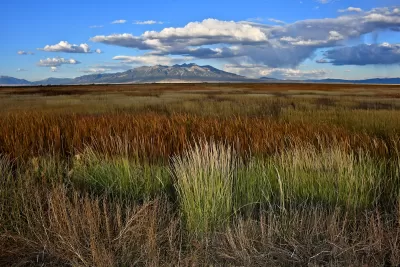
Colorado legislators approved a bill that will extend new protections to the state’s streams and wetlands after the U.S. Supreme Court reduced protections for wetlands last year, reports Daniel C. Vock in Route Fifty. “The issue of wetland regulations is particularly poignant in Colorado, where two-thirds of the state’s waters are temporary in nature and lack year-round flow, according to a friend-of-the-court brief the state filed in the Supreme Court case.”
Last year’s ruling, which states that “the Clean Water Act only applies to wetlands that have a continuous surface connection to bigger bodies of water,” makes states responsible for enacting — and funding — more stringent regulations that apply to non-contiguous wetlands and seasonal streams.
According to Vock, “Roughly half the states relied on federal rules to determine what waterways they would regulate for dredging and filling activities before the Supreme Court ruled, according to an analysis by James McElfish, an attorney at the Environmental Law Institute.”
FULL STORY: After Supreme Court decision left wetlands unprotected, Colorado steps in

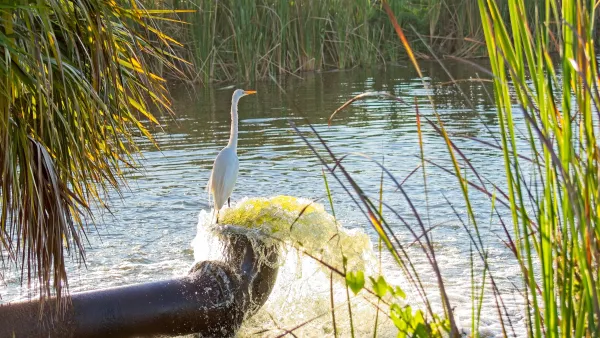
94% of wetlands could lose federal protections under proposed EPA rule
The ruling would only allot federal protections to waterways that flow nearly everyday, which few wetlands do.
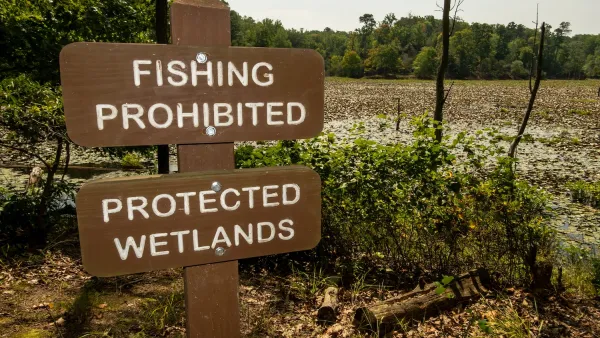
Proposed EPA Rule Change Would Exclude Millions of Acres of Wetlands and Waterways From Federal Protection
A proposed change to the Waters of the United States Rule would narrow the definition of protected waterways.
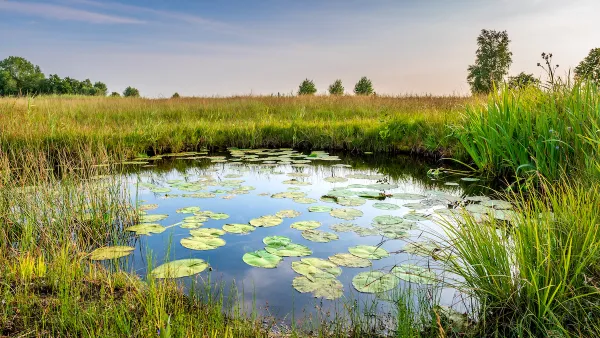
States Scramble in Wake of Clean Water Act Ruling
The removal of federal oversight of wetlands has left millions of acres unregulated and erected major hurdles for lawmakers seeking to protect them.

The state-sanctioned urbicide of Austin
People don’t kill cities. Freeways do.

US to reduce Colorado River water deliveries to Mexico
A new Colorado Treaty amendment reduces Mexico’s Colorado River water allocation by 250,000 acre feet.

New Jersey’s second-largest city bans standalone data centers
Jersey City will continue to allow co-location facilities, such as those meant for research institutions that store their own data.

Amtrak not solely to blame for New Jersey commuter rail's unreliability, report finds
A new study from the Garden State Initiative found that NJ Transit’s budget grew 20% across a 4 year period, but reliability declined significantly over the same period.

EPA erases limits on planet-warming pollution from power plants
Under Monday’s plan, power plants would still have some limits on how much mercury, arsenic and other contaminants they can emit.

Phoenix announces new on-demand transit service, more frequent RAPID buses
Both new services will launch in October, and are part of Phoenix's Project Effective Access Solutions for Easing Congestion.

FREE Course: Walkable City 1: Why Walkability?
After describing his path towards focusing on walkability as the essence of good planning, Jeff Speck marches through his five principal reasons for making more walkable places.
Reinventing Malls: Planning Alchemy—Turning Gray Fields Into Gold
The course focuses on the opportunities and imperatives that shape reinvention of mall sites.

Eagle County Government
Harvard University Graduate School of Design
Nashville Planning Department
The Architects Foundation
University of Cincinnati Online
The Pocatello Development Authority
The Urban Renewal Agency of the City of Pocatello
Journal of the American Planning Association