The state’s energy grid was entirely powered by clean energy for some portion of the day on 37 out of the last 45 days.


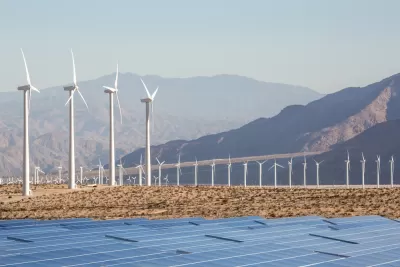
The state of California was powered entirely by renewable energy for over 9 hours last Saturday and 8 hours on Sunday, reports Adele Peters in Fast Company, making Sunday “the ninth straight day that solar, wind, hydropower, geothermal, and battery storage fully powered the electric grid for at least some portion of the time.” Of the last 45 days, renewable energy powered the grid entirely for at least a portion of the day on 37 days.
As Peters explains, “California also has natural gas plants that keep running at low levels in case backup power is needed. Even when the state is producing more than enough renewable energy to cover all of its needs, it’s still exporting some gas power to other states. But it also exports solar power, helping make other grids cleaner.”
To limit waste, California is growing its battery storage capacity, and is now home to the world’s largest lithium-ion battery storage system. “Grid operators also want to add new transmission lines to make it easier to send more renewable energy to other states.”
FULL STORY: California just went 9.25 hours using only renewable energy


Puerto Rico Pilot Program Harnesses Household Renewables
The experiment could become the largest renewable energy grid of its kind.

Court unfreezes $20B in federal climate grants
A U.S. Court of Appeals ruled that the Trump administration potentially violated the Inflation Reduction Act by attempting to claw back grants awarded under the Greenhouse Gas Reduction Fund program.

A desolate patch of Southern California desert could become a lithium powerhouse
Plans to develop lithium mines and data centers are dividing residents of a remote Southern California region.

Planetizen Federal Action Tracker
A weekly monitor of how Trump’s orders and actions are impacting planners and planning in America.

The state-sanctioned urbicide of Austin
People don’t kill cities. Freeways do.

US to reduce Colorado River water deliveries to Mexico
A new Colorado Treaty amendment reduces Mexico’s Colorado River water allocation by 250,000 acre feet.

5 New England states march closer to 800 megawatt wind energy project
Securing federal approval for the project may be complicated under the Trump administration, which has historically been hostile towards domestic wind power.

Baltimore to break ground on $50 million Transit Priority Project
The project will bring faster bus trips, safer streets and better bike connections to Baltimore.

Airbnb launches $250 million 'last-dollar financing' housing accelerator, makes first investment in Austin
The company will put $6.4 million towards affordable housing development in Texas’ capital.

FREE Course: Walkable City 1: Why Walkability?
After describing his path towards focusing on walkability as the essence of good planning, Jeff Speck marches through his five principal reasons for making more walkable places.
Reinventing Malls: Planning Alchemy—Turning Gray Fields Into Gold
The course focuses on the opportunities and imperatives that shape reinvention of mall sites.

Eagle County Government
Harvard University Graduate School of Design
Nashville Planning Department
The Architects Foundation
University of Cincinnati Online
The Pocatello Development Authority
The Urban Renewal Agency of the City of Pocatello
Journal of the American Planning Association