The state’s Department of Natural Resources says it needs continued funding to map coastal areas at risk for tsunami impacts and prepare mitigation and evacuation plans.


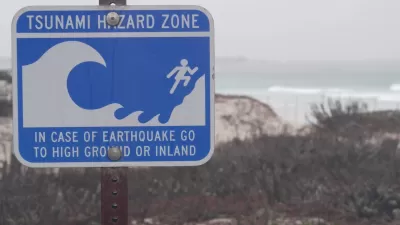
Washington State Commissioner of Public Lands Hilary Franz says the state needs more funding to prepare for the impacts of potential tsunamis, reports Erica Zucco for King 5. “For its part, the Washington Department of Natural Resources has been doing modeling and mapping to learn where tsunamis would be most impactful, where people should go to get to safety, and what structures or mechanisms could be put in place to save lives.”
In a letter to the National Oceanic and Atmospheric Administration (NOAA), Franz called for additional funding for Washington tsunami preparedness, saying, “We have utilized the money we've had in the past few years to map the areas with the highest population centers, like Ocean Shores, like Long Beach, but there's communities up and down the entire coastline that we haven't yet mapped just because we haven't had the resources and time.”
According to Zucco, “The Washington Military Department prepares tsunami education and collaborates with communities to get the word out and the National Oceanic and Atmospheric Administration (NOAA) coordinates monitoring activities and runs several programs to promote safety.”
Read the full story: Public lands commissioner advocates for more tsunami prep funding to protect coastal cities
Worst-Case Tsunami Scenario Mapped
The event of a huge earthquake off the Aleutian Islands could send a devastating tsunami towards the West coast of the U.S. Researchers have released maps of what a worst-case scenario might look like for coastal communities.
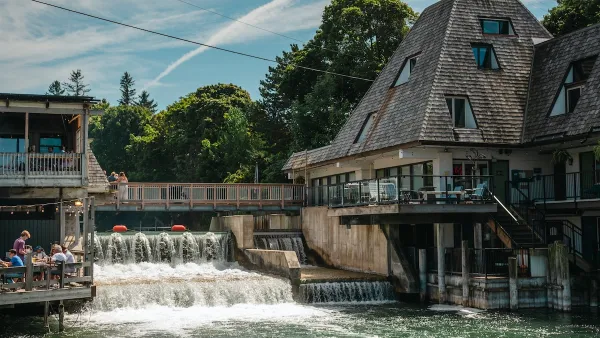
Michigan Senate votes to revise 'lax' dam safety laws
A Bridge Michigan investigation found more than 100,000 Michigan residents live in the floodpath of a high or significant-hazard dam.
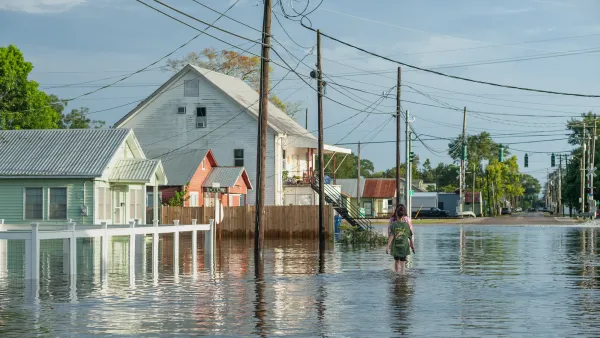
Study: Historically redlined neighborhoods face higher risk of extreme flooding
A new study indicates that structural disinvestment can translate into serious risk for vulnerable communities.

Planetizen Federal Action Tracker
A weekly monitor of how Trump’s orders and actions are impacting planners and planning in America.

California plans to bury El Niño’s downpour
If the state plays its cards right, it may be able to store a billion acre-feet of El Niño’s water in aquifers.

Desperate measures: Advocates weigh draining Lake Powell to fill Colorado River
Draining the reservoir could reduce evaporation losses by a couple hundred thousand acre-feet.

Chicago voters approve permanent festival grounds, penalty for vacant property owners
Currently, major summer and fall festivals take over public parks for weeks at a time, drawing criticism from nearby residents

NYC votes to cut outdoor dining red tape, speed up permitting
New York City also voted to allow the Department of Transportation to begin work on urgent projects before notifying elected officials.

California appears to reject Prop. 45
The proposition would have expanded the projects that qualify for a streamlined environmental review, effectively paring down the California Environmental Quality Act.

FREE Course: Walkable City 1: Why Walkability?
After describing his path towards focusing on walkability as the essence of good planning, Jeff Speck marches through his five principal reasons for making more walkable places.
Reinventing Malls: Planning Alchemy—Turning Gray Fields Into Gold
The course focuses on the opportunities and imperatives that shape reinvention of mall sites.

City of Rosemead
Rutgers University, Edward J. Bloustein School of Planning and Public Policy
One Hundred Miles
Hunter College, City University of New York (CUNY)
The Architects Foundation
University of Cincinnati Online
City of Cambridge
Montrose County
The Pocatello Development Authority