A 1973 state law creates urban growth boundaries that limit urban sprawl, but rising housing costs are causing lawmakers to consider a one-time expansion.


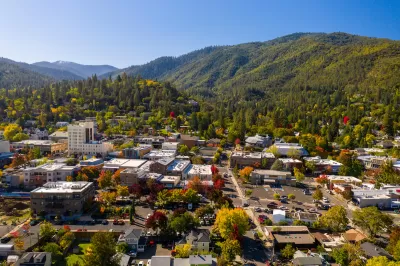
In an Associated Press article, Claire Rush explains how the housing crisis could force changes in Oregon’s landmark ‘urban growth boundary’ law, which limits development outside city limits to reduce sprawl and conserve natural areas.
The law has been instrumental in growing the state’s reputation as a green haven. But with housing costs hitting record highs in Oregon and around the country, state officials are considering altering the law to encourage more housing production.
Now, a proposed bill would tweak the law by granting a one-time exemption allowing cities to acquire new land and expand their boundaries for housing, with the caveat that 30 percent of the new housing must be affordable. This would change the current policy which requires cities to submit a 20-year plan to change their UGB.
The proposed bill would still ask cities to prove they lack the land to build necessary housing units, and would prevent them from acquiring ‘high-value’ farm or forest lands.
FULL STORY: A housing shortage is testing Oregon's pioneering land use law. Lawmakers are poised to tweak it

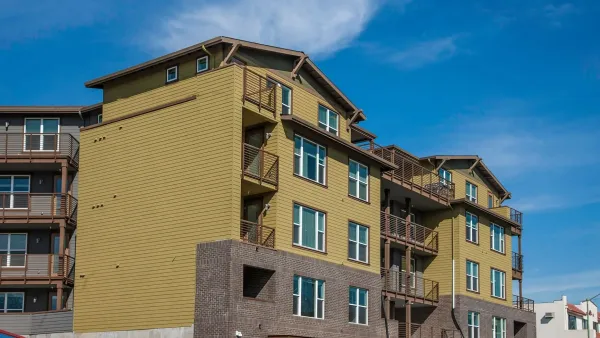
Oakland opens first affordable housing for teachers
The school district says 70% of its teachers can't afford to live in Oakland.

Report: Dallas Has Just 6 Affordable Homes for Every 10 Middle-income Households
The city’s affordable housing stock is rapidly disappearing.
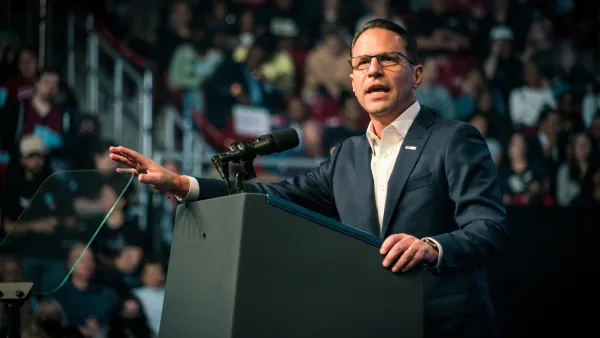
Pennsylvania Housing Action Plan Calls for $1B Fund, Expanded Renter Protections, Homebuyer Assistance
Gov. Shapiro’s proposed plan would bolster support for renters and homebuyers and reduce barriers to housing development.

Planetizen Federal Action Tracker
A weekly monitor of how Trump’s orders and actions are impacting planners and planning in America.

The state-sanctioned urbicide of Austin
People don’t kill cities. Freeways do.

US to reduce Colorado River water deliveries to Mexico
A new Colorado Treaty amendment reduces Mexico’s Colorado River water allocation by 250,000 acre feet.

Baltimore to break ground on $50 million Transit Priority Project
The project will bring faster bus trips, safer streets and better bike connections to Baltimore.

Airbnb launches $250 million 'last-dollar financing' housing accelerator, makes first investment in Austin
The company will put $6.4 million towards affordable housing development in Texas’ capital.

Guerilla urbanists are building DIY bus stop benches in Chicago
A before-and-after of one of the bus stops with a new bench. The new benches are not officially sanctioned or permitted, but the residents who placed them hope they will be the start of a network of DIY benches across the city.

FREE Course: Walkable City 1: Why Walkability?
After describing his path towards focusing on walkability as the essence of good planning, Jeff Speck marches through his five principal reasons for making more walkable places.
Reinventing Malls: Planning Alchemy—Turning Gray Fields Into Gold
The course focuses on the opportunities and imperatives that shape reinvention of mall sites.

Eagle County Government
Harvard University Graduate School of Design
Nashville Planning Department
The Architects Foundation
University of Cincinnati Online
The Pocatello Development Authority
The Urban Renewal Agency of the City of Pocatello
Journal of the American Planning Association