More than 55,000 apartments across the U.S. are scheduled for conversion from old office space this year, according to a new report.



The office-to-apartment conversion trend is gathering steam and expected to continue as weakening demand for office space and rising vacancies push the sector into oversupply in many cities, reports Wendy Broffman for Yield Pro.
According to the RENTCafe’s recently released annual Adaptive Reuse Report, the number of these conversions has quadrupled since 2020, when the pandemic emptied offices and spurred an increase in remote work. A record-breaking 55,300 projects are anticipated in 2024.
The report says office conversions now represent 38 percent of the 147,000 apartments in future adaptive reuse projects. And the cities with the largest pipelines for these projects are Washington, D.C, New York City, Dallas, Chicago, Los Angeles, and Cleveland.
This type of adaptive reuse is typically financially unfeasible for developers because of the structural changes often necessary to make office buildings suitable for multifamily residential uses. But city and state tax credits and billions from the Biden Administration are helping to subsidize those prohibitive costs, making these projects.
“Many state and local governments are counting on office-to-apartment conversions to address the nation’s shortage of affordable housing and the post-pandemic surplus of vacant office buildings,” Broffman writes.
Read the full story: Office-to-apartment conversions gather steam

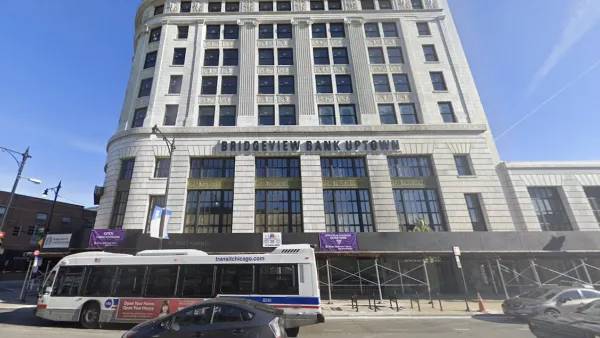
The Golden Age of Office Conversions
In 2023, there were more than twice as many adaptive reuse projects underway around the country as in prior years.
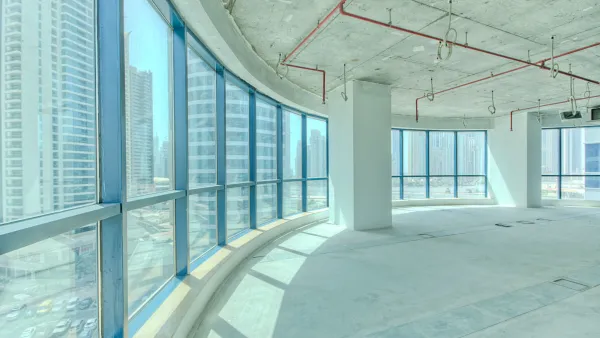
Co-living ‘Microapartments’ Cost Half as Much to Build as Typical Studios
In 10 major U.S. metros, an analysis found that converting office buildings to small co-living units could dramatically cut the costs of construction.
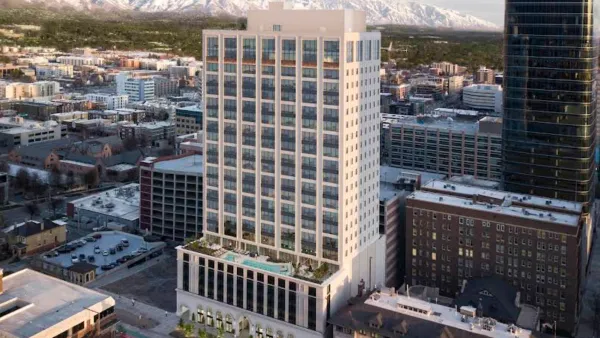
1960s Salt Lake City Tower Transformed Into 217 Luxury Housing Units
The new Seraph building may herald a new era of adaptive reuse in downtown Salt Lake City.

Planetizen Federal Action Tracker
A weekly monitor of how Trump’s orders and actions are impacting planners and planning in America.

California plans to bury El Niño’s downpour
If the state plays its cards right, it may be able to store a billion acre-feet of El Niño’s water in aquifers.

Chicago breaks ground on $3 billion megadevelopment
The new neighborhood, titled Foundry Park, will one day host 3,700 residences.

Satanic Place Names
From streams and lakes to valleys and canyons, I mapped more than 1,000 places named after the Devil.

California High-Speed Rail Authority CEO resigns after $600,000 scandal
Under Ian Choudri, the authority used taxpayer dollars to fund first class flights and trips to nightclubs.

Want to study the Missouri River? Soon, you may need unanimous approval from 10 states
Legislation would require 10 governors’ permission to study or build projects moving water outside the basin.

FREE Course: Walkable City 1: Why Walkability?
After describing his path towards focusing on walkability as the essence of good planning, Jeff Speck marches through his five principal reasons for making more walkable places.
Reinventing Malls: Planning Alchemy—Turning Gray Fields Into Gold
The course focuses on the opportunities and imperatives that shape reinvention of mall sites.

City of Rosemead
Rutgers University, Edward J. Bloustein School of Planning and Public Policy
One Hundred Miles
Hunter College, City University of New York (CUNY)
The Architects Foundation
University of Cincinnati Online
City of Cambridge
Montrose County
The Pocatello Development Authority