Opponents of the project have filed another lawsuit in hopes of halting the widening of Interstate 35.



The Texas Department of Transportation (TxDOT) “turned a blind eye to the environmental injustices of the project, failed to explore less disruptive alternatives and glossed over the effects on air and water quality,” alleges a lawsuit filed by a group of activists in Austin opposing the expansion of Interstate 35. As Nathan Bernier reports for KUT, “The legal complaint also zeroes in on TxDOT's plans for seizing land on the shores of Lady Bird Lake.”
The state has been moving forward with a plan to add four ‘managed lanes’ along eight miles of U.S. 290 East. “Among the big changes, TxDOT will lower the main lanes from downtown to Airport Boulevard. The city of Austin and UT Austin are planning to spend hundreds of millions of dollars to cover the highway trench with large decks called ‘caps’ that might support buildings, effectively concealing the widened interstate beneath a tunnel through the core of the city.” But even if capped, opponents say widening the freeway will induce more traffic and worsen air quality.
“Rethink35 escalated its fight against the expansion by simultaneously filing a civil rights complaint with the Federal Highway Administration,” charging that the project amounts to “knowingly engaging in acts of discrimination.”
Read the full story: I-35 expansion sparks civil rights complaint and another lawsuit

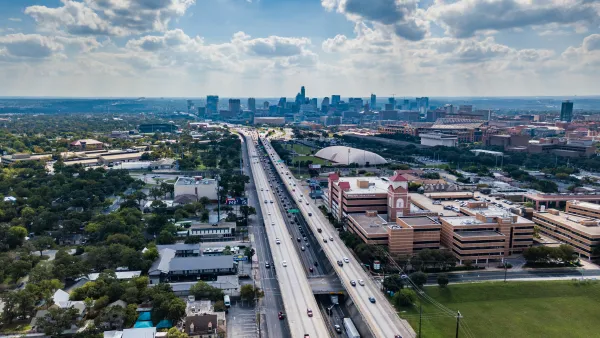
Letter Reveals Changes to I-35 Expansion Plan in Austin
In addition to new HOV lanes and a proposed boardwalk, TxDOT agreed to engineer the freeway for caps in some areas, but the city would have to fund their construction.
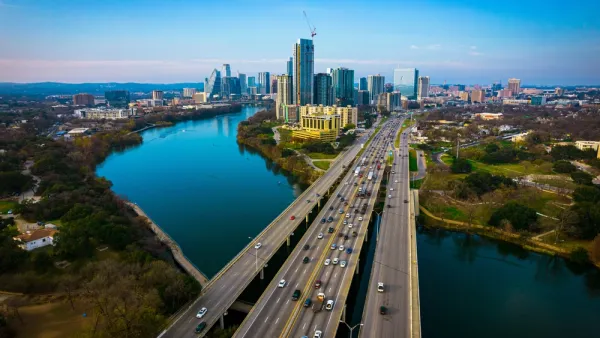
Highway Expansion Moves Forward in Austin Despite Local Opposition
The Texas Department of Transportation plans to build an elevated freeway segment as part of its plan to widen Interstate 35 through central Texas.
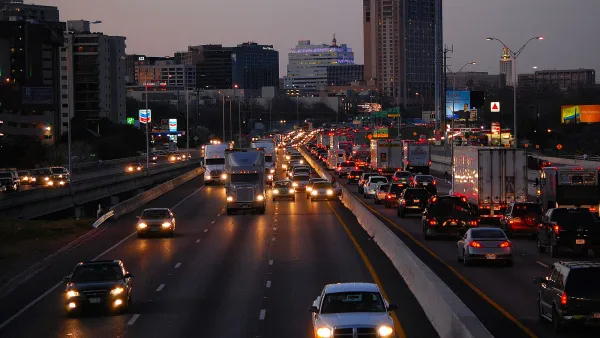
Austin Leaders Denounce 20-Lane Freeway Project
TxDOT is pushing ahead with plans for a massive freeway expansion project through downtown Austin despite opposition from virtually all local leaders.

Planetizen Federal Action Tracker
A weekly monitor of how Trump’s orders and actions are impacting planners and planning in America.

California plans to bury El Niño’s downpour
If the state plays its cards right, it may be able to store a billion acre-feet of El Niño’s water in aquifers.

Chicago breaks ground on $3 billion megadevelopment
The new neighborhood, titled Foundry Park, will one day host 3,700 residences.

California High-Speed Rail Authority CEO resigns after $600,000 scandal
Under Ian Choudri, the authority used taxpayer dollars to fund first class flights and trips to nightclubs.

Want to study the Missouri River? Soon, you may need unanimous approval from 10 states
Legislation would require 10 governors’ permission to study or build projects moving water outside the basin.

Desperate measures: Advocates weigh draining Lake Powell to fill Colorado River
Draining the reservoir could reduce evaporation losses by a couple hundred thousand acre-feet.

FREE Course: Walkable City 1: Why Walkability?
After describing his path towards focusing on walkability as the essence of good planning, Jeff Speck marches through his five principal reasons for making more walkable places.
Reinventing Malls: Planning Alchemy—Turning Gray Fields Into Gold
The course focuses on the opportunities and imperatives that shape reinvention of mall sites.

City of Rosemead
Rutgers University, Edward J. Bloustein School of Planning and Public Policy
One Hundred Miles
Hunter College, City University of New York (CUNY)
The Architects Foundation
University of Cincinnati Online
City of Cambridge
Montrose County
The Pocatello Development Authority