The state will add 21 new fast-charging stations in the next two years along interstate highways.


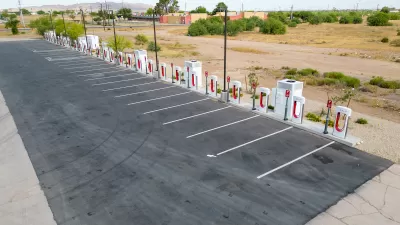
Federal funding aimed at electrifying the transportation sector will help pay for 21 new electric vehicle chargers along Arizona’s interstate highways, according to an article by David Wichner in the Arizona Daily Star.
“ADOT on Monday said it is seeking bids from private developers to construct the planned new and upgraded chargers, which also include a potential upgrade in the Casa Grande area off I-10, a station upgrade near Green Valley and proposed new stations in the Nogales area and San Simon along I-10 near the New Mexico border,” Wichner explains.
The department plans to have the new chargers operating by the end of 2025. The state is building out a larger system of rapid-charging stations with the goal of having stations no more than 50 miles apart and within a mile of a freeway interchange.
Read the full story: Arizona's electric vehicle plan includes new chargers along I-10 near Tucson

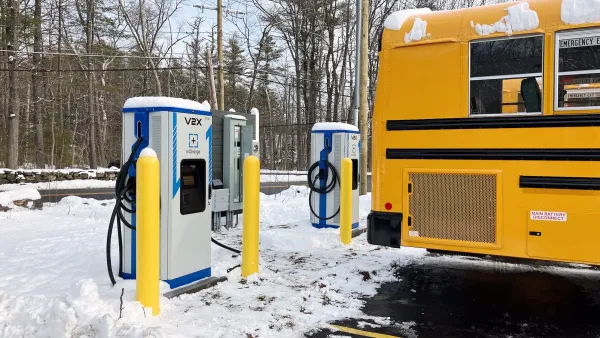
Massachusetts program pays EV owners to put power back into the grid
A pilot program could pave the way for more vehicle-to-grid installations in the United States.
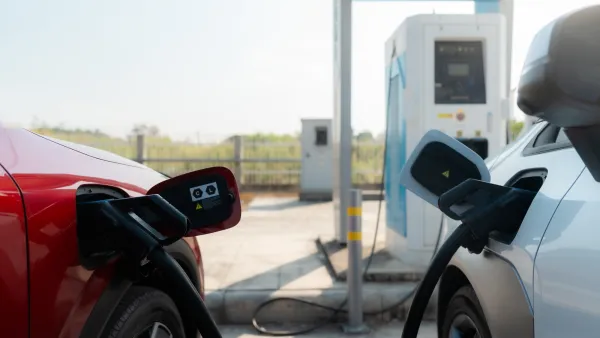
California launches $3,500 EV rebate
A new rebate program aims to maintain momentum for EV adoption as the federal government eliminates other incentives.
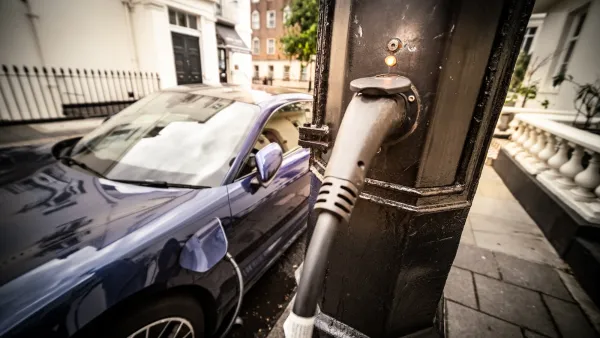
DC light poles will soon charge your electric car
The city awarded three grants to companies that will install more publicly available EV chargers.

Planetizen Federal Action Tracker
A weekly monitor of how Trump’s orders and actions are impacting planners and planning in America.

Amtrak, CN end decades-long dispute with eight-year agreement
The new operating agreement establishes an updated framework for the companies to work together, including processes to resolve disputes.

Judges permit Denver to divert 77,000 acre feet from the Colorado River for reservoir expansion
Overuse and climate change have caused the Colorado River’s water levels to plummet.

NYC DOT wants faster, more permanent street upgrades
The city is examining ways to build more concrete infrastructure without getting entangled in 'decades-long' projects.

'Something we’ve never seen before:' rising utility rates could strain city finances nationwide
Data centers, climate change and other factors have caused utility rates in the United States to increase by 38% since 2020.

Trump to overrule local leaders, lease millions of acres of America’s Pacific Island territories’ seafloors to mining companies
International law says that the Indigenous people of America’s territories have a right to prior and informed consent regarding projects that impact their countries.

FREE Course: Walkable City 1: Why Walkability?
After describing his path towards focusing on walkability as the essence of good planning, Jeff Speck marches through his five principal reasons for making more walkable places.
Reinventing Malls: Planning Alchemy—Turning Gray Fields Into Gold
The course focuses on the opportunities and imperatives that shape reinvention of mall sites.

Harvard University Graduate School of Design
KFH Group Inc.
Greater Baltimore Committee
The Architects Foundation
University of Cincinnati Online
The Pocatello Development Authority
The Urban Renewal Agency of the City of Pocatello