The funding will help purchase over 2,700 electric and low-emission vehicles in 280 school districts in 37 states.


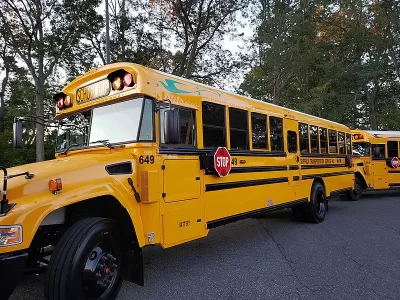
The U.S. Environmental Protection Agency (EPA) kicked off the new year by announcing $1 billion in grants to transition school bus fleets away from diesel to electric and low-emission vehicles. The move comes as diesel emissions have been linked to high rates of asthma, cancer, and school absenteeism. The funds will be disbursed to 280 school districts serving 7 million children, 86 percent of which serve low-income, rural, and tribal communities, which are more likely to suffer from higher rates of air pollution, writes Betsy Reed of the Guardian US.
“The new funds mean so far nearly $2bn has been awarded to add about 5,000 clean buses to schools across the country. The program draws from the 2021 bipartisan infrastructure law that carved out $5bn to equip schools with clean buses over five years, and is part of a broader federal strategy that aims to spend 40% of investments in environmental justice communities,” Reed reports.
The transition away from diesel isn’t something most school districts can afford without state or federal assistance. High upfront costs of electric buses and the cost of installing charging infrastructure are prohibitive for many. A full-size electric bus costs three to four times as much as a diesel version.
Republican senators from New York expressed as much in recent pushback against a new state mandate banning the purchase of diesel buses starting in 2027. The state awarded $100,000 in grants to assist with electric school bus purchases, but the senators say that’s nowhere near enough.
“With 45,000 school buses in the state, full conversion by 2035 will cost approximately $20 billion. The cost over and above what school districts already pay for replacement buses is projected at between $8 billion and $15 billion statewide. These totals don’t even include the required infrastructure upgrades including installation of charging stations, electrical improvements, bus garage renovations and so on,” they wrote in a letter to Gov. Kathy Hochul last month. They called on the governor to rescind the mandate or commit to fully funding the conversion.
Read the full story: US to invest $1bn in plan to move from diesel to electric school buses

Driving Equity and Clean Air: California Invests in Greener School Transportation
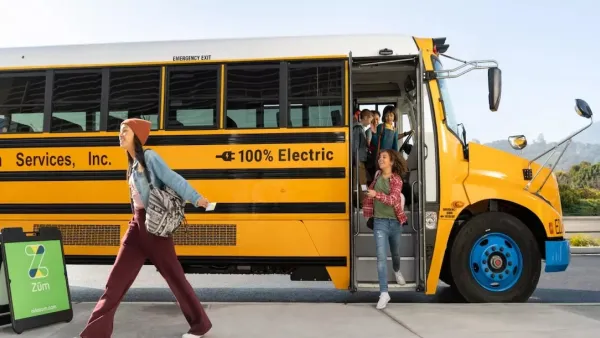
California has awarded $500 million to fund 1,000 zero-emission school buses and chargers for educational agencies as part of its effort to reduce pollution, improve student health, and accelerate the transition to clean transportation.
California Invests Additional $5M in Electric School Buses
The state wants to electrify all of its school bus fleets by 2035.
Opinion: Supporting Electric School Buses is the Right Thing to Do — and Fiscally Conservative
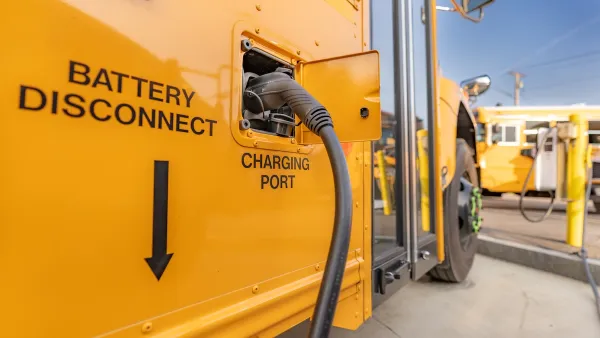
Why switching school bus fleets to electric vehicles is good for students, the environment, and school districts’ finances.

Planetizen Federal Action Tracker
A weekly monitor of how Trump’s orders and actions are impacting planners and planning in America.

California plans to bury El Niño’s downpour
If the state plays its cards right, it may be able to store a billion acre-feet of El Niño’s water in aquifers.

Desperate measures: Advocates weigh draining Lake Powell to fill Colorado River
Draining the reservoir could reduce evaporation losses by a couple hundred thousand acre-feet.

Chicago voters approve permanent festival grounds, penalty for vacant property owners
Currently, major summer and fall festivals take over public parks for weeks at a time, drawing criticism from nearby residents

NYC votes to cut outdoor dining red tape, speed up permitting
New York City also voted to allow the Department of Transportation to begin work on urgent projects before notifying elected officials.

California appears to reject Prop. 45
The proposition would have expanded the projects that qualify for a streamlined environmental review, effectively paring down the California Environmental Quality Act.

FREE Course: Walkable City 1: Why Walkability?
After describing his path towards focusing on walkability as the essence of good planning, Jeff Speck marches through his five principal reasons for making more walkable places.
Reinventing Malls: Planning Alchemy—Turning Gray Fields Into Gold
The course focuses on the opportunities and imperatives that shape reinvention of mall sites.


City of Rosemead
Rutgers University, Edward J. Bloustein School of Planning and Public Policy
One Hundred Miles
Hunter College, City University of New York (CUNY)
The Architects Foundation
University of Cincinnati Online
City of Cambridge
Montrose County
The Pocatello Development Authority