Many small and mid-sized cities could see a decline before 2100.


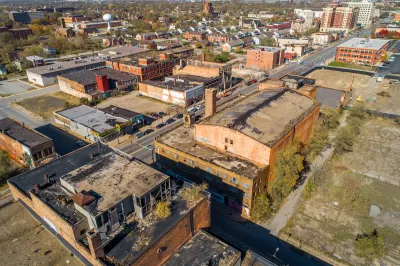
An analysis of population trends in U.S. cities claims that as many as 15,000 urban centers could see dramatic population declines by the end of the century. Rachel Nuwer outlines the study in Scientific American.
The researchers began with a project for the Illinois Department of Transportation to assess “how Illinois’s cities are projected to change over time and what the transportation challenges will be for places that are depopulating,” later realizing that the same type of analysis could be expanded to other cities.
“The authors’ resulting projections indicated that around half of cities in the U.S., including Cleveland, Ohio, Buffalo, N.Y., and Pittsburgh, Pa., are likely to experience depopulation of 12 to 23 percent by 2100. Some of those cities, including Louisville, Ky., New Haven, Conn., and Syracuse, N.Y., are not currently showing declines but are likely to in the future, according to the findings.”
The study can’t account for potential changes in the far future, but depopulation can impact how cities and regions plan and redesign public infrastructure to serve remaining residents. “The authors hope that their paper serves as a wake-up call to policy makers to begin moving away from growth-based planning and to start finding place-specific solutions for cities that are likely to depopulate in the years ahead.”
FULL STORY: Thousands of U.S. Cities Could Become Virtual Ghost Towns by 2100

California Decline: Population Likely Peaked Three Years Ago
A July projection from the state's Demographic Research Unit indicates that the population in 2060 may be about what it is today.
Americans Are Moving Toward Climate Risk
More Americans are ignoring the realities of climate change emigrating—even as more and more climate refugees flee the damage.
US Population Growth Slowest Since 2020 Due to Declining Immigration
Net international migration dropped from 2.7 million to 1.3 million in the year spanning July 2024 to July 2025.

Planetizen Federal Action Tracker
A weekly monitor of how Trump’s orders and actions are impacting planners and planning in America.

The state-sanctioned urbicide of Austin
People don’t kill cities. Freeways do.

US to reduce Colorado River water deliveries to Mexico
A new Colorado Treaty amendment reduces Mexico’s Colorado River water allocation by 250,000 acre feet.

Mamdani overhauls NYC's Vision Zero plan with 100 new policy goals
The overhaul aims to reduce traffic deaths and make streets safer for pedestrians, cyclists and drivers through lower speed limits, new safety infrastructure and more.

Amtrak not solely to blame for New Jersey commuter rail's unreliability, report finds
A new study from the Garden State Initiative found that NJ Transit’s budget grew 20% across a 4 year period, but reliability declined significantly over the same period.

EPA erases limits on planet-warming pollution from power plants
Under Monday’s plan, power plants would still have some limits on how much mercury, arsenic and other contaminants they can emit.

FREE Course: Walkable City 1: Why Walkability?
After describing his path towards focusing on walkability as the essence of good planning, Jeff Speck marches through his five principal reasons for making more walkable places.
Reinventing Malls: Planning Alchemy—Turning Gray Fields Into Gold
The course focuses on the opportunities and imperatives that shape reinvention of mall sites.

Eagle County Government
Harvard University Graduate School of Design
Nashville Planning Department
The Architects Foundation
University of Cincinnati Online
The Pocatello Development Authority
The Urban Renewal Agency of the City of Pocatello
Journal of the American Planning Association