Mountain towns in Colorado and other western states are struggling to maintain a supply of affordable housing for their workers and lower-income residents.


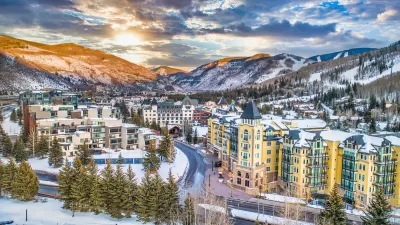
Mountain towns across the West are taking a wide array of approaches to their growing housing crisis as lower-income residents find it increasingly difficult to access affordable housing.
According to an article by Nick Bowlin in High Country News, a new report reveals just how varied these approaches are. As Bowlin explains, “The report was produced by the Northwest Colorado Council of Governments (NWCCOG), a voluntary association of 30 local governments, including some of the state’s most iconic — and expensive — ski areas.”
The report summarizes the state of housing in over 40 local jurisdictions, mostly in Colorado. Key findings include the need for local governments to get involved, noting that “public entities need to play an active role in the housing market” to keep housing affordable for workers and other residents. The report also highlights creative ways governments are working to create and keep affordable housing, such as building housing on federal land and preserving mobile home parks and protecting their residents from evictions and rent spikes.
FULL STORY: Mountain towns are trying all sorts of solutions to the housing crisis


How Much Are Short-Term Rentals to Blame for the Housing Crisis?
Whether and how deeply Airbnb and other short-term rentals affect housing costs depends largely on local conditions and economies.
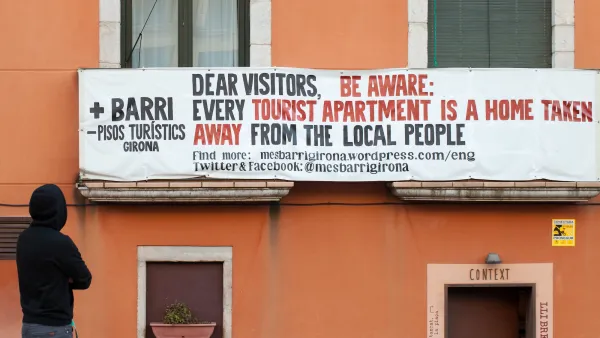
Spain Fines Airbnb $75 Million After Crackdown on Unlicensed Rentals
The government took action after residents in tourist centers protested, blaming tourist rentals for a growing housing crisis.

Study: Maui’s Plan to Convert Vacation Rentals to Long-Term Housing Could Cause Nearly $1 Billion Economic Loss
The plan would reduce visitor accommodation by 25% resulting in 1,900 jobs lost.

The state-sanctioned urbicide of Austin
People don’t kill cities. Freeways do.

US to reduce Colorado River water deliveries to Mexico
A new Colorado Treaty amendment reduces Mexico’s Colorado River water allocation by 250,000 acre feet.

New Jersey’s second-largest city bans standalone data centers
Jersey City will continue to allow co-location facilities, such as those meant for research institutions that store their own data.

Amtrak not solely to blame for New Jersey commuter rail's unreliability, report finds
A new study from the Garden State Initiative found that NJ Transit’s budget grew 20% across a 4 year period, but reliability declined significantly over the same period.

EPA erases limits on planet-warming pollution from power plants
Under Monday’s plan, power plants would still have some limits on how much mercury, arsenic and other contaminants they can emit.

Phoenix announces new on-demand transit service, more frequent RAPID buses
Both new services will launch in October, and are part of Phoenix's Project Effective Access Solutions for Easing Congestion.

FREE Course: Walkable City 1: Why Walkability?
After describing his path towards focusing on walkability as the essence of good planning, Jeff Speck marches through his five principal reasons for making more walkable places.
Reinventing Malls: Planning Alchemy—Turning Gray Fields Into Gold
The course focuses on the opportunities and imperatives that shape reinvention of mall sites.

Eagle County Government
Harvard University Graduate School of Design
Nashville Planning Department
The Architects Foundation
University of Cincinnati Online
The Pocatello Development Authority
The Urban Renewal Agency of the City of Pocatello
Journal of the American Planning Association