A bill passed by the State Assembly and moving on to the Senate would require autonomous semi trucks to have a trained human operator in the vehicle.



According to an article by Maggie Angst in The Sacramento Bee, “California assembly members on Wednesday overwhelmingly voted to pass Assembly Bill 316, a proposal with bipartisan support to require a trained individual to sit behind the wheel of autonomous semitrucks and big rigs.”
Angst explains, “Current state law, established by the DMV, allows testing and deployment of driverless light-duty autonomous vehicles that weigh 10,000 pounds or less — stopping short of allowing the same for long-haul trucks and big rigs with autonomous capabilities.”
The bill’s author, Assemblywoman Cecilia Aguiar-Curry, D-Winters, said “we need to make sure that the roads are safe for the sake of our constituents and that jobs are safe for our truck drivers.” The bill is supported by truck drivers, who fear the loss of jobs to autonomous vehicles. “Supporters say the regulation would help protect people traveling on California roadways and support the livelihoods of truck drivers across the state.”
The move was criticized by industry leaders, who say the state should wait for federal guidance before deploying its own regulations on self-driving trucks. “Permitting the testing and deployment of autonomous trucks in California would help eliminate human errors, such as texting and driving and distraction, that contribute to traffic fatalities,” said Mufaddal Ezzy, senior director of state public affairs for software company Aurora.
FULL STORY: Lawmakers and Big Tech clash over the fate of self-driving semitrucks in California

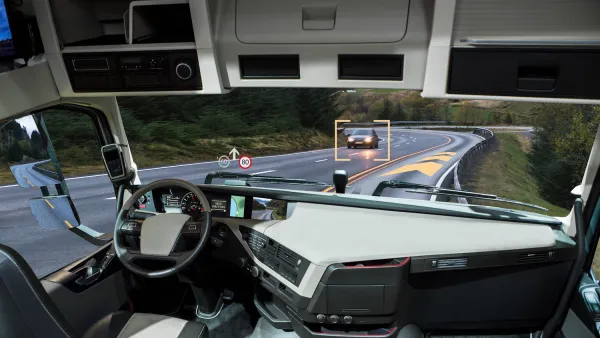
California Is Retooling its AV Guidelines
The California DMV is proposing a new framework for light- and heavy-duty self-driving trucks that would enhance reporting requirements and pave the way for autonomous commercial fleets.
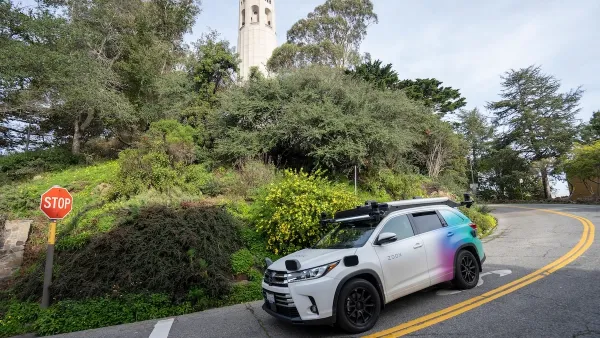
California Governor Vetoes Autonomous Truck Ban, Approves New Guidelines for AVs
A new law will allow police to issue citations to self-driving car operators and create stricter guidelines for crashes and interactions with first responders.

California Governor Vetoes Autonomous Truck Ban
Gov. Newsom called the new law unnecessary, citing existing efforts by state regulators to develop new rules around autonomous trucking.

Planetizen Federal Action Tracker
A weekly monitor of how Trump’s orders and actions are impacting planners and planning in America.

The state-sanctioned urbicide of Austin
People don’t kill cities. Freeways do.

US to reduce Colorado River water deliveries to Mexico
A new Colorado Treaty amendment reduces Mexico’s Colorado River water allocation by 250,000 acre feet.

5 New England states march closer to 800 megawatt wind energy project
Securing federal approval for the project may be complicated under the Trump administration, which has historically been hostile towards domestic wind power.

Baltimore to break ground on $50 million Transit Priority Project
The project will bring faster bus trips, safer streets and better bike connections to Baltimore.

Airbnb launches $250 million 'last-dollar financing' housing accelerator, makes first investment in Austin
The company will put $6.4 million towards affordable housing development in Texas’ capital.

FREE Course: Walkable City 1: Why Walkability?
After describing his path towards focusing on walkability as the essence of good planning, Jeff Speck marches through his five principal reasons for making more walkable places.
Reinventing Malls: Planning Alchemy—Turning Gray Fields Into Gold
The course focuses on the opportunities and imperatives that shape reinvention of mall sites.

Eagle County Government
Harvard University Graduate School of Design
Nashville Planning Department
The Architects Foundation
University of Cincinnati Online
The Pocatello Development Authority
The Urban Renewal Agency of the City of Pocatello
Journal of the American Planning Association