An adaptive reuse ordinance limited to the city’s downtown core helped create roughly 12,000 units of new housing.


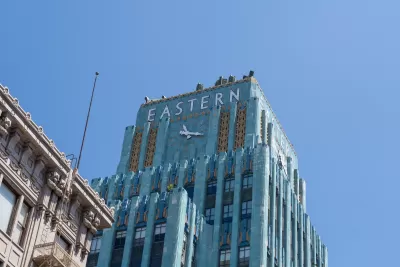
The Los Angeles Department of City Planning has released details about its new Citywide Adaptive Reuse program, calling it “an innovative strategy that facilitates the conversion of existing underutilized or historically significant buildings into housing.”
The program would expand on an existing adaptive reuse initiative that has been in place in downtown Los Angeles since 1999 and is credited with creating over 12,000 housing units in former garment factories, warehouses, and other vacant downtown buildings.
According to the city’s press release, “Drafted with post-pandemic economic recovery in mind, the Adaptive Reuse Ordinance incentivizes the conversion of existing commercial buildings to housing, providing a faster review process for older buildings, allowing for flexible unit sizes, and allowing buildings to retain their building shell while the interior may be converted to housing.”
City officials say the ordinance will promote infill development, historic preservation, and mixed use, lowering carbon emissions and extending the life of existing buildings. The program is part of the Citywide Housing Incentive Program, a six-part plan for meeting the city’s state-mandated housing goals.
FULL STORY: City Planning Releases New Proposed Incentives to Repurpose Vacant Commercial Spaces for Housing

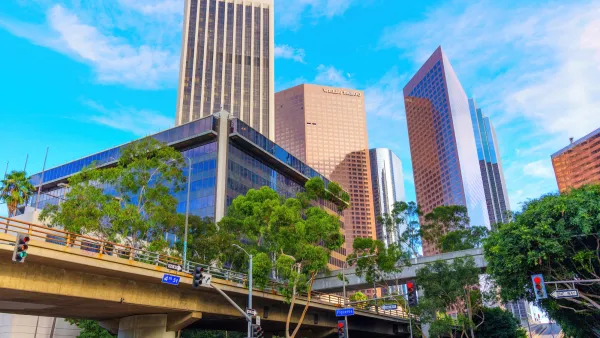
Vacant downtown LA office building will be transformed into 512 affordable homes
The World Trade Center will create hundreds of new apartments with rents starting as low as $937.
Old Walls, New Homes
From forgotten buildings to thriving neighborhoods, adaptive reuse has the power to transform our cities.
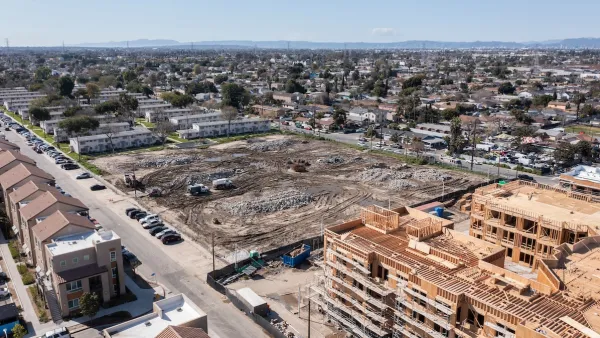
New California Law Supports Adaptive Reuse
AB 2243 paves the way for easier conversion of industrially and commercially zones properties for residential development.

The state-sanctioned urbicide of Austin
People don’t kill cities. Freeways do.

US to reduce Colorado River water deliveries to Mexico
A new Colorado Treaty amendment reduces Mexico’s Colorado River water allocation by 250,000 acre feet.

New Jersey’s second-largest city bans standalone data centers
Jersey City will continue to allow co-location facilities, such as those meant for research institutions that store their own data.

Amtrak not solely to blame for New Jersey commuter rail's unreliability, report finds
A new study from the Garden State Initiative found that NJ Transit’s budget grew 20% across a 4 year period, but reliability declined significantly over the same period.

EPA erases limits on planet-warming pollution from power plants
Under Monday’s plan, power plants would still have some limits on how much mercury, arsenic and other contaminants they can emit.

Phoenix announces new on-demand transit service, more frequent RAPID buses
Both new services will launch in October, and are part of Phoenix's Project Effective Access Solutions for Easing Congestion.

FREE Course: Walkable City 1: Why Walkability?
After describing his path towards focusing on walkability as the essence of good planning, Jeff Speck marches through his five principal reasons for making more walkable places.
Reinventing Malls: Planning Alchemy—Turning Gray Fields Into Gold
The course focuses on the opportunities and imperatives that shape reinvention of mall sites.

Eagle County Government
Harvard University Graduate School of Design
Nashville Planning Department
The Architects Foundation
University of Cincinnati Online
The Pocatello Development Authority
The Urban Renewal Agency of the City of Pocatello
Journal of the American Planning Association