Those tasked with interpreting the significance of historical sites like Mount Vernon must weave together the often contradictory threads that contribute to the nation’s story.


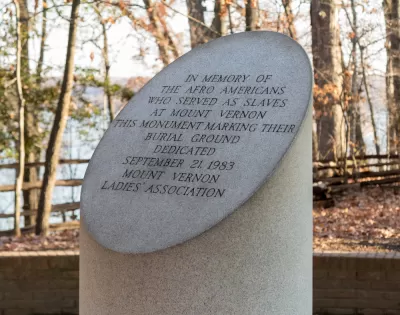
Allison Wickens, Vice President of Education at the Mount Vernon historical site, provides some background on historic preservation and interpretation efforts at George Washington’s home, a site weighed down by a complex tapestry of some of the most significant, most impactful, and most shameful aspects of American history.
According to Wickens, “Historic interpretation happens at the intersection of the historic site, the visitors who come to it and the staff who ascribe meaning based on their scholarship and the society in which their institution exists.” In the case of Washington, his leadership of the early republic is marred by slaveownership, while his warnings about political partisanship ring truer than ever.
Historical interpreters must not ‘interpret nostalgia,’ as Wickens puts it, although it is up to visitors to decide whether Mount Vernon’s presentation of Washington’s legacy successfully avoids this trap. For Wickens, “Successful historic interpretation allows us to see ourselves in the past, but it also energizes us to be involved in the world around us today while also looking ahead.”
Read the full story: Weaving Together Past and Present

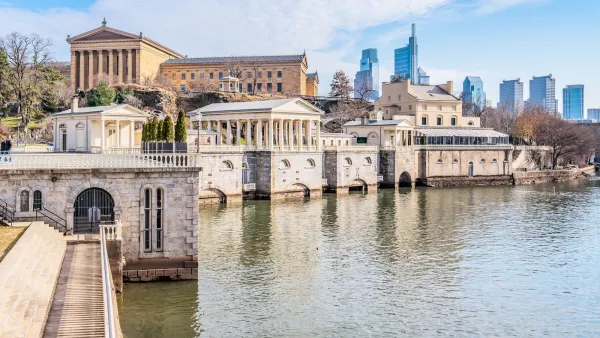
Pennsylvania’s Historic Sites are Under Threat From Rising Waters
The state has one of the nation’s highest concentrations of registered historic sites — and some face destruction from flooding.
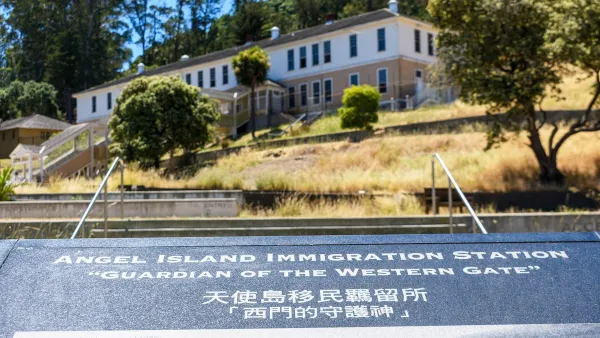
Preserving Endangered Historic Sites
How the America’s Most Endangered Places list helps bring important stories out of obscurity.
SLC Reveals Plan for Historic Park
Residents have called for preserving the unique mix of art and nature in Allen Park.

Planetizen Federal Action Tracker
A weekly monitor of how Trump’s orders and actions are impacting planners and planning in America.

The state-sanctioned urbicide of Austin
People don’t kill cities. Freeways do.

US to reduce Colorado River water deliveries to Mexico
A new Colorado Treaty amendment reduces Mexico’s Colorado River water allocation by 250,000 acre feet.

Nation's most wind-powered state turns to coal as data centers increase energy demand
For the first time in decades, Iowa has increased its generation of coal power.

NYC cools commuters with city's first rain garden above a bus stop
New York City officials say the plants in the rain garden can absorb 16 gallons of rainwater during heavy storms.

Brightline West’s future may rely on $6 billion federal loan
The company has until Nov. 2 to make a $400 million equity investment into its proposed high-speed rail line.

FREE Course: Walkable City 1: Why Walkability?
After describing his path towards focusing on walkability as the essence of good planning, Jeff Speck marches through his five principal reasons for making more walkable places.
Reinventing Malls: Planning Alchemy—Turning Gray Fields Into Gold
The course focuses on the opportunities and imperatives that shape reinvention of mall sites.

Greater Baltimore Committee
Eagle County Government
Harvard University Graduate School of Design
The Architects Foundation
University of Cincinnati Online
The Pocatello Development Authority
The Urban Renewal Agency of the City of Pocatello
Journal of the American Planning Association